
Krong Siem Reab
Spean
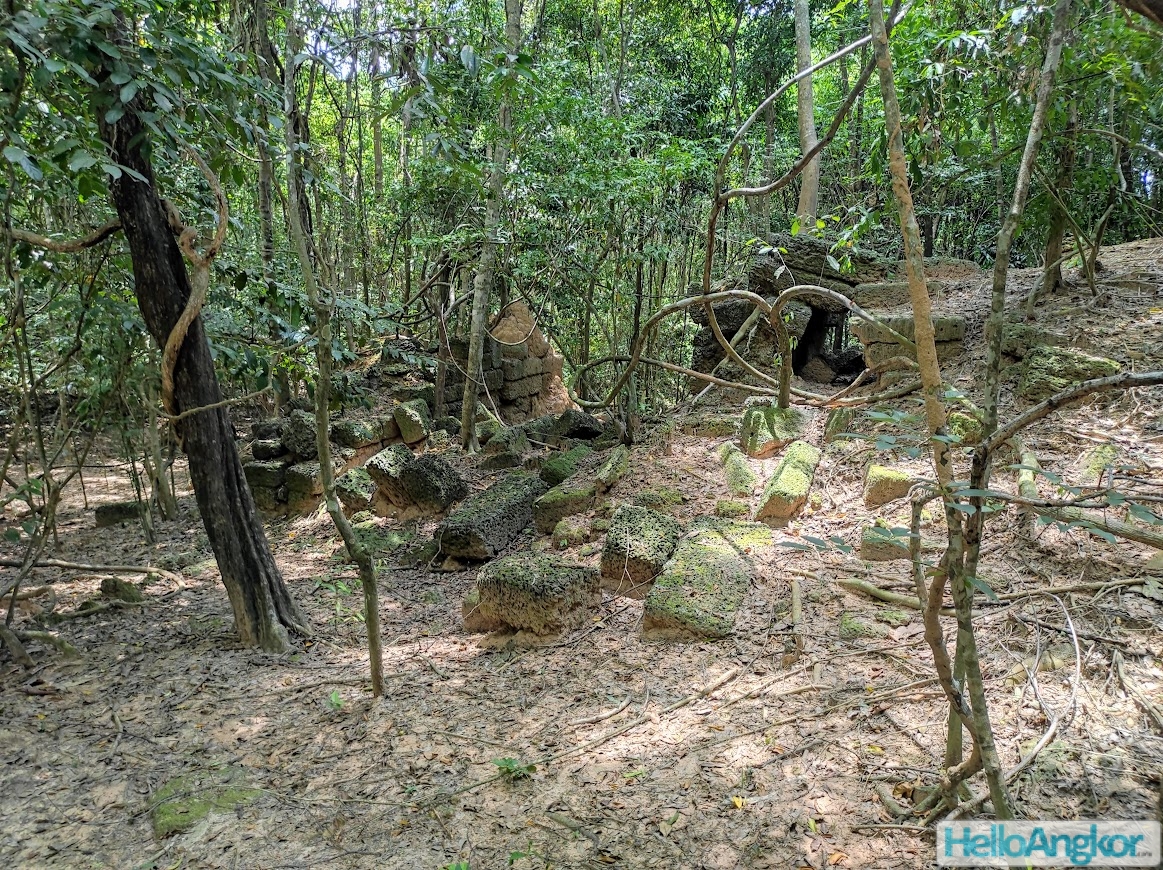
A laterite bridge that is around 9m wide with remains extending lengthwise for around 26m, while there are scant remains, it may have been originally around 45-50m long. It runs north-south and crossed the old Siem Reap river. It would not seem necessarily related to the ancient road network of the empire and with the … Read more
Angkor Thom (Enclosure & Moat)
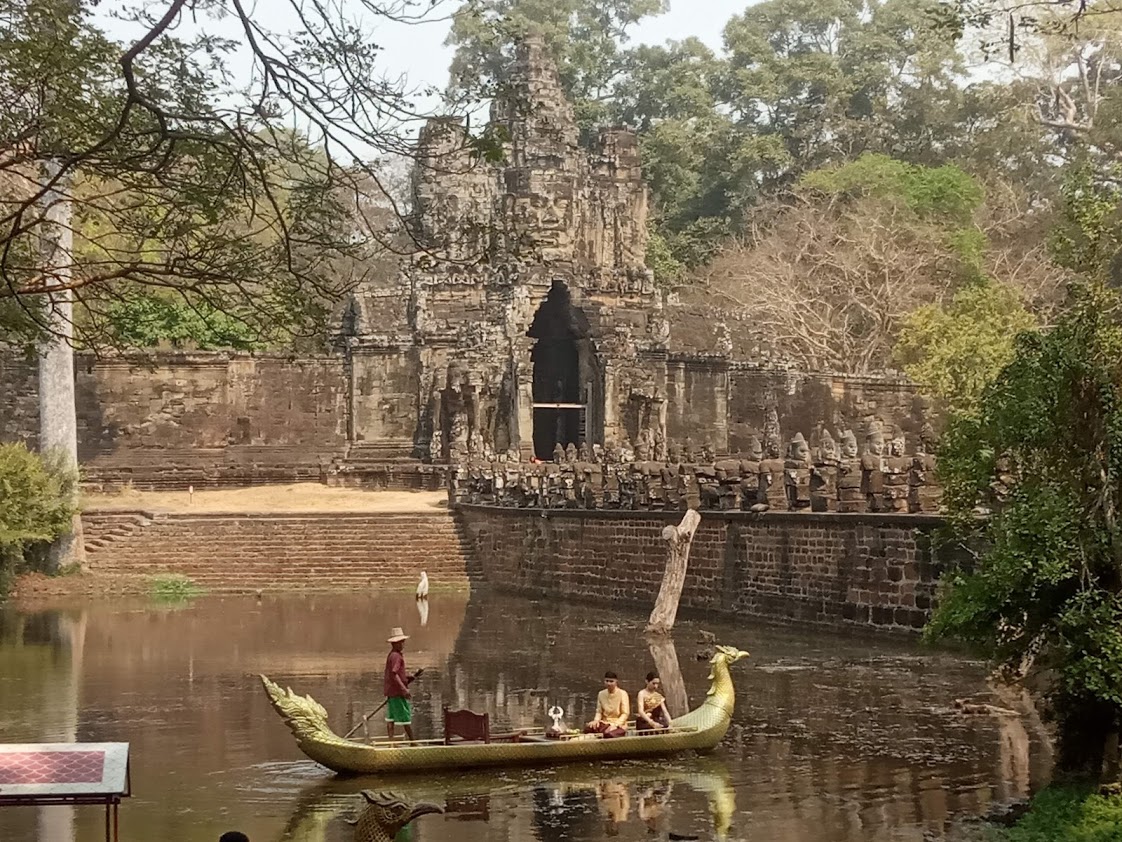
The grand outer enclosure wall of Angkor Thom is 3 km square constructed of laterite and further supported by an inner earthen buttressing. The enclosure has five monumental gates preceded by causeways that cross the 110m wide outer surrounding moat. The five gates are covered here: South Gate (Tonle Om), West Gate (Thvear Ta Kev), … Read more
Angkor Thom Victory Gate
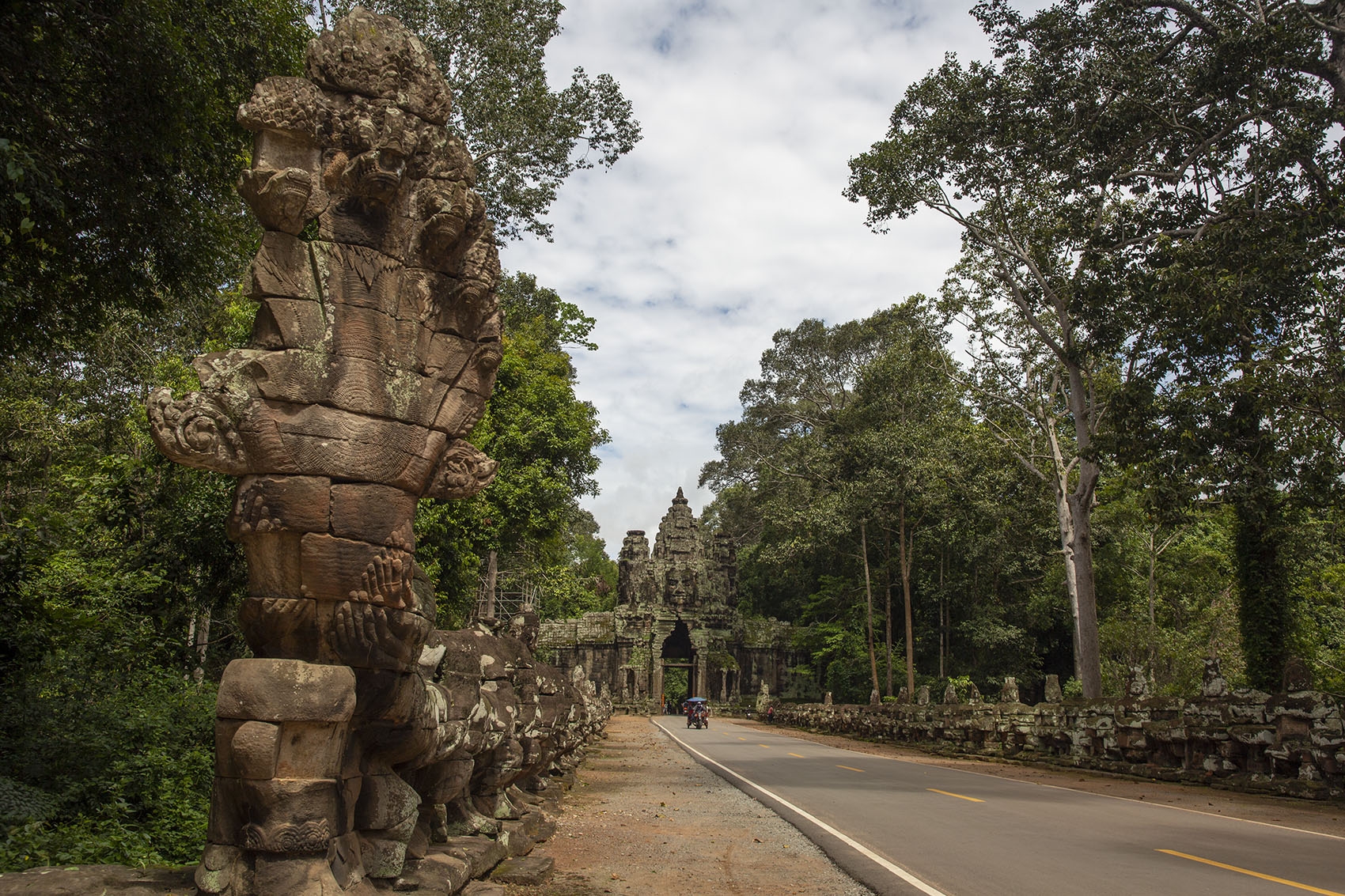
Thvear Chey, or Victory Gate of Angkor Thom, is one of the five gates of Angkor Thom, located on the eastern side and north of the Gate of the Dead. Interestingly, the other four gates are located on cardinal points having a particular symmetry from an overall design based on Hindu beliefs. Victory gate, however, … Read more
Bayon Temple – Hidden Quirks, Facts and History
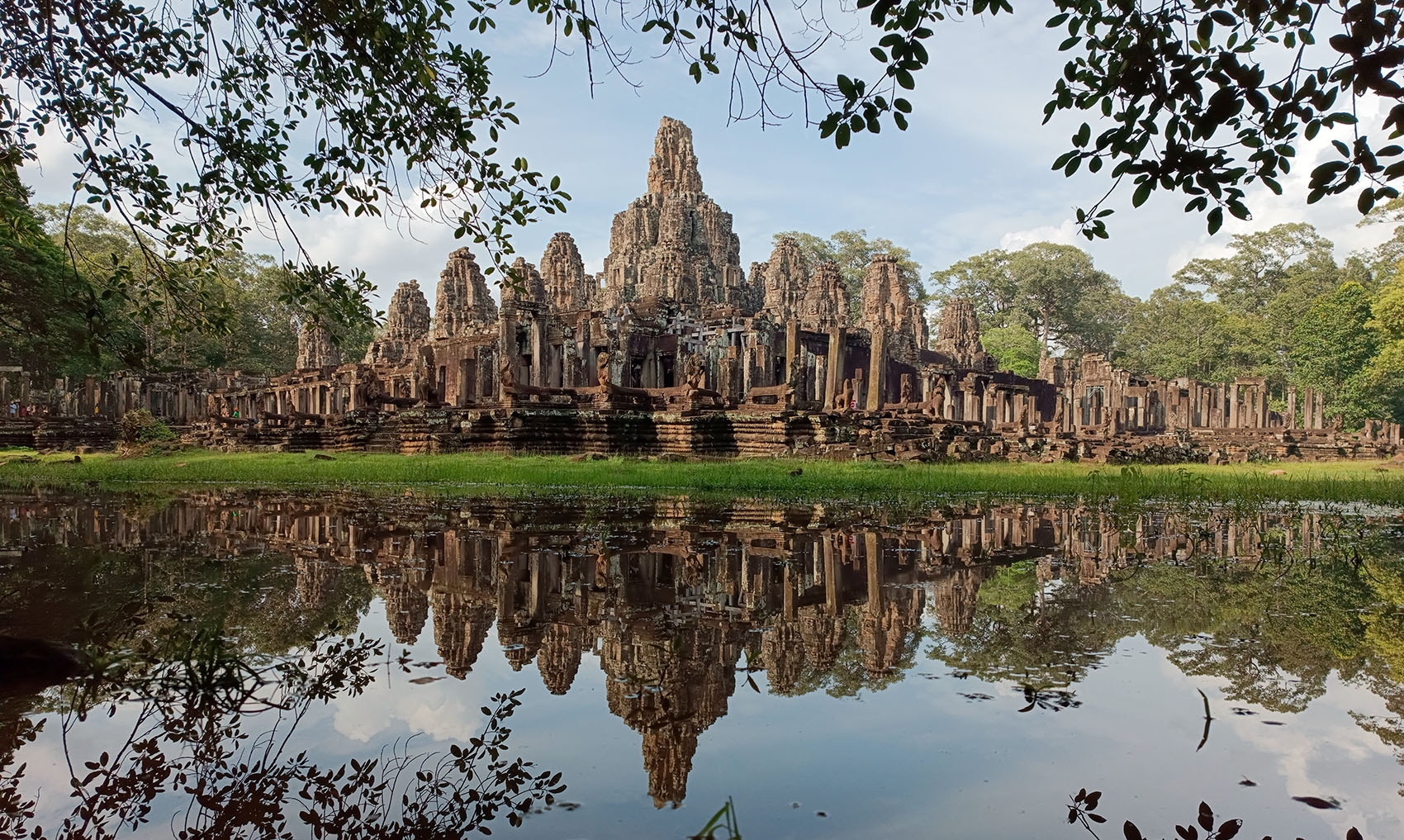
Bayon Temple is a richly decorated ancient Khmer temple located at the center of Angkor Thom in Angkor Archeological Park of Siem Reap, Cambodia. It is one of the must-see temples when visiting the area being famous for its array of towers with smiling faces and “baroque” architecture in a Khmer context. From an architectural … Read more
Tep Pranam Temple
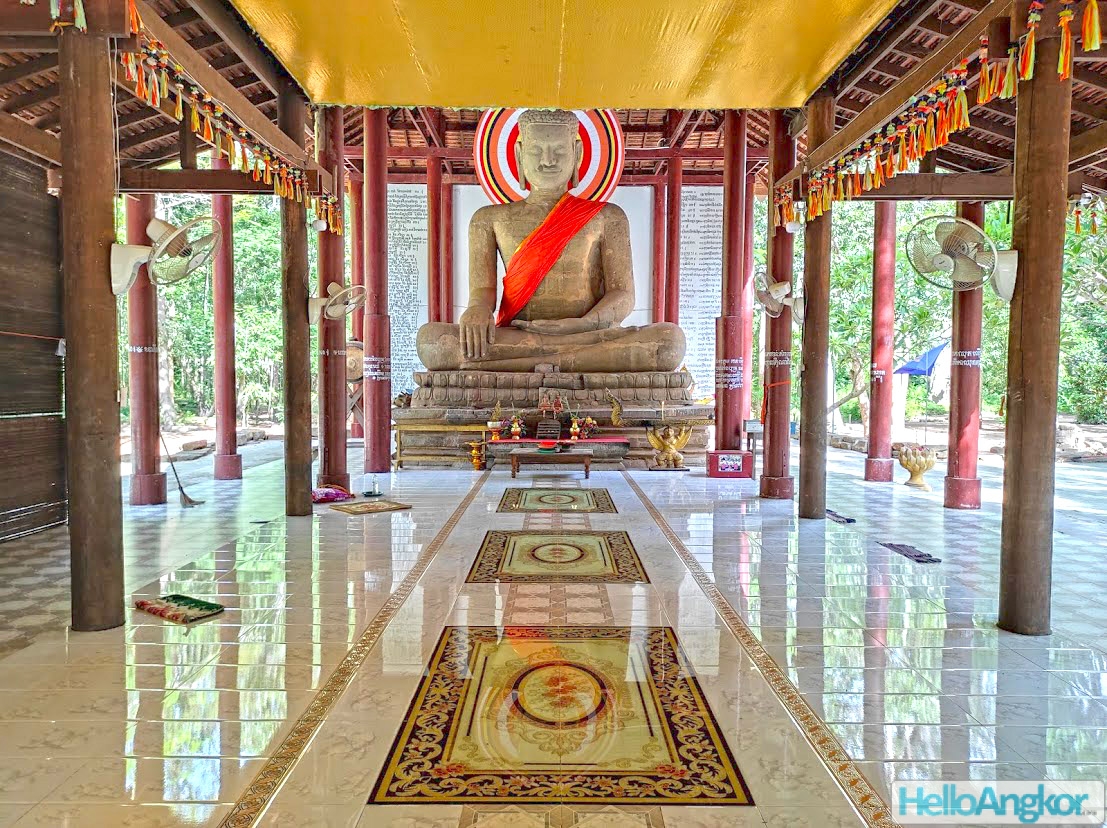
Tep Pranam (Khmer: ប្រាសាទទេពប្រណម្យ), located inside Angkor Thom, is a “Buddhist terrace” featuring seated lions and naga balustrades with a giant seated Buddha. It is located just north of the Terrace of the Leper King. The terrace is typical of Buddhist Terrace constructions being low height, cruciform shape, and facing east. Preceded by an approx.. … Read more
Baphuon Temple – History & Highlights
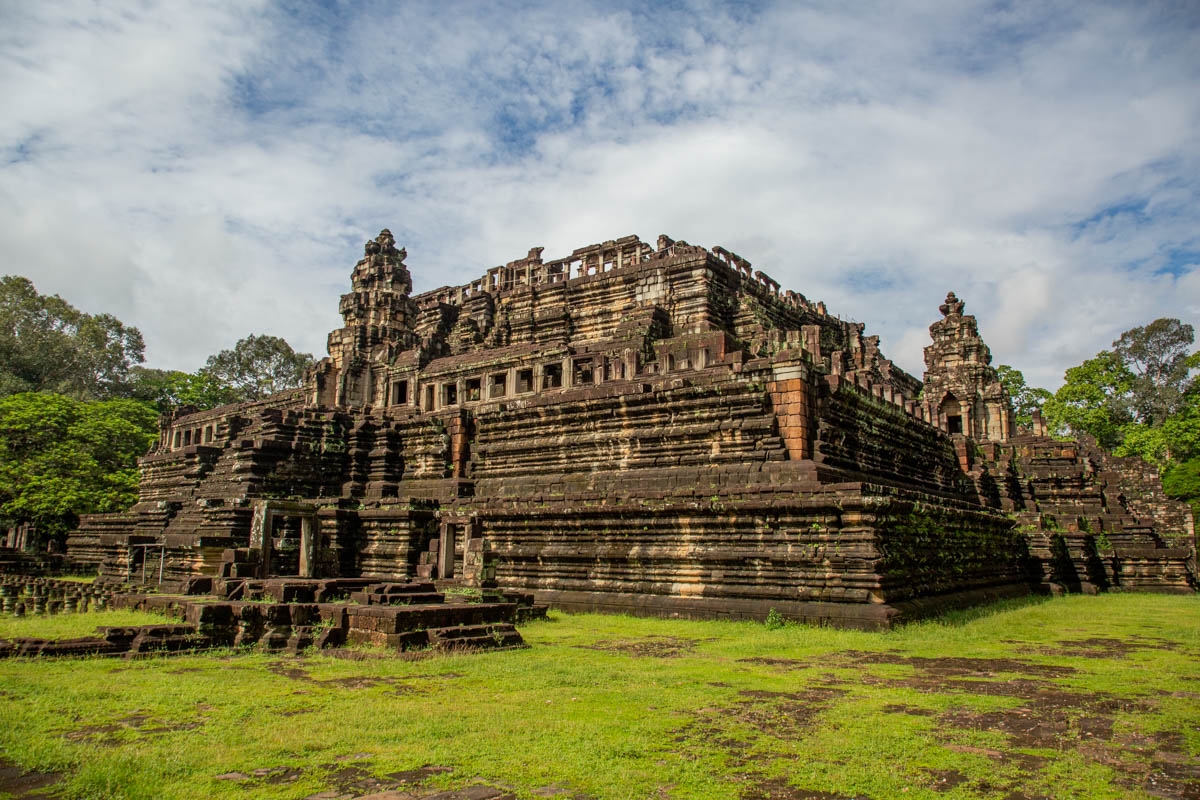
The Baphuon Temple, located in Angkor Thom to the northwest of the Bayon temple, is another of the famed mountain temples built by the ancient Khmer. The temple is known for its grand entrance, its scale, and the impressive reliefs especially those on the second enclosure of the top level. It dates to the mid-11th century, … Read more
The Ancient Royal Palace of Angkor Thom
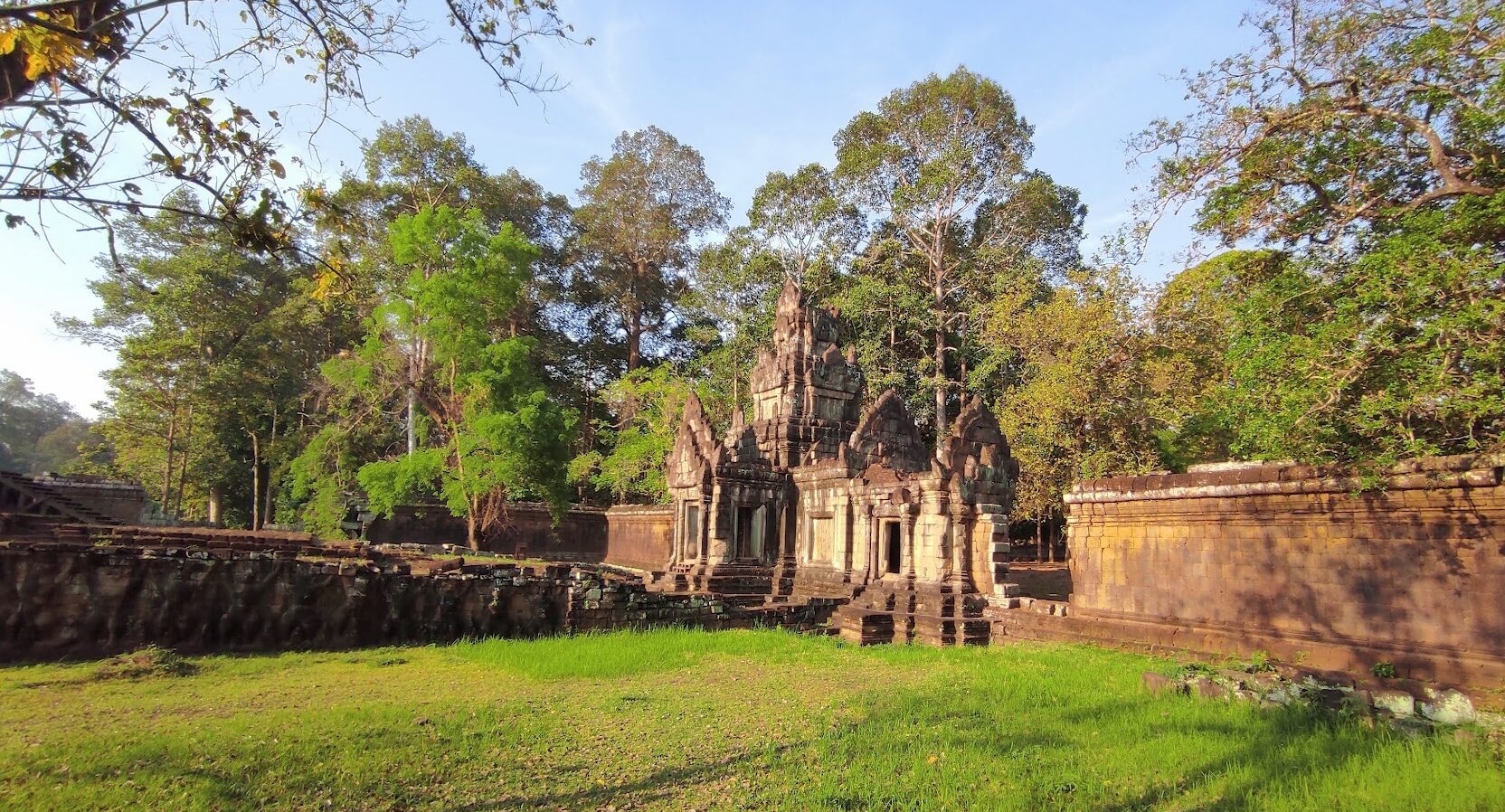
The ancient Royal Palace is a large rectangular (600m x 260m) walled area located within Angkor Thom to the northwest of Bayon Temple. Originally built by King Suryavarman I in the 10-11th century adding to the already existing Phimeanakas temple, it is from here that a series of kings would have ruled over the entire … Read more
Terrace of the Leper King
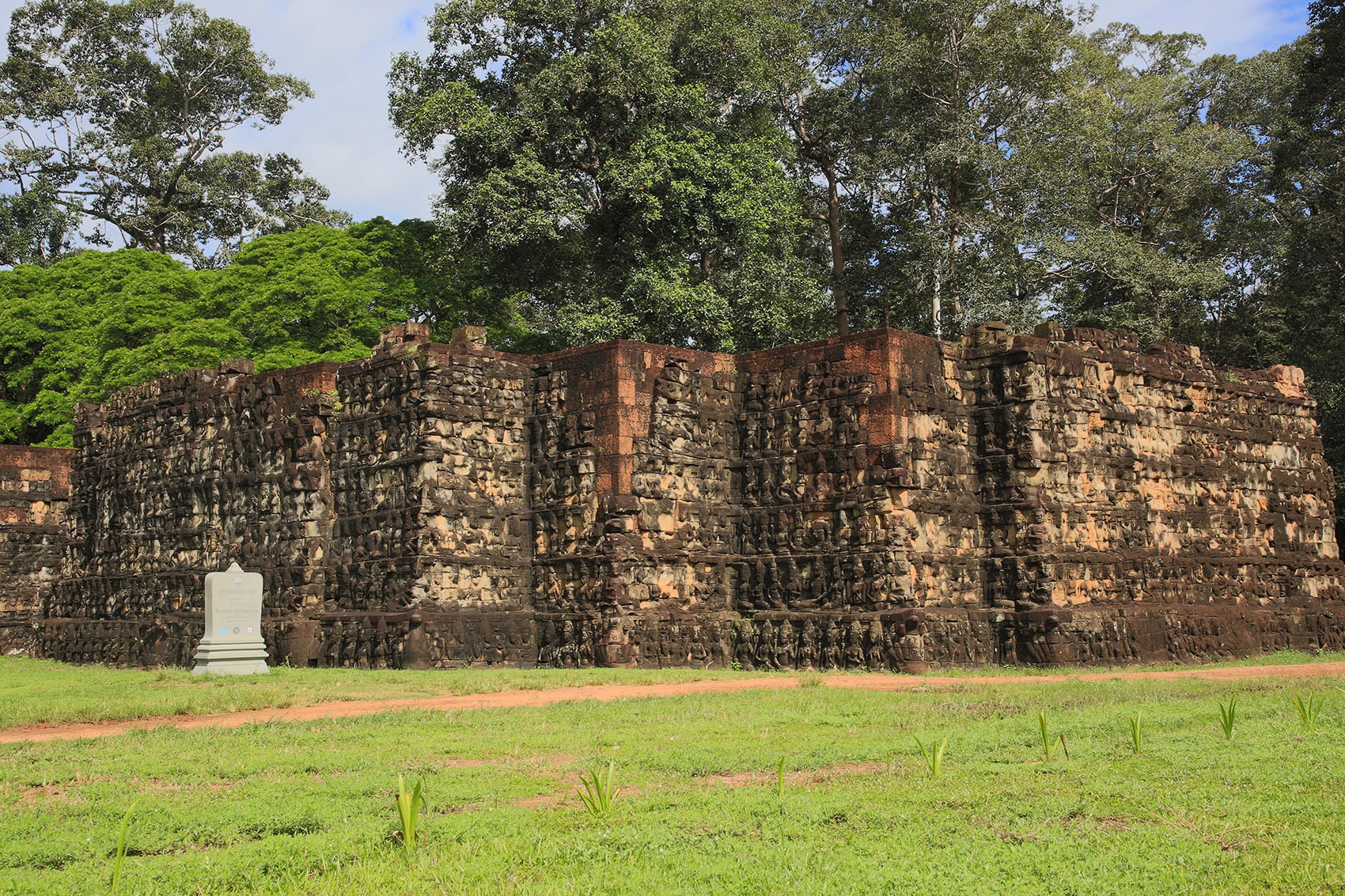
The Terrace of the Leper King, also known as Preah Lean Sdach Kumlung, is located in Angkor Thom, immediately north of the Terrace of the Elephants and just south of Tep Pranam. It’s a unique construction in the ancient Khmer context featuring an amazing array of carvings of personages, devas, royalty and animal figures. It’s … Read more
Preah Palilay Temple
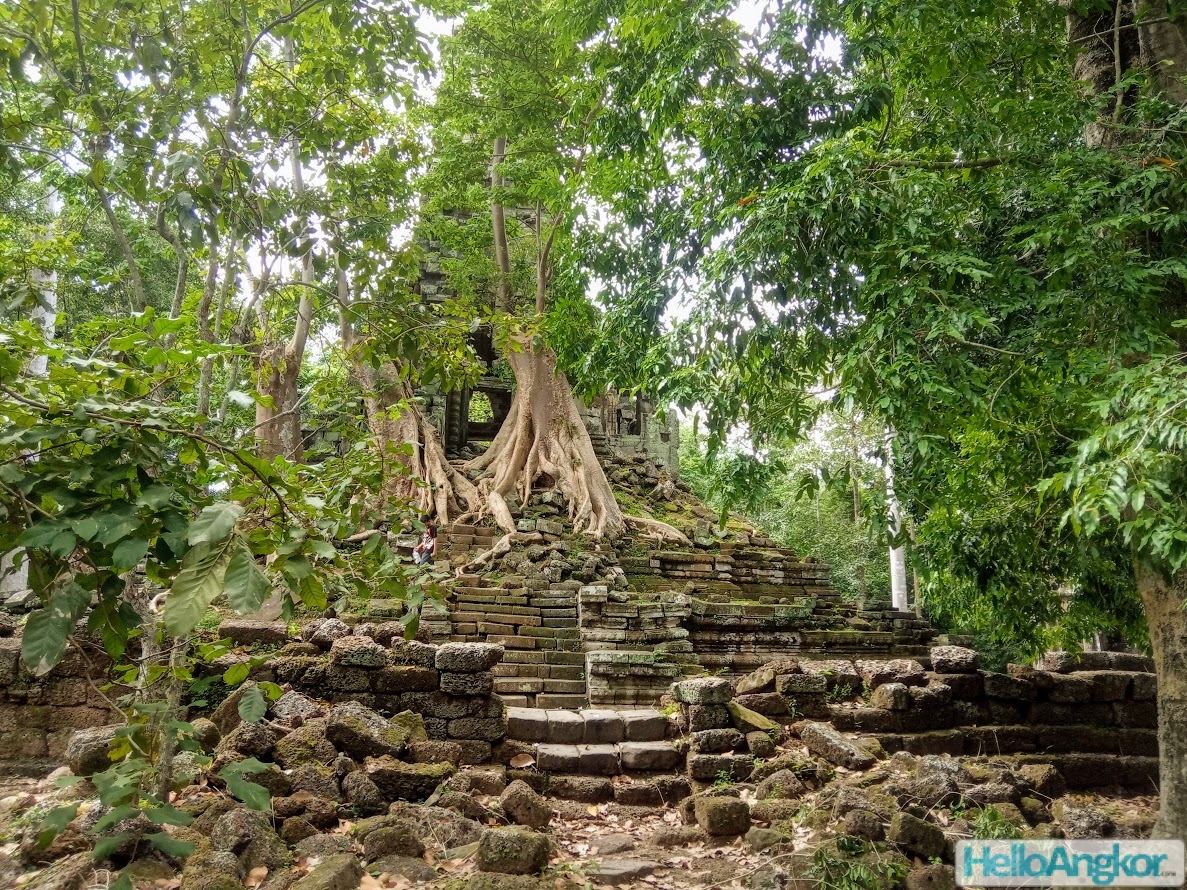
Preah Palilay (Khmer: ប្រាសាទព្រះបាលិលេយ្យ) is a small but fascinating ancient temple located in Angkor Thom, only a short walk to the north-west of Terrace of Leper King and Tep Pranam. The site’s contemporary name, Preah Palilay, has the meaning Sacred Forest of Palilay whilst the original site name is unknown. At its eastern entrance it … Read more
North Khleang – History & Highlights
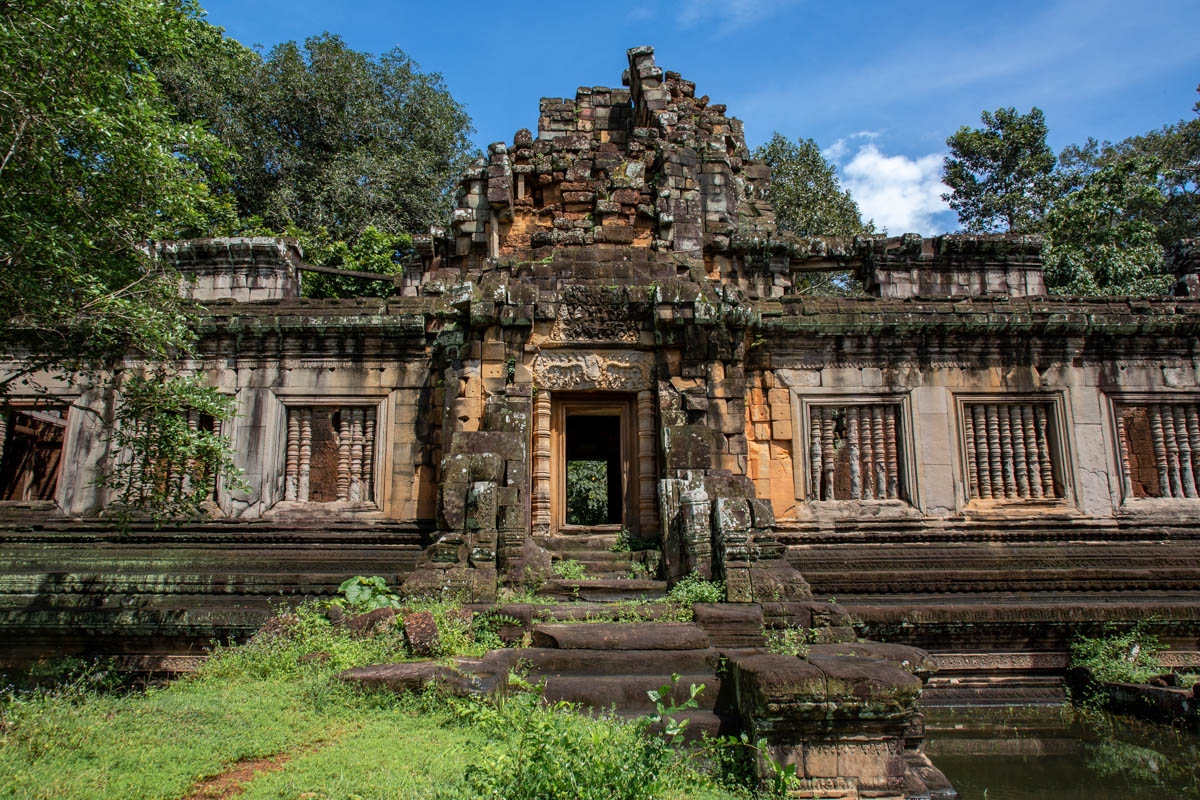
Located in Angkor Thom, north of the causeway that leads from Victory Gate to the Royal Palace, the North Khleang is a large sandstone structure configuring of long galleried halls enclosing a courtyard with a small shrine at its center. It is duplicated, almost identically by the South Khleang, all of which are fronted by … Read more
South Khleang – Highlights & History
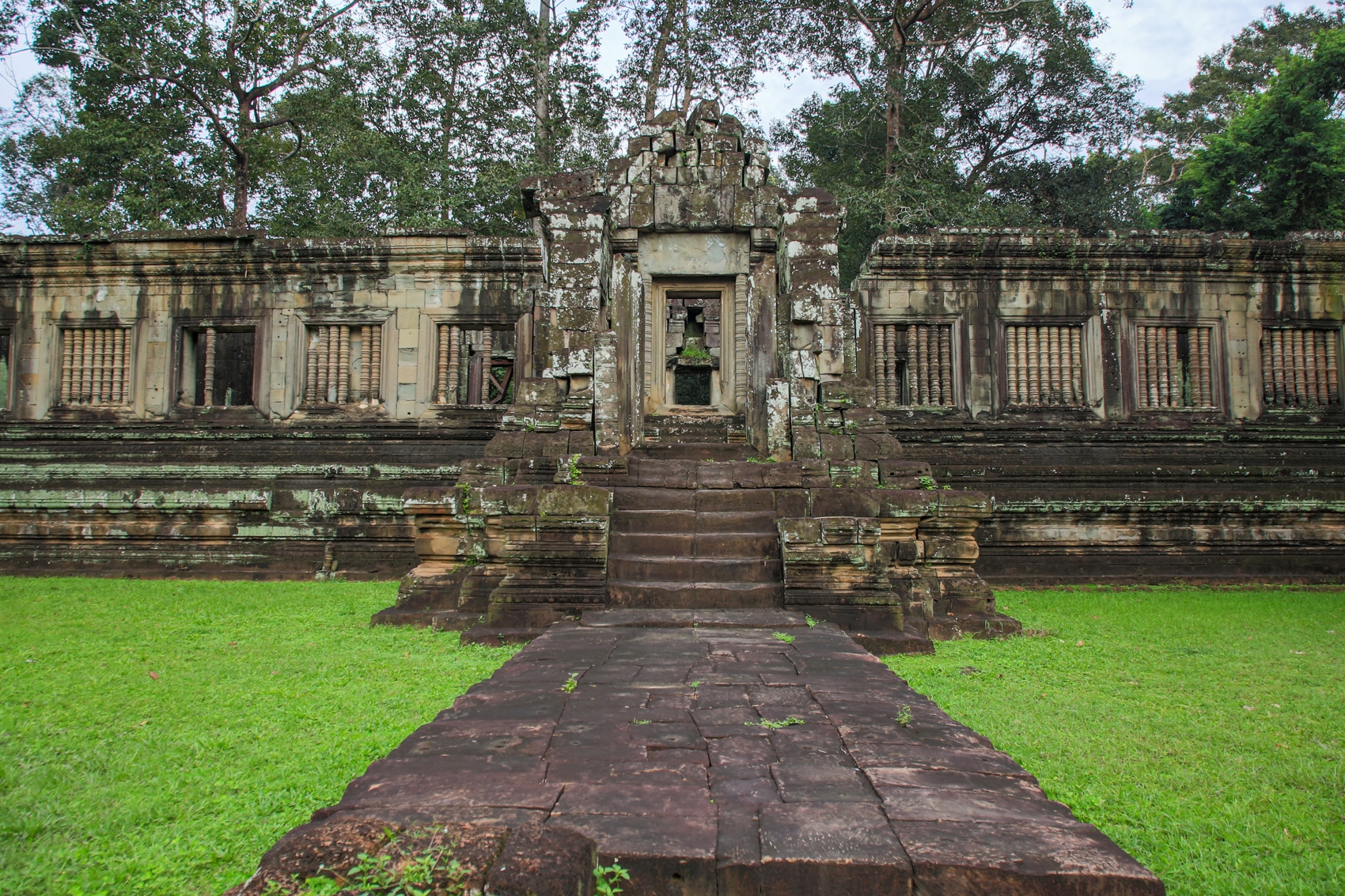
Located in Angkor Thom flanking the causeway that leads to the ancient Royal Palace from the Gate of Victory, the South Khleang is mirrored to its north by the North Khleang and fronted by the stunning towers collectively known as Sour Prat. Whilst it mirrors the North Khleang in location and style the two have … Read more
Preah Pithu T (Kor Sak Temple)
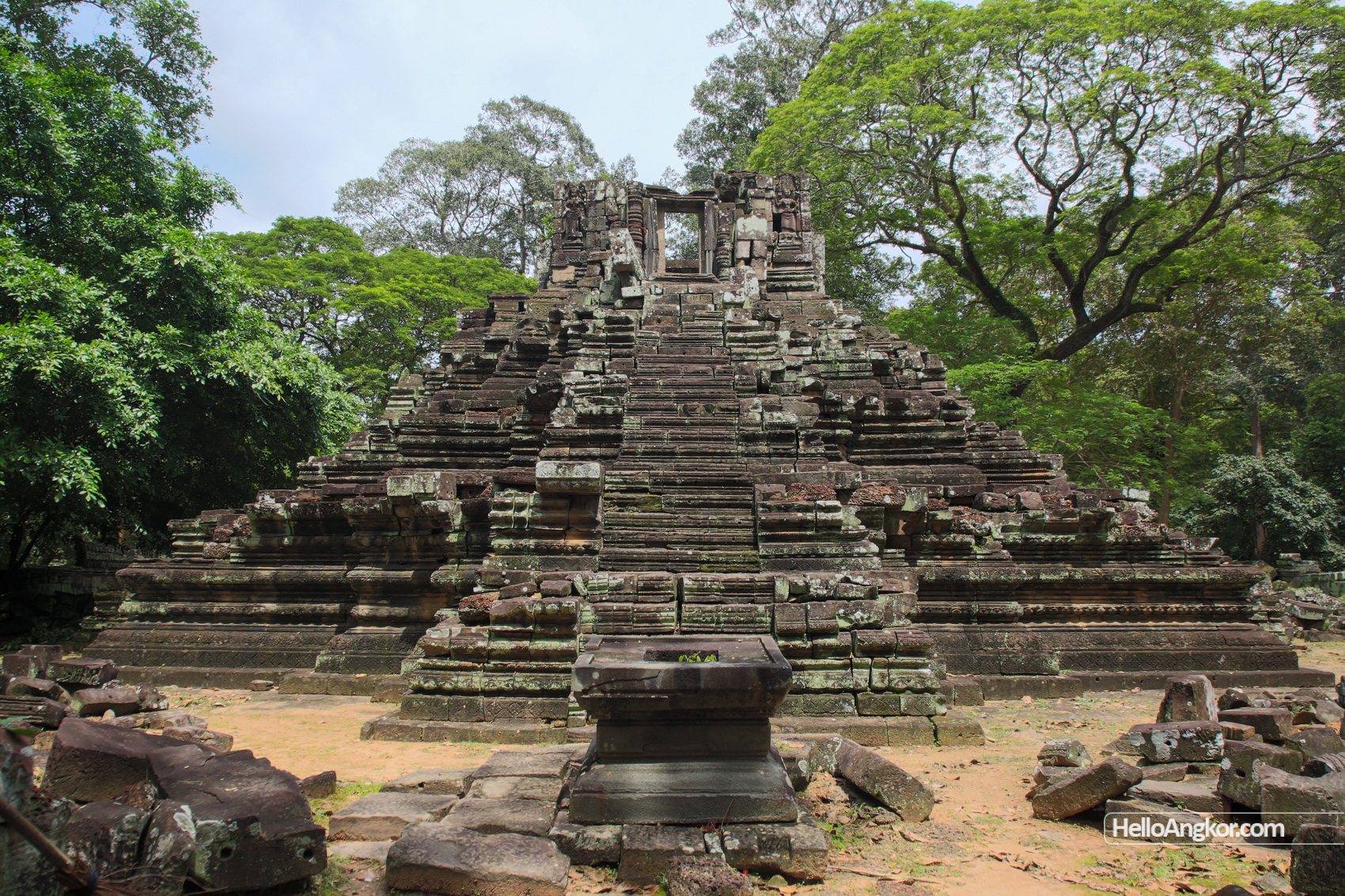
Kor Sak Temple, or Preah Pithu T, is located in Angkor Thom and is one of the five temples that make up what is known as Preah Pithu Group which are located to the northeast of the ancient Royal Palace. The ancient temple was originally dedicated to Vishnu, opening to the west with a large … Read more
Chorm Temple (Preah Pithu U)
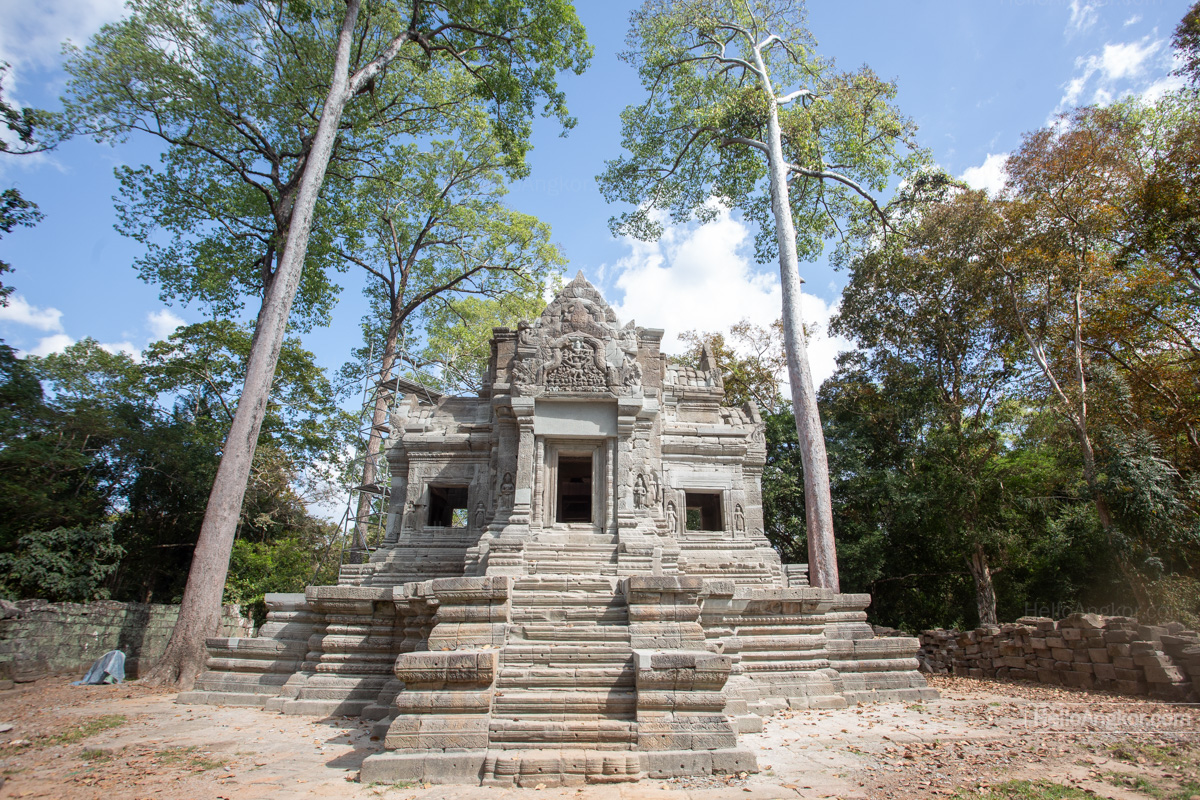
Prasat Chorm, or Preah Pithu U, or Chorm Temple, is a small sandstone temple, surrounded by a wall, and sharing an “island” created by an outer moat with Preah Pithu T (Kor Sak Temple). The outer wall, with entrances at each cardinal point, leads to the small cruciform shaped temple that rises up on a … Read more
Preah Ngok (Angkor Thom)
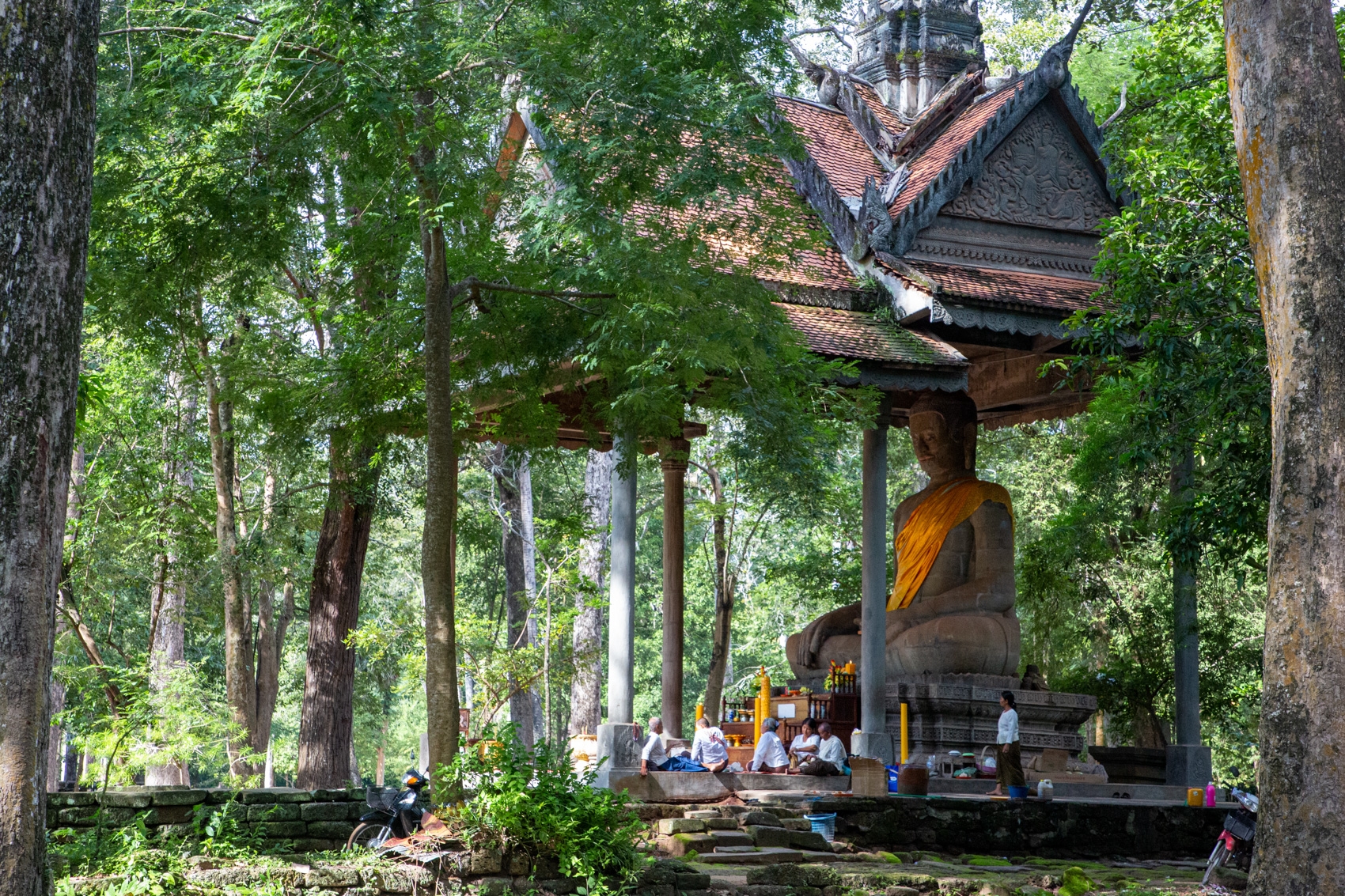
Located just north of Bayon and featuring a monumental Buddha statue, it’s one of the many Buddhist terraces attributed to the post-Angkor period created using recycled masonry from prior ancient sites. It is a simple but large terrace, formed by a platform of laterite blocks recorded as 90 meters by 24 meters that rises around … Read more
Preah Pithu X (Ta Tuot Temple)
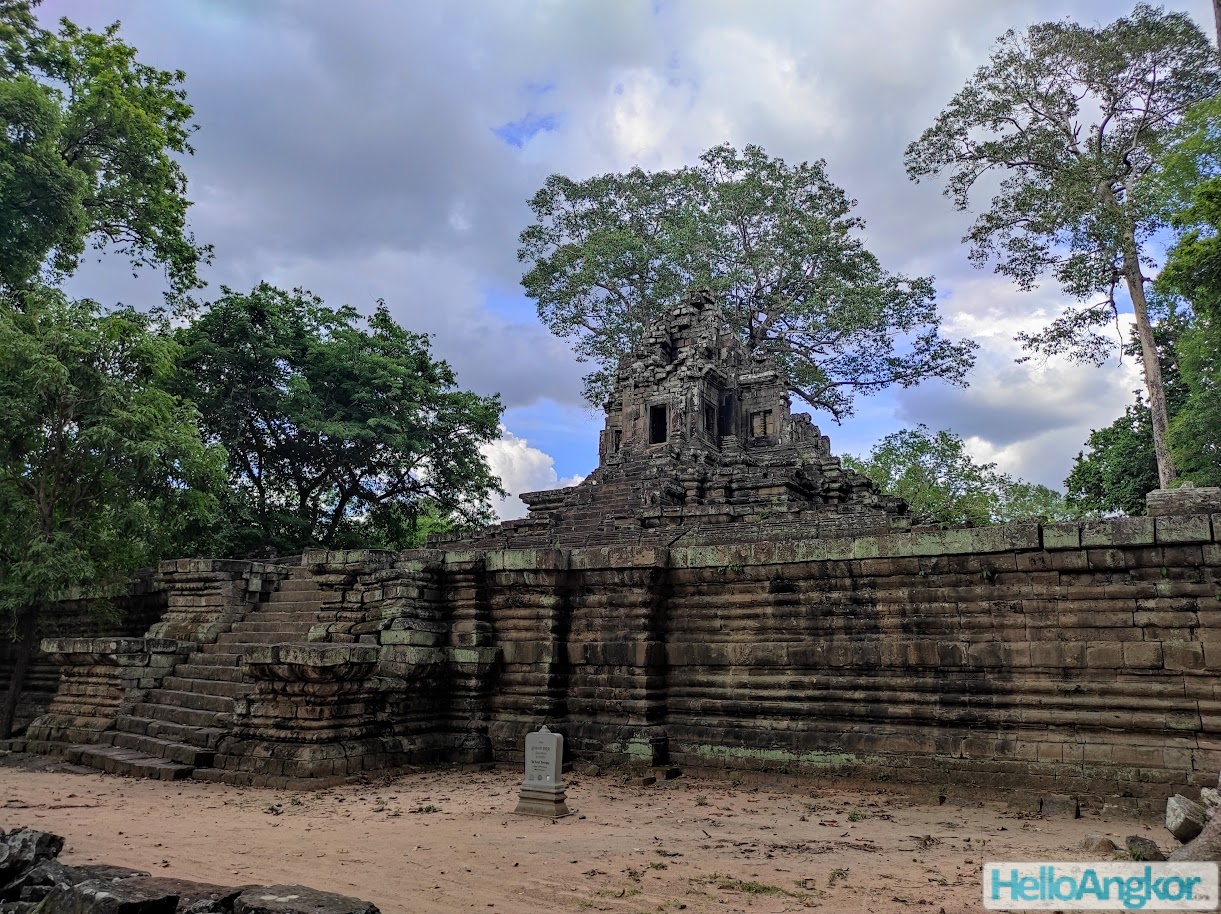
Differing from others in the Preah Pithu group, Ta Tuot is a Buddhist Temple converted from an earlier Hindu temple sometime around the 14th century. It is a sandstone temple atop a large and tall platform atop of which is a stepped pyramid-style base with four stairways leading to the central shrine also with entrances … Read more
Preah Pithu V (Duan Mea Temple)
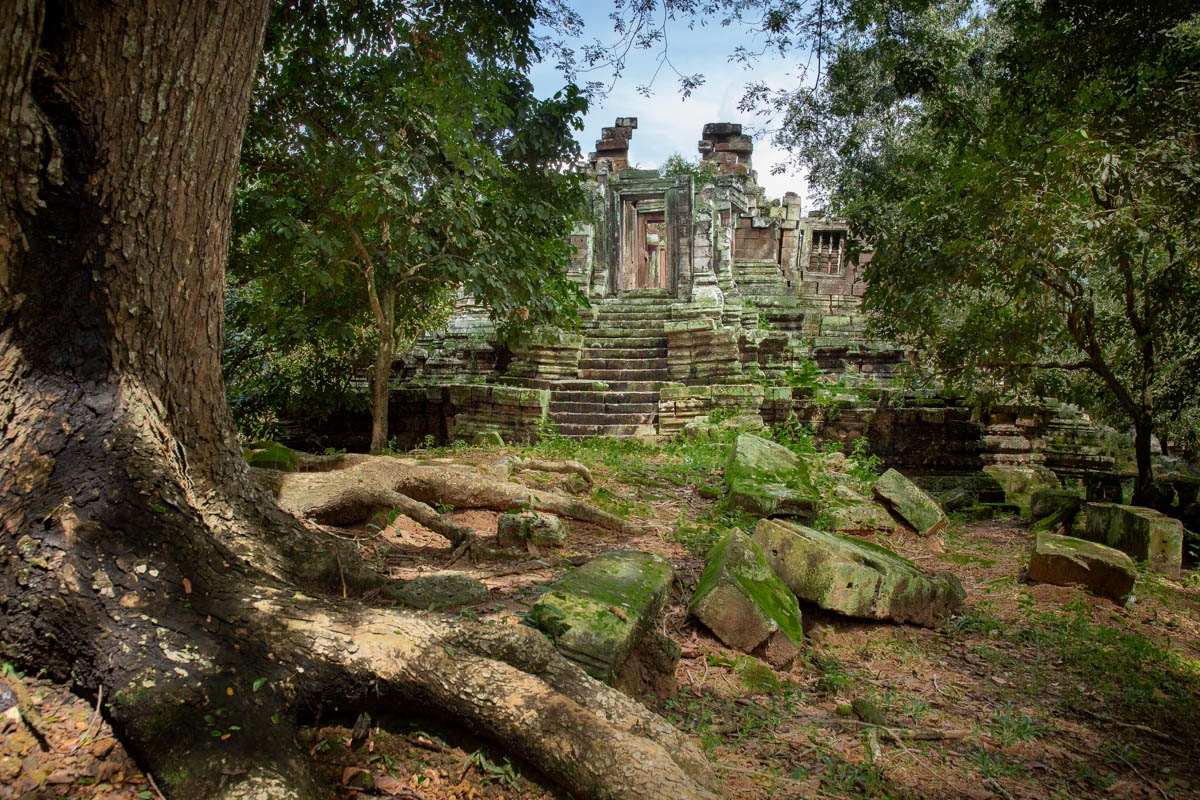
Preah Pithu V, or Duan Mea Temple, is an early 12th Century Hindu temple located in Angkor Thom. It is part of what is known as the Preah Pithu Group which references five temples that are clustered together, although, not necessarily constructed at the same time. The site does not feature a foundation inscription and … Read more
Preah Pithu Y (Kandork Yeak Temple)
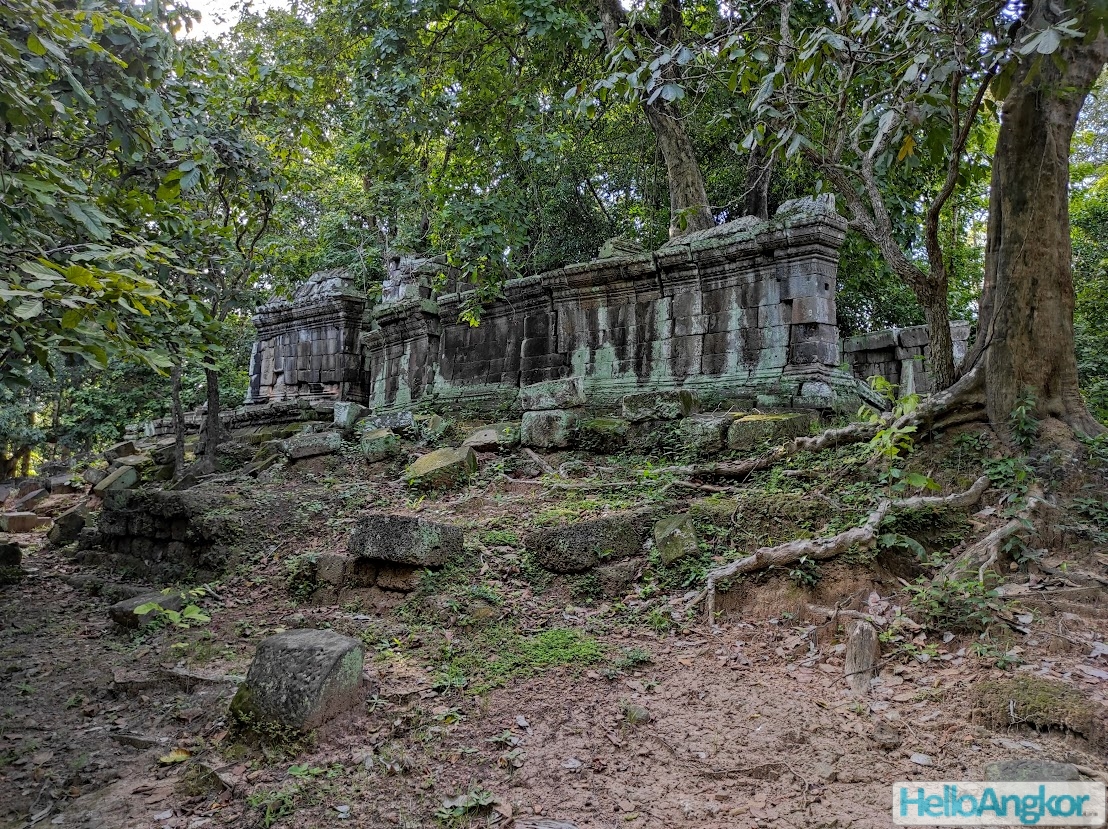
Preah Pithu Y, or Kandork Yeak Temple, is a 12th-century sandstone temple located in Angkor Thom. It was originally dedicated to Vishnu. It is one of the five temples in the Preah Pithu Group and differs greatly from the other four in many ways. Similar though is the fact that it sits atop a large … Read more
Western Prasat Top (Monument 486)
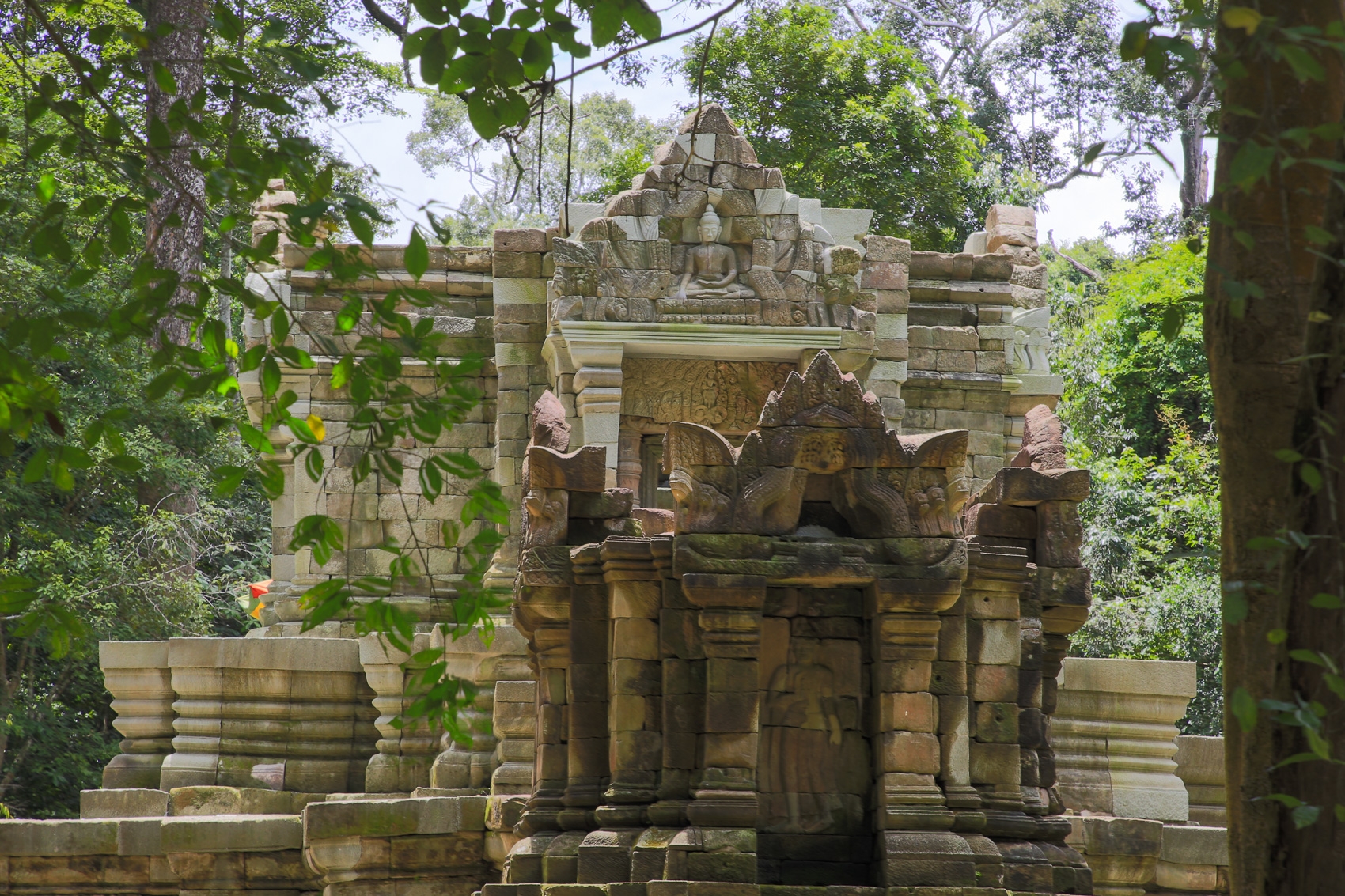
Located inside Angkor Thom along the route from Bayon to the West Gate (Ta Kev) it is also known as Western Top Temple, Monument 486 or West Tob. The site is recorded officially as dating to the 10th century, although a 9th-century inscription was found with the site receiving alterations taking place from the 13th … Read more
Mangalartha (Monument 487)
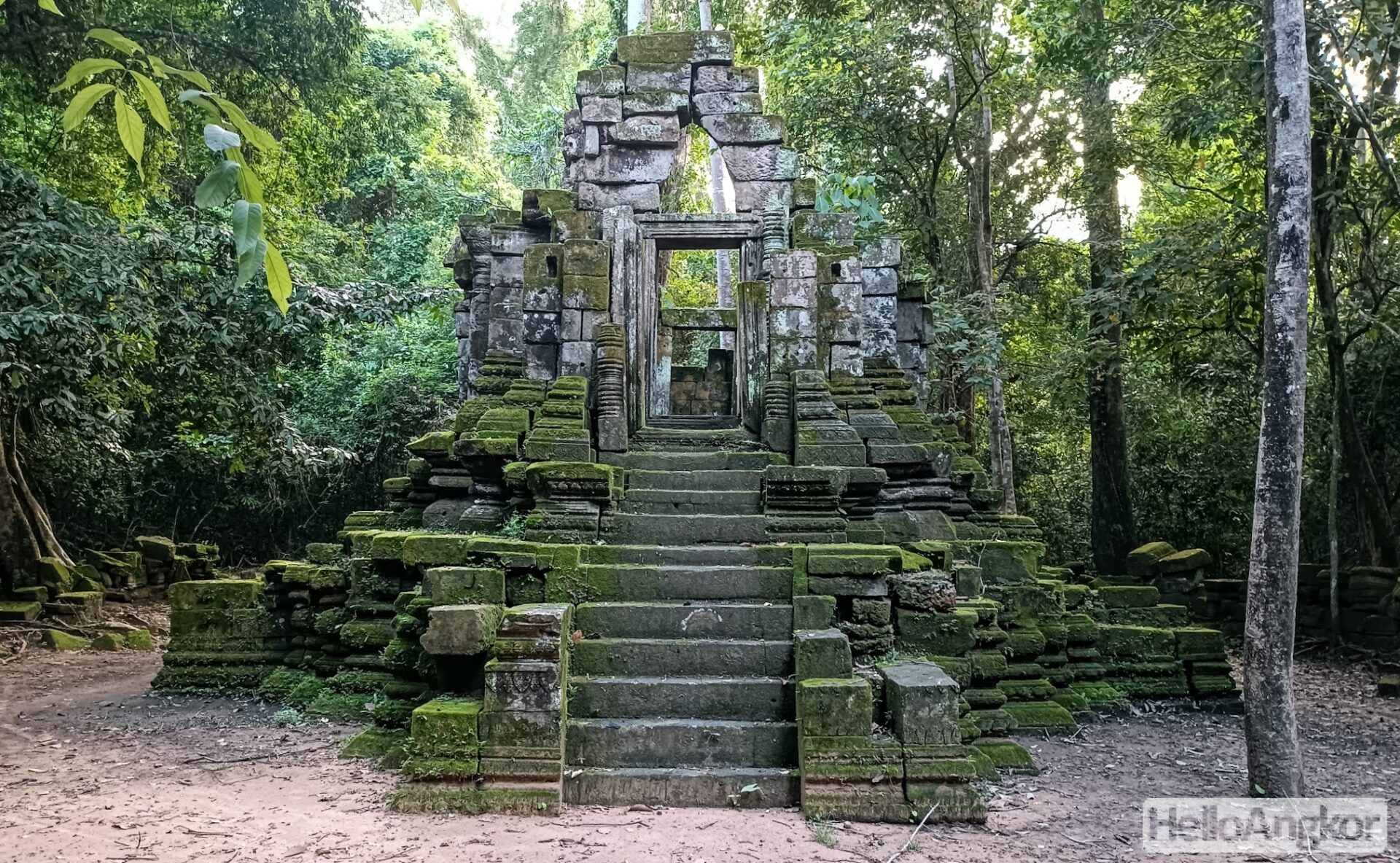
Also known as Prasat Mangalartha and Eastern Top Temple, it is located inside Angkor Thom down a narrow dirt track that comes off the road leading to Victory Gate. It is one of the last significant Hindu temples, if not the very last built in Angkor (or at least the last dedicated), and while being … Read more
Spean Thma
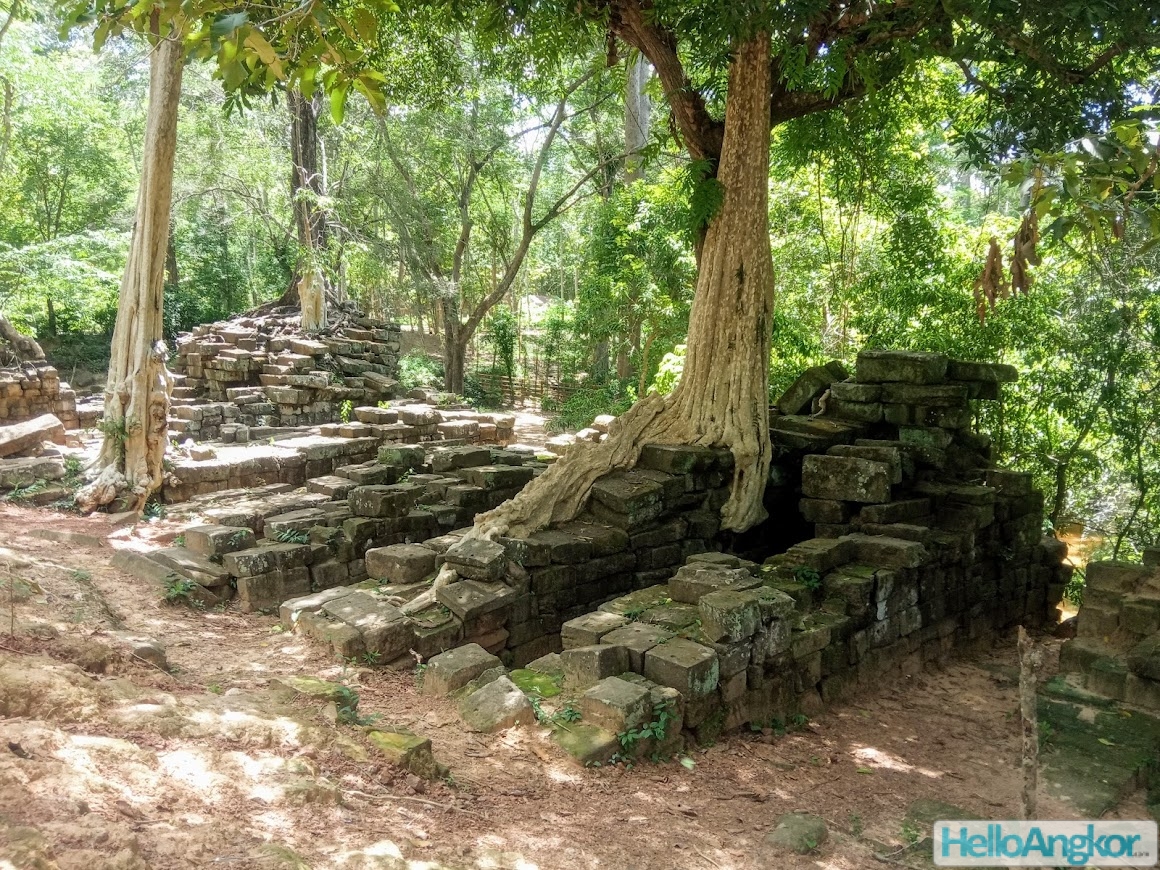
Known as Spean Thmor, or Spean Thma (Khmer: ស្ពានថ្ម) in Angkor Archeological Park is an ancient sandstone bridge located west of Ta Keo. It was built on the former path of the Siem Reap River between Angkor Thom and the Eastern Baray and it was rebuilt/constructed sometime between the 13-17th century, officially recorded as the 17th … Read more
Preah Vihear Pram Pi Lven
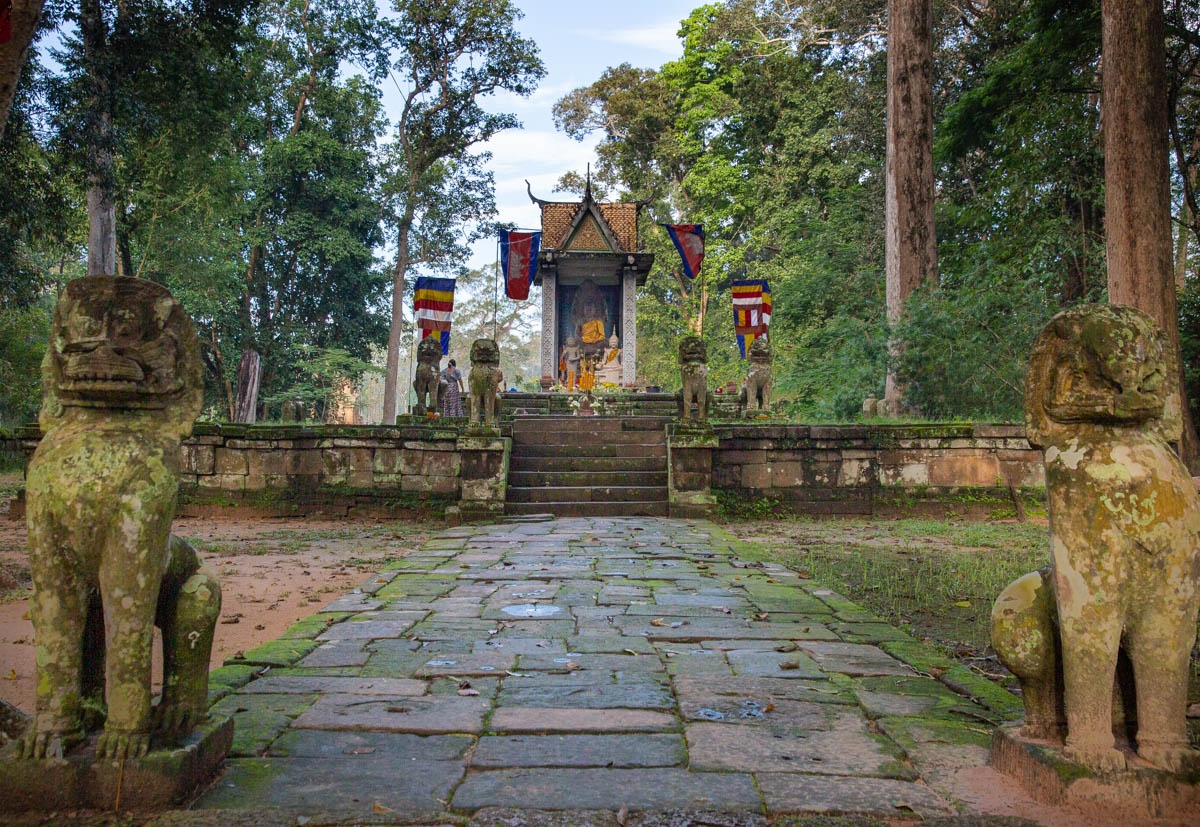
Located east of the Royal Palace in Angkor Thom, just off the road that leads to Victory gate, it is the best preserved of Angkor Thom’s Buddhist Terraces. As a brief intro, and there is more here including links to new research, there are over 70 of these terraces and structures within the Angkor Thom … Read more
Chau Say Tevoda Temple – History & Highlights
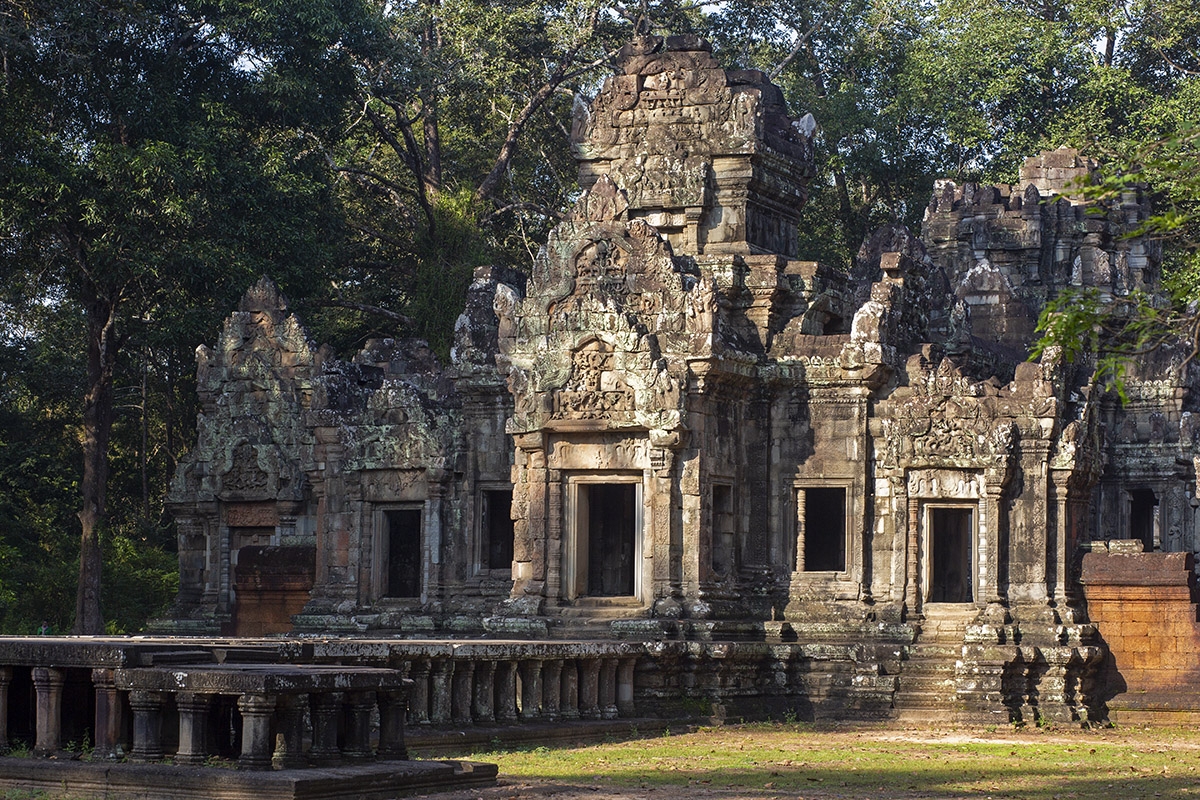
Chau Say Tevoda (Khmer: ប្រាសាទចៅសាយទេវតា) is a temple at Angkor Archeological Park, Siem Reap Cambodia. It is located just east of Angkor Thom before the Victory Gate and directly opposite Thommanon Temple. Chau Say Tevoda is often overlooked on a tour of the temples which is a shame, as it is, in my mind at least, … Read more
Thommanon Temple
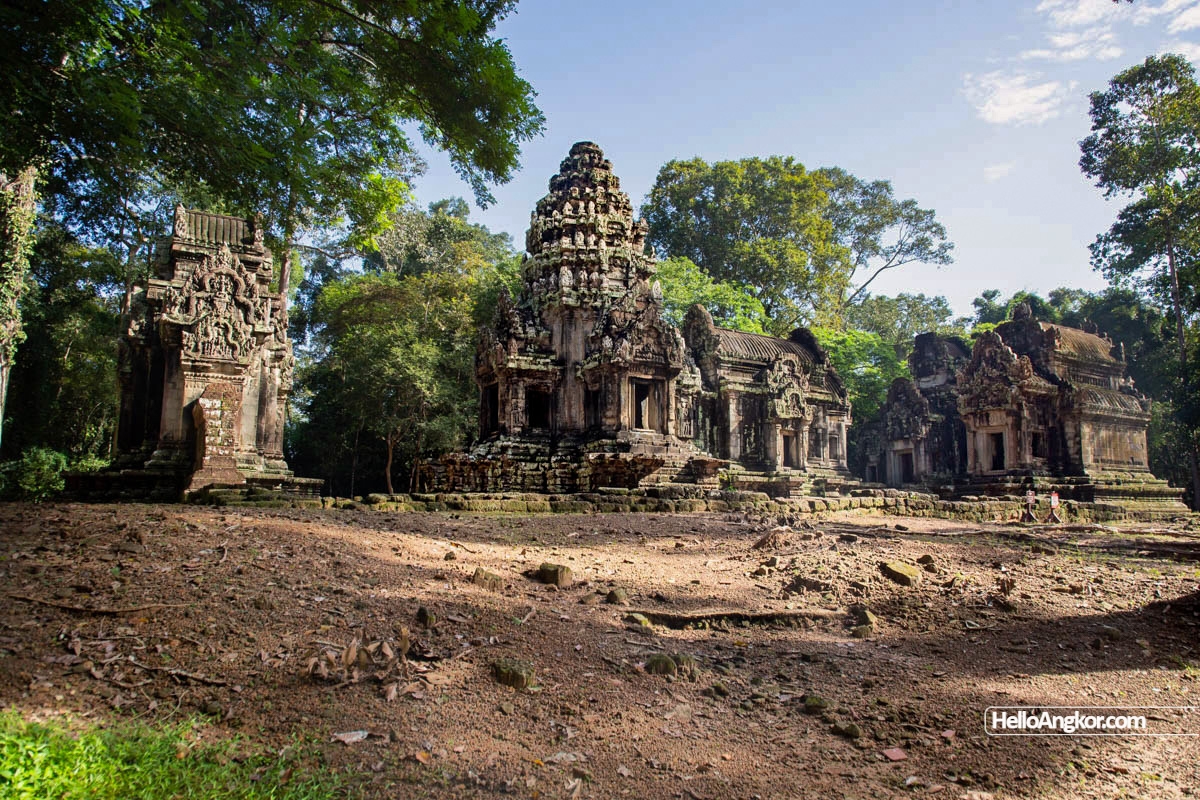
Thommanon Temple is a small but very ornate temple featuring beautiful bas-relief pediments located east of the Victory Gate of Angkor Thom and north of Chau Say Tevoda. Although no foundation inscription was found, it is dated by art style to the late 11th or early 12th century and generally attributed to the reign of … Read more
Leak Neang – Hospital Chapel
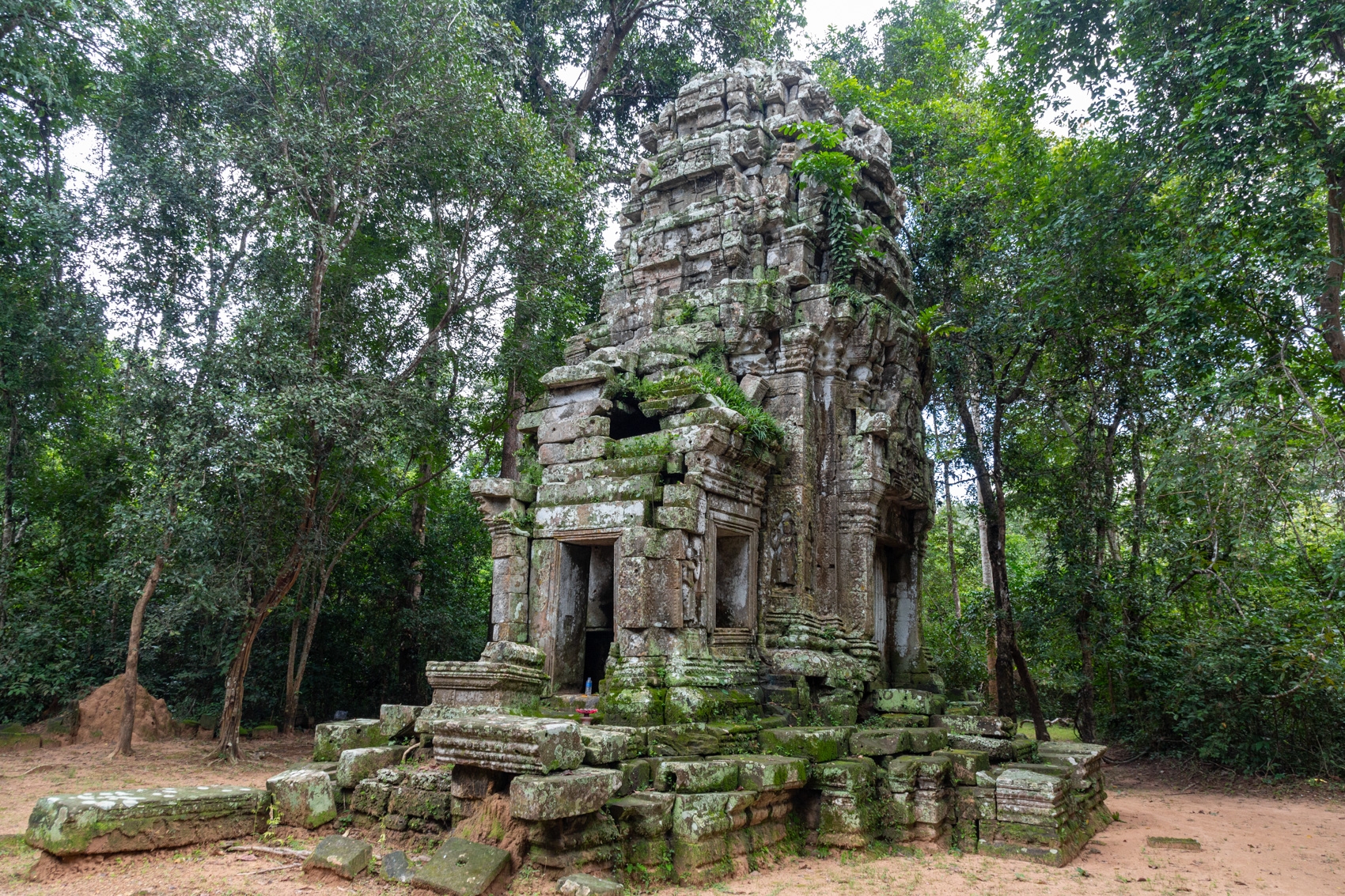
Located west of Ta Keo temple, it is one of the many ‘hospital chapels’ built during the reign of King Jayavarman VII. The site layout is typical of that construction type featuring a single sandstone temple with a false story superstructure, a hall/mandapa extending east, and then, enclosed by an outer wall with entrance gopura. … Read more
Ta Keo Temple
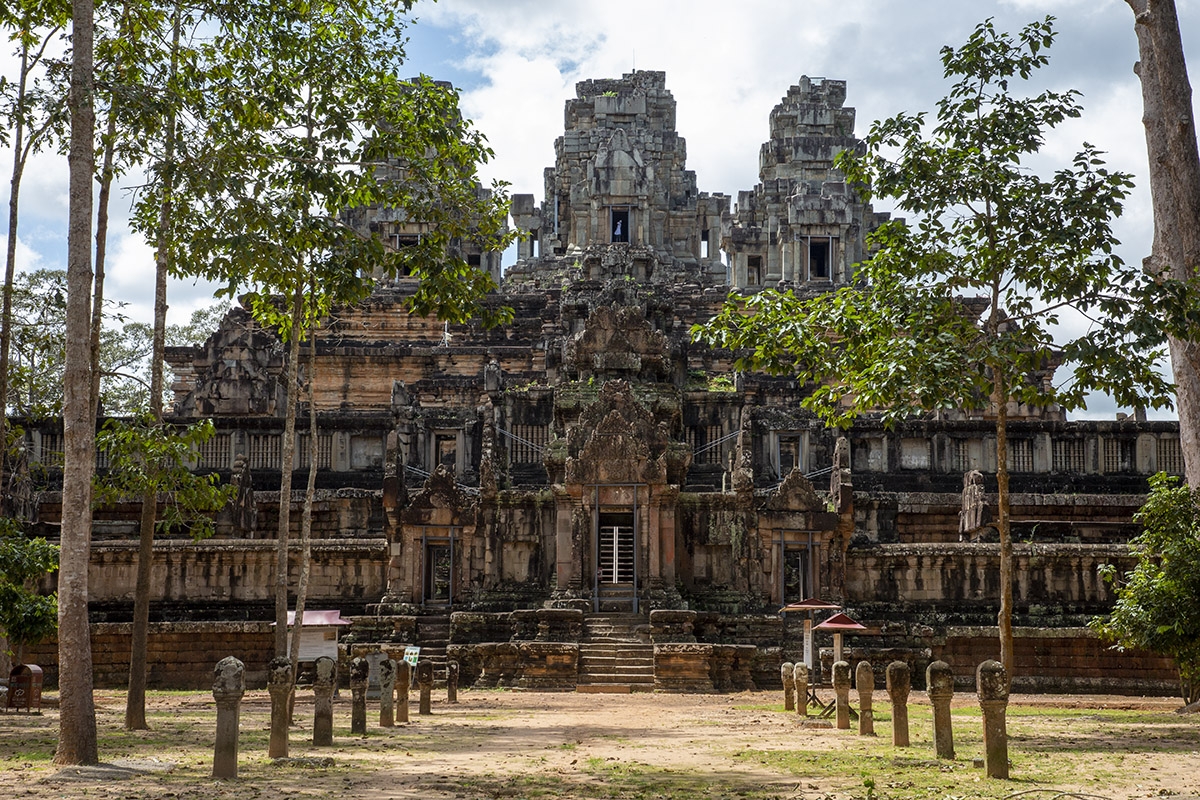
Prasat Ta Keo is another grand example of the ancient Khmer concept of the “temple mountain” featuring a monumental stepped-pyramid base topped with five massive towers. Located east of Angkor Thom, north of Angkor Wat, and on the west side of the East Baray, it is dated to the 11th century. Visiting Ta Keo Temple … Read more
Ta Prohm Temple – Layout, History, Visiting Guide and More
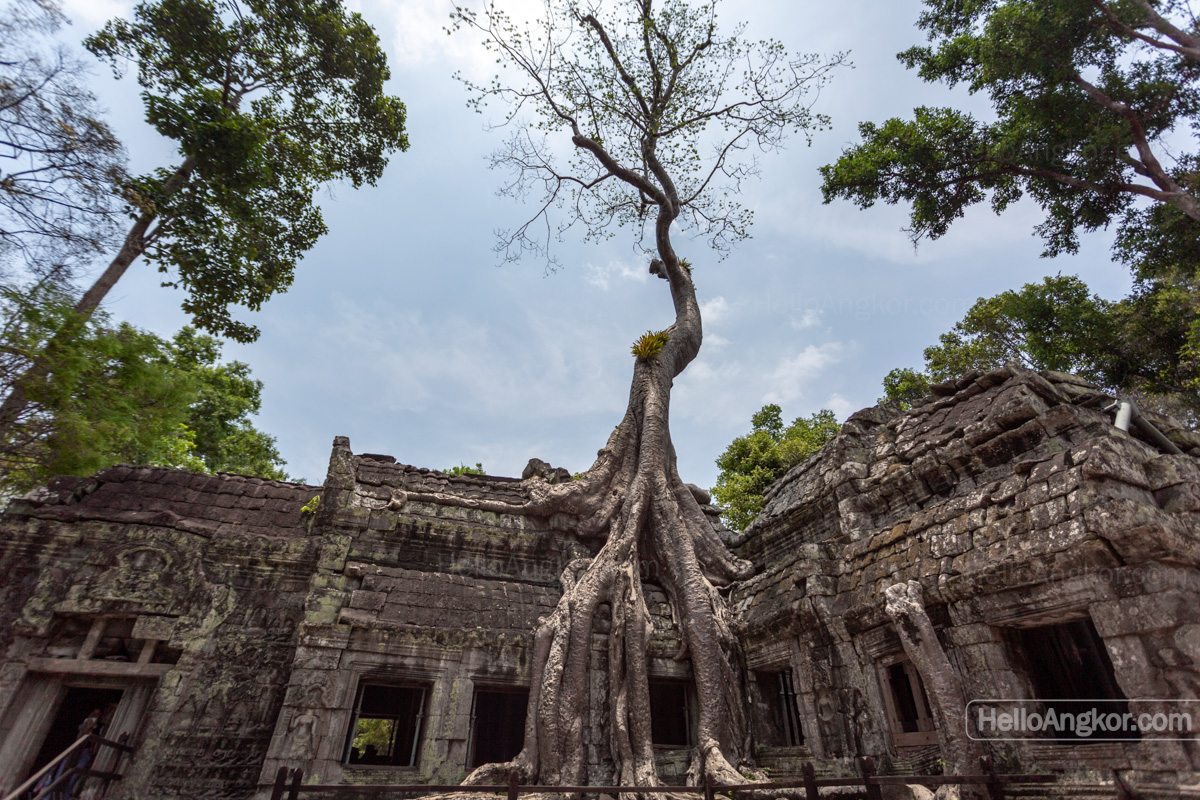
Ta Prohm temple is located 3 km northeast of Angkor Wat, and around 12 km northeast of Siem Reap city. It is an ancient Buddhist monastic complex that was constructed in 1186 AD under the reign of the Khmer King, Jayavarman VII, and is popularly known in modern culture as the “Tomb Raider Temple”. The … Read more
Banteay Kdei Temple
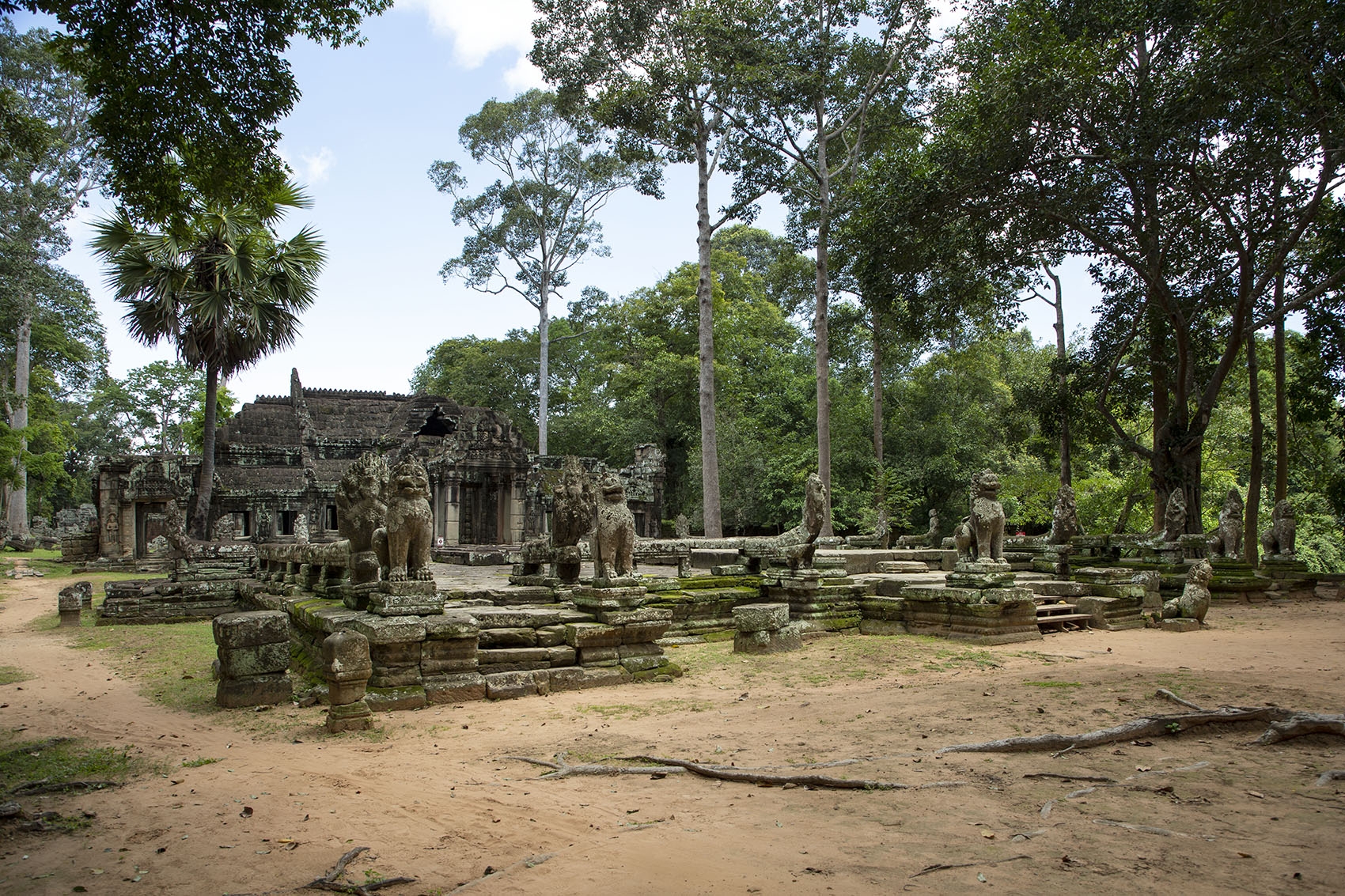
Banteay Kdei Temple is a charming ancient temple located opposite the grand basin of Srah Srang to which it was once connected. Built in the mid-12th to early 13th centuries during the reign of King Jayavarman VII, it is in the Bayon architectural style, with a flat layout plan similar to the nearby Ta Prohm … Read more
Srah Srang & Kandal Srah Srang
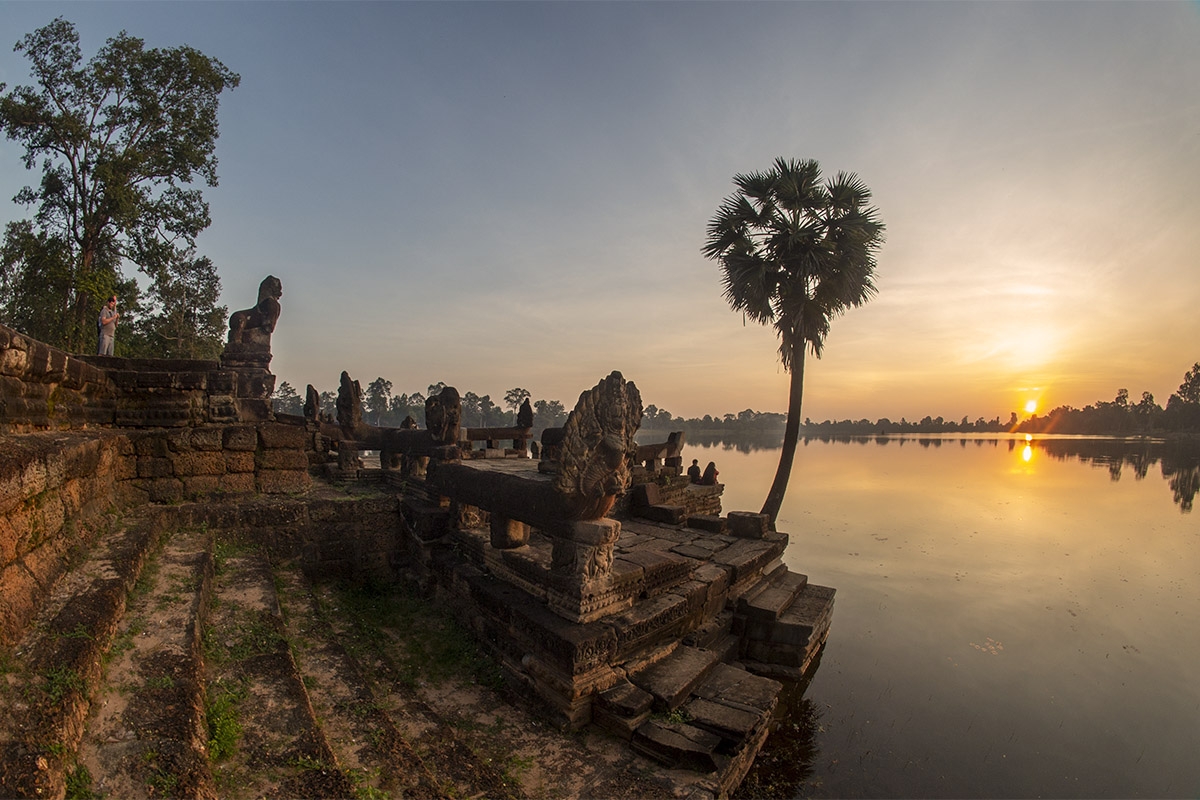
Srah Srang (Khmer: ស្រះស្រង់) is a reservoir at Angkor, Cambodia, located south of the East Baray and east of Banteay Kdei. Srah Srang measures 700 by 350 m, lined by laterite blocks capped with sandstone featuring a landing stage/terrace on its western side and an island temple at its center. It is cruciform, flanked by … Read more
Kravan Temple – History & Highlights
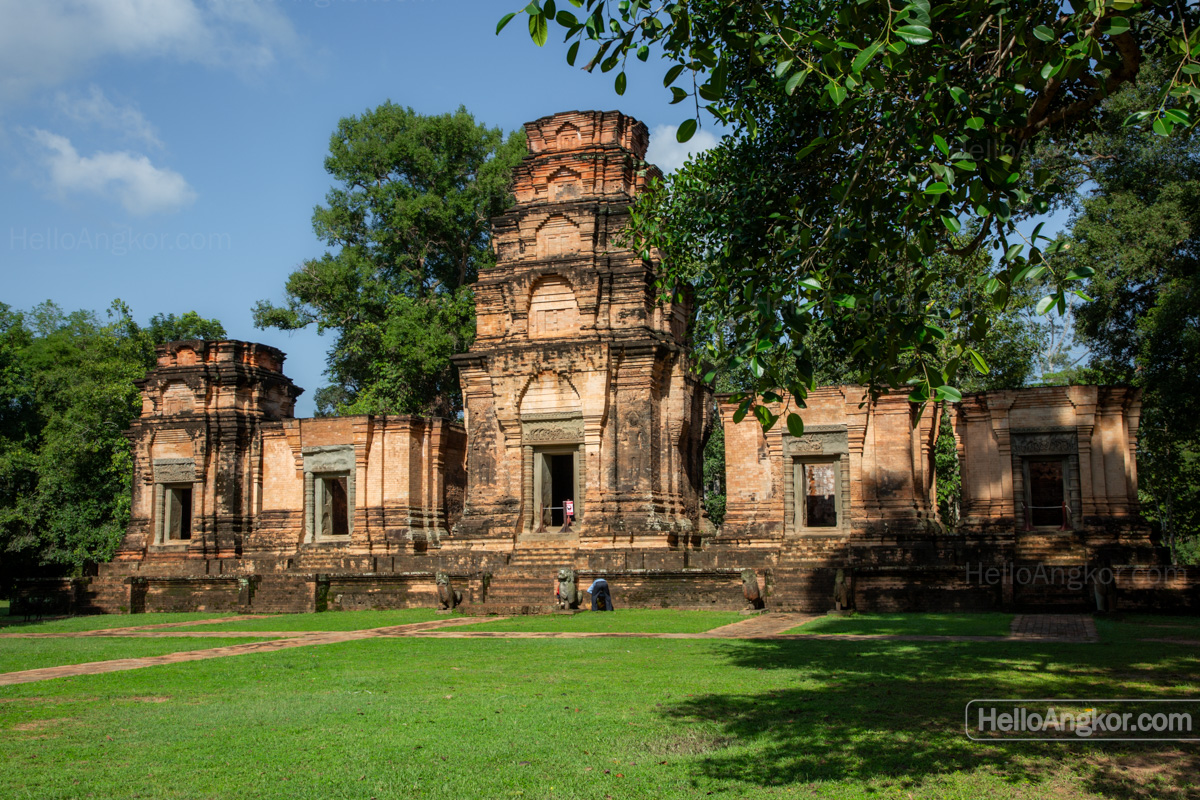
Prasat Kravan (Khmer: ប្រាសាទក្រវាន់) is a 10th-century temple constructed in the era of Harshavarman I (reign circa 910-922 AD) consisting of five brick towers. The temple was dedicated to Vishnu in 921 AD, according to the inscription. It’s a site that is often skipped, which is a shame, as the style of bas-relief carvings here … Read more