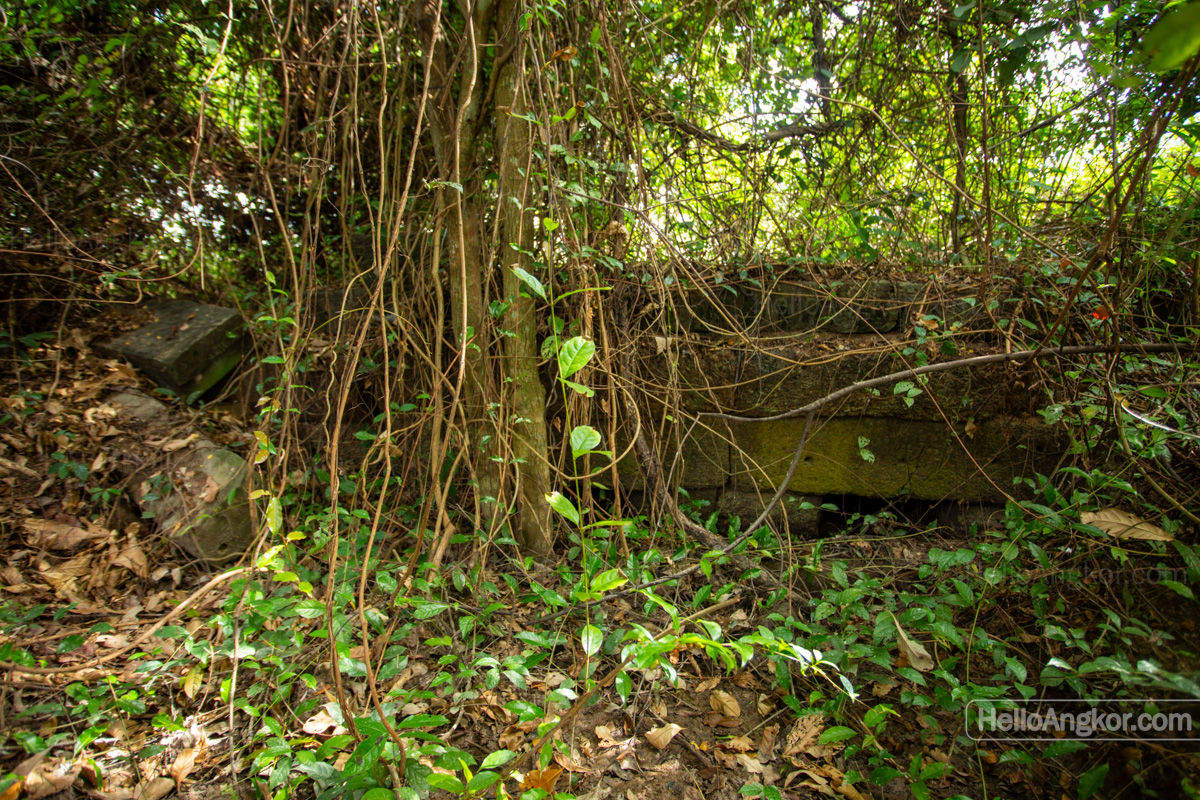
East Baray Stele (SW)
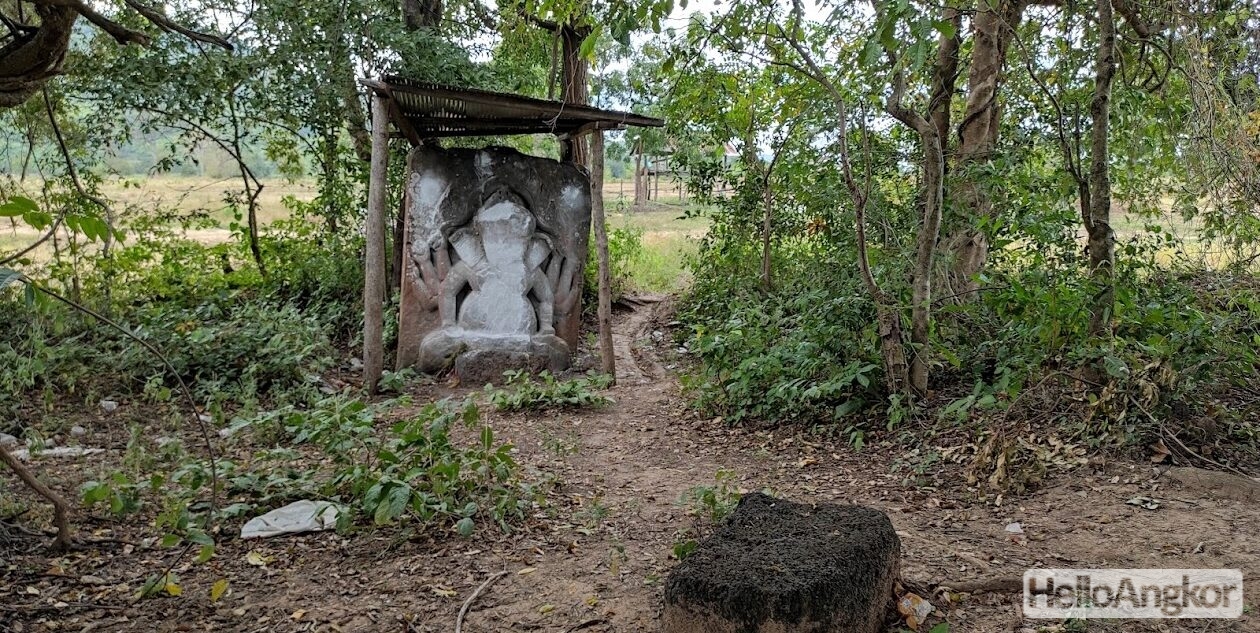
A laterite shelter that once housed an inscribed stele. The inscription is registered under K. 283.
A laterite shelter that housed a stele relating to the East Baray. What remains today is one laterite frame. The inscription from the stele is registered under K.281
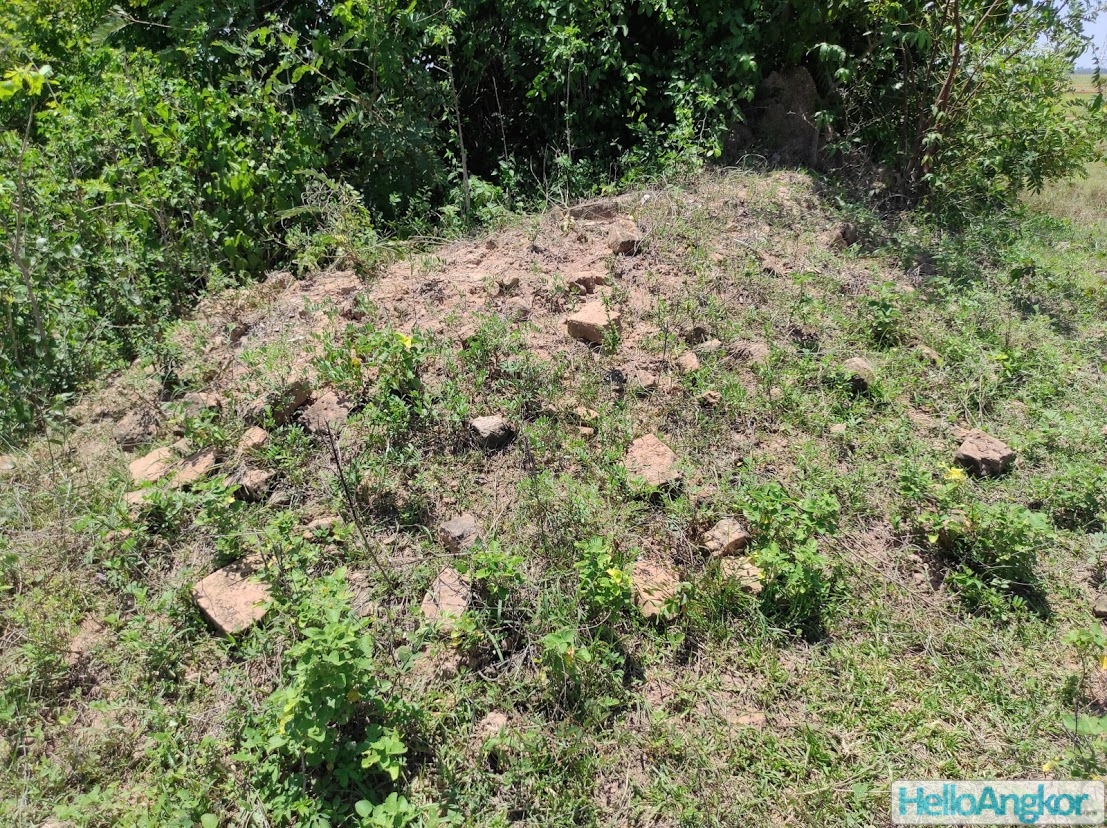
Scant remains of a laterite and sandstone terrace that are close by and may be related to this terrace.
Phimeanakas (Khmer: ប្រាសាទភិមានអាកាស) is another of the grand pyramid-based state-temples that was the common archetype of the 8-11th century. Located inside the ancient Royal Palace of Angkor Thom, it is a grand three-tiered pyramid with a rectangular base whose corners are mounted with stone elephants and staircases flanked by lions which lead up to a … Read more
A group of at least three ruinous brick temples that are partially standing. It appears to have featured an entry gopura on the east, an outer wall, and perhaps other structures which are hard to determine from the rubble that remains. Nearby is a kneeling elephant statue.
Located about 6.5km west of Kralanh and just south of the NR6, atop a small mountain, there are two shrines, one retaining fragments of an ancient temple recorded under the same name as the mountain, Phnom Lieb. Interestingly, one of the colonette fragments appears to be from around the 8th century while another appears to … Read more
Also known as Prasat Phnom Preah Tevakh, the ancient temple is located atop the low mountain with one tall tower built atop a stepped laterite base which also appears as it may have once led to stairs down the mountain on its easter side. The tower is constructed mostly of laterite although a lot of … Read more
Located west of Anlong Thom village and north of the main road, Peam Kre features two partially standing brick temples. They are aligned on a north-south axis and open to the east. One of the shrines rose up on a seemingly pyramidal base of decent proportions while the other sat a little lower making for … Read more
Also known as Kom Nob Temple (ប្រាសាទ ភ្នំកំណប់), it’s located atop a small mountain of the same name, Phnom Hap, that lies to the southwest of Phnom Kulen and south of Kbal Spean. At the base of the mountain, on its northeastern side, a Buddhist monastery (wat) provides access to the trail leading up to … Read more
Remnants of an ancient brick temple site. Location approximated.
Located in Svay Leu on the farming plains below Kulen Mountain, Prasat Ta Iem (on Google Maps as Prasat Ta Tiep and other notes as Sre Yem) features an outer moat, laterite walled enclosure with an entrance on the east leading to a single brick tower. The site is also recorded as Srae Yem and … Read more
Located near the southwestern corner of the baray of Preah Khan of Kampong Svay, the monumental four-sided Buddha stands some 10m tall. The site is held to date to around the late 12th to early 13th century although no foundation inscription has ever been recovered. Also recorded as Chaktomuk Temple/Prasat Chatumuk (Khmer: ប្រាសាទចតុមុខ), the site … Read more
The ancient site of Kbal Spean is a section of the river whose waters flow over the natural stone bedrock which has been abundantly sculpted, in particular with linga, but also with gods of the Hindu pantheon including Brahma, Shiva, Vishnu, Uma and other deities. The riverbed even features small basins whose walls were also … Read more
The Banteay site is an expansive area that is believed to be the royal palace of Jayavarman II (802–850 AD) in what is now known as once being the ancient capital, Mahendraparvata atop Phnom Kulen. While there are no visible remnants of the royal palace to be seen today bar some scattered brick debris, excavations … Read more
Located atop Phnom Kulen and southwest of the village of Anlong Thom, it’s also recorded as Poeng Tbal. A fascinating scenic site with natural rock massifs featuring ancient carvings all sitting at the edge of a natural gulley that is believed to have been developed into a reservoir during ancient times. The groups of rock … Read more
Rock carvings.