Lbeuk Temple
Remains of a brick temple

Remains of a brick temple
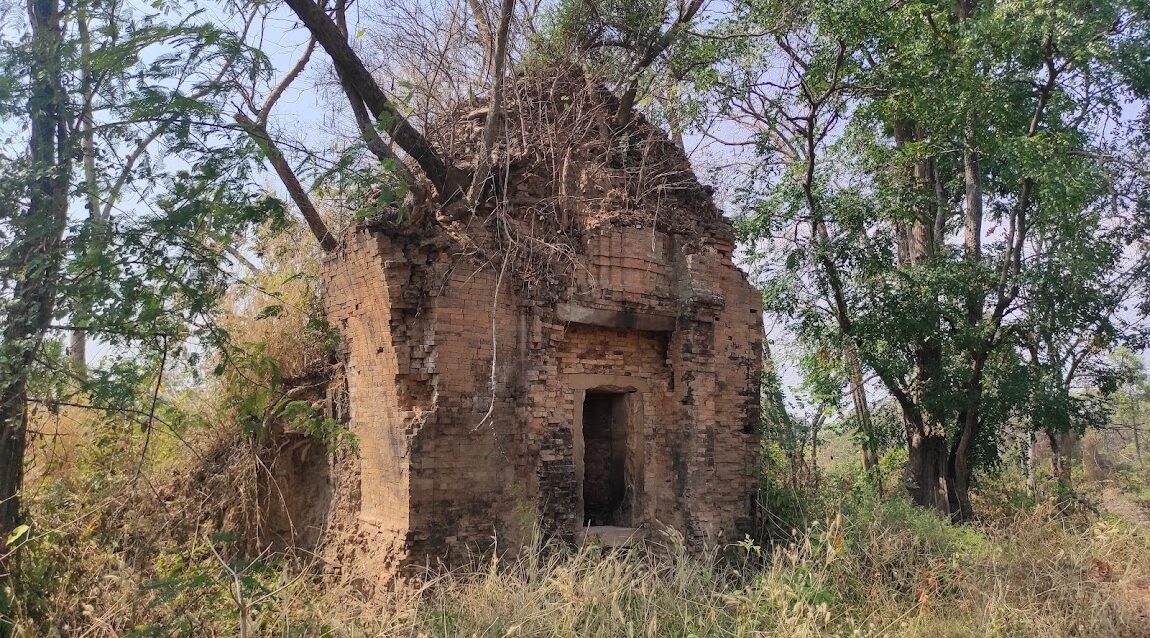
The partially standing remains of a single brick temple. Whilst not much is left, it’s still intriguing. Only the front eastern wall and part of the north and south wall remain. It would have likely had a forebody extending its eastern entrance with some remnants seen. The forebody would have had a raised floor or … Read more
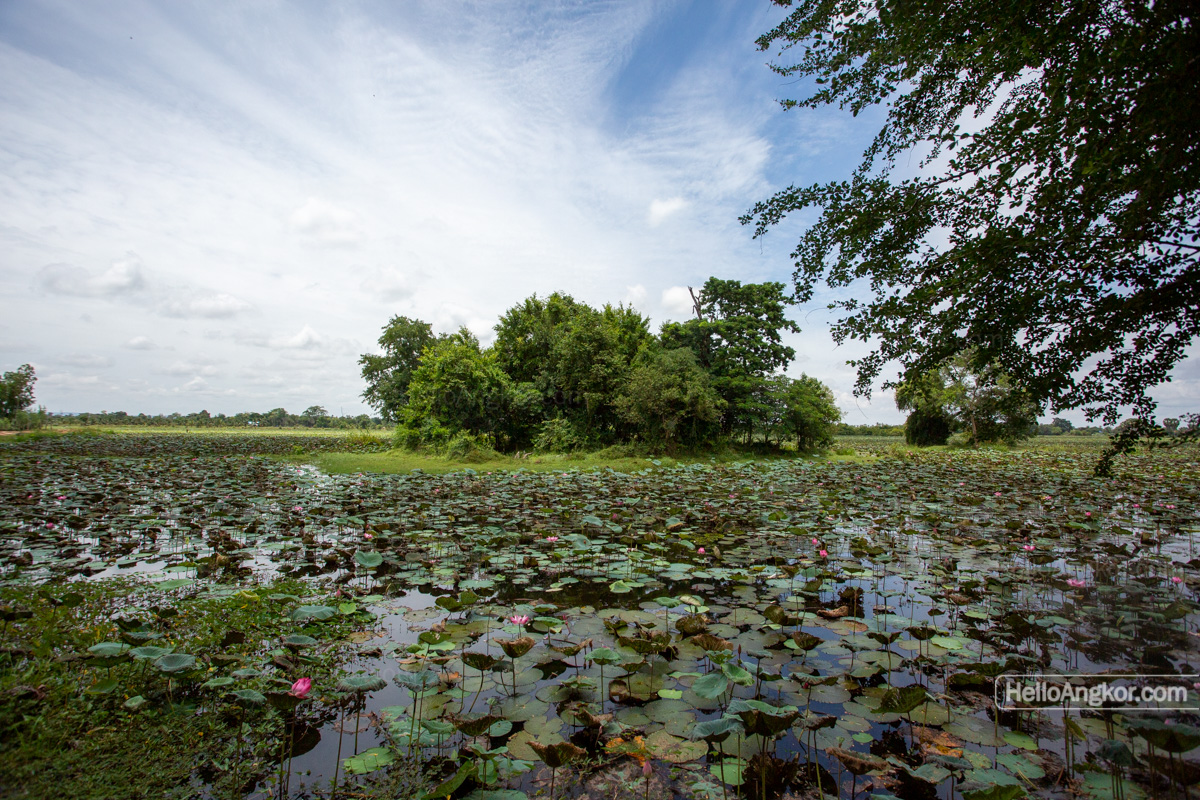
Also recorded as Prasat Sing. Engulfed by the waters of its own basin, on our visit in Aug 2024, a local suggested to come back in the dry season. Nearby is small community hall which retains a sandstone pedestal from the site. Historical Notes Translated from French. From Inventaire descriptif Monuments du Cambodge, E. Lajonquiere, … Read more
Brick temple, standing?
Remains of a brick temple
Remains of a brick temple
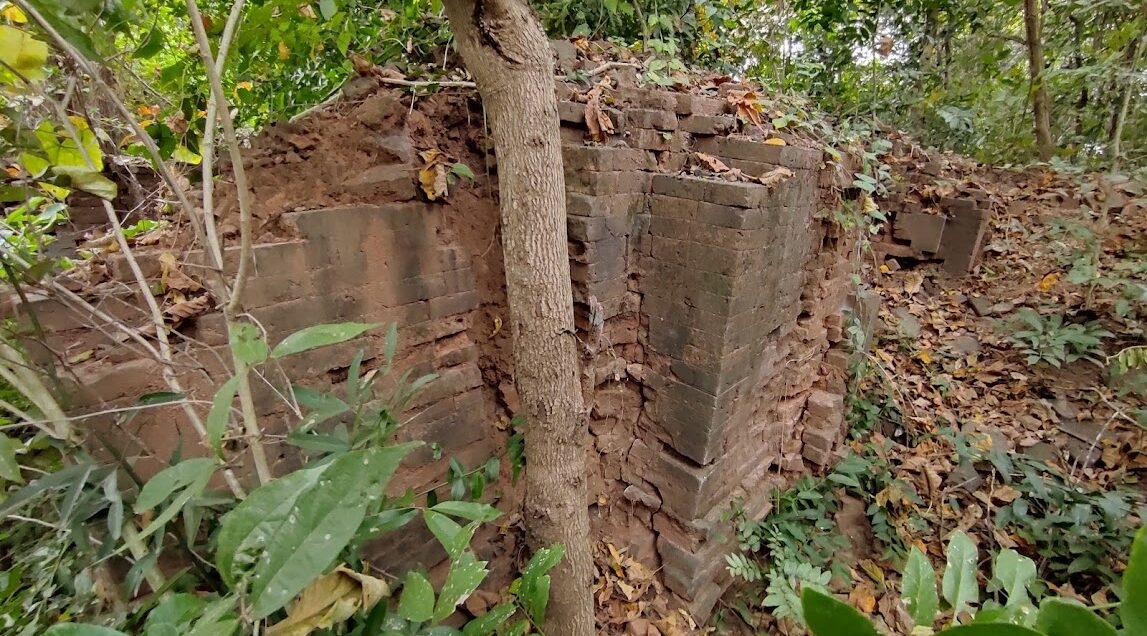
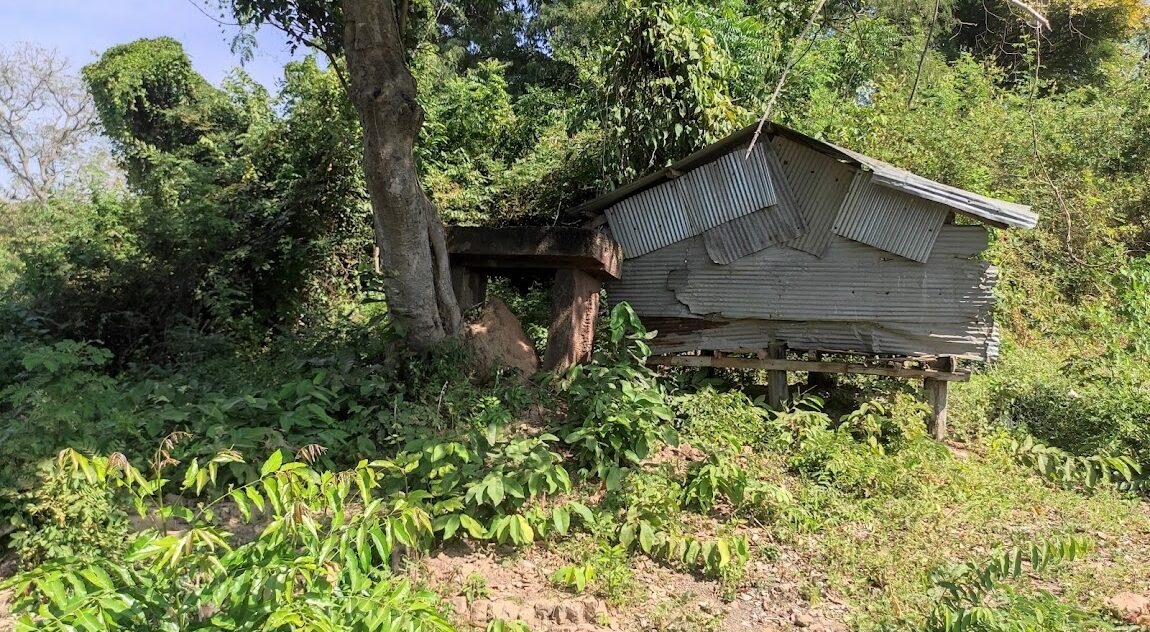
Remains of two unusually large brick temples, in terms of width anyway as they have mostly fallen with only the very lower portion of the temple remaining standing. They both appear to open to the east although no remains of a sandstone doorframe are seen. Fronting the site is a small collapsed shelter under which … Read more
Remains of a brick temple, with outer enclosure wall, moat, and basin in the east.
According to French notes, originally a group of three brick towers and two library buildings were surrounded by an outer enclosure wall with an entrance gopura on the east and a false entrance on the west. At the site today, the moat still fills during the rainy season and during the dry season revealing further … Read more
Location of a brick temple where fragments were found, surrounded by a moat with basin in the east

A small temple site consisting of what once was a group of three small brick towers fronted by two laterite/sandstone libraries. Today the brick structures have completely collapsed and only some standing remnants of sandstone false doors and door frames remain standing. The two library or satellite buildings are standing (just) with the one on … Read more
Remains of an ancient temple site
Remains of an ancient temple site. Location approximate
Remains of an ancient brick temple site

Located northeast of Battambang city and sometimes referred to as Prasat Baset/Basaet, Baset Temple, or Prasat Barsaet, it’s the ruins of a large and grandiose ancient temple complex estimated around 400 m x 150 m centering on a large central temple surrounded by six small temples with two libraries. It’s believed to date to the … Read more
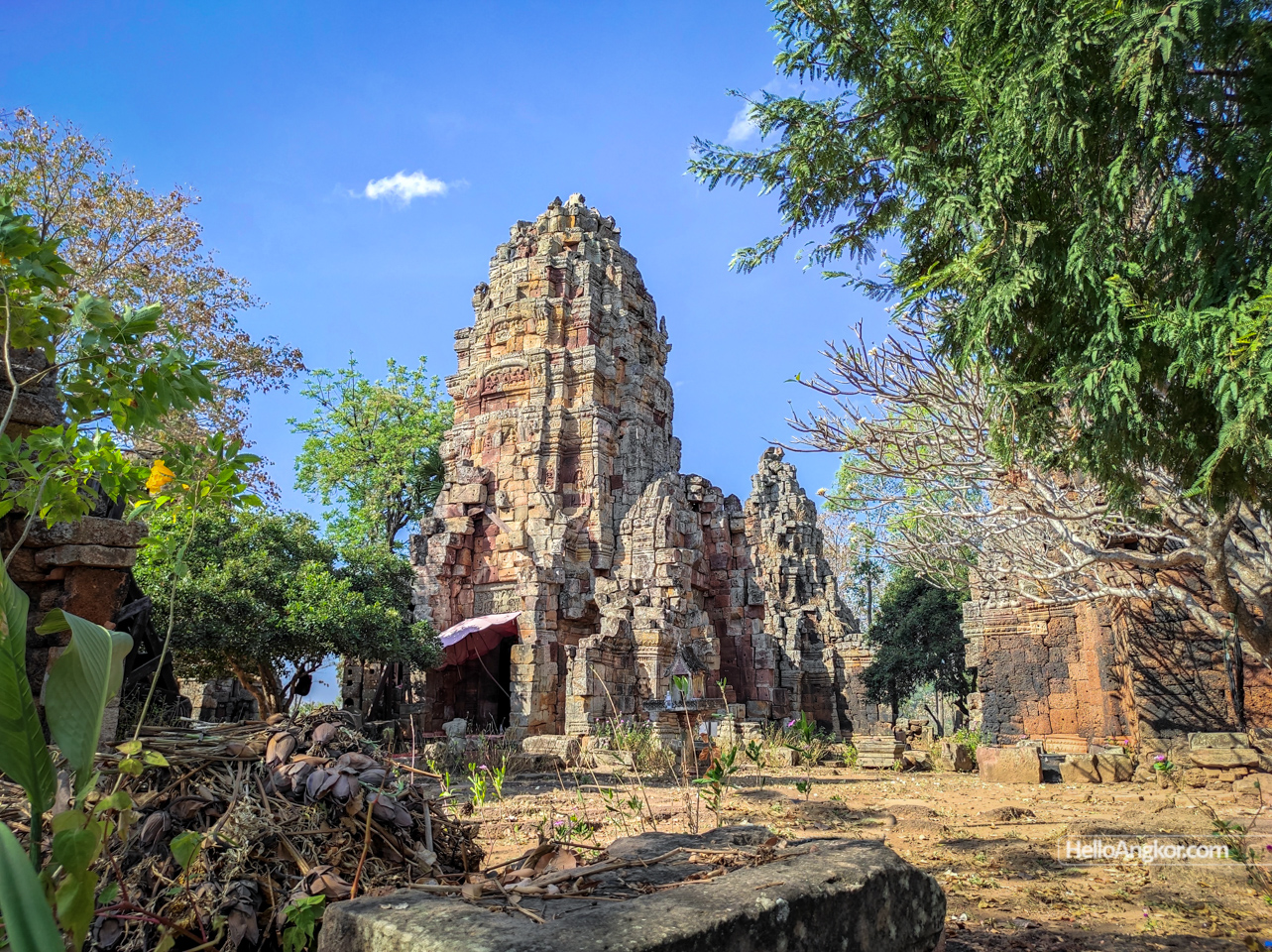
Phnom Banan, also known as Wat Banan, is a must-see ancient site located around 20 km south of the city of Battambang. From its eastern side, a grand terrace platform with naga balustrade precedes a staircase flanked by lions rising 400m to the grand temple featuring five ancient ruinous towers, albeit not in a quincunx … Read more
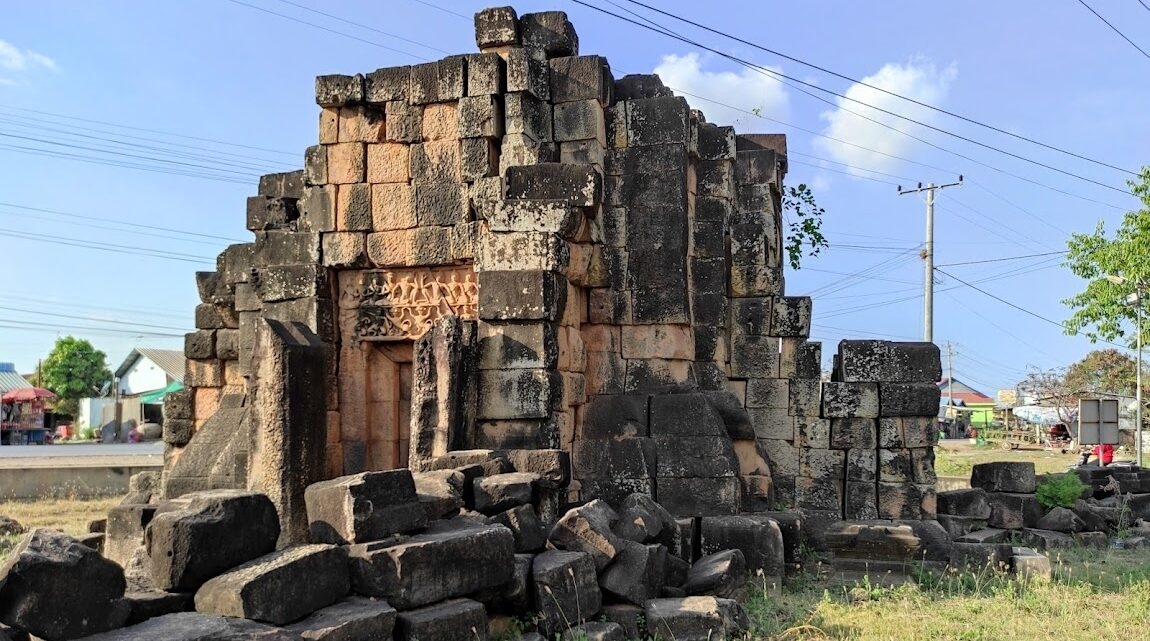
Also referred to as Prasat Snoeng Khang Lech, it is the remains of a sandstone temple. The site is located right by the roadway and fronting the monastery features a doorway opening to the east with a short forebody repeated around the other 3 sides with false doors. What makes it worth traveling to the … Read more
Remains of a brick temple
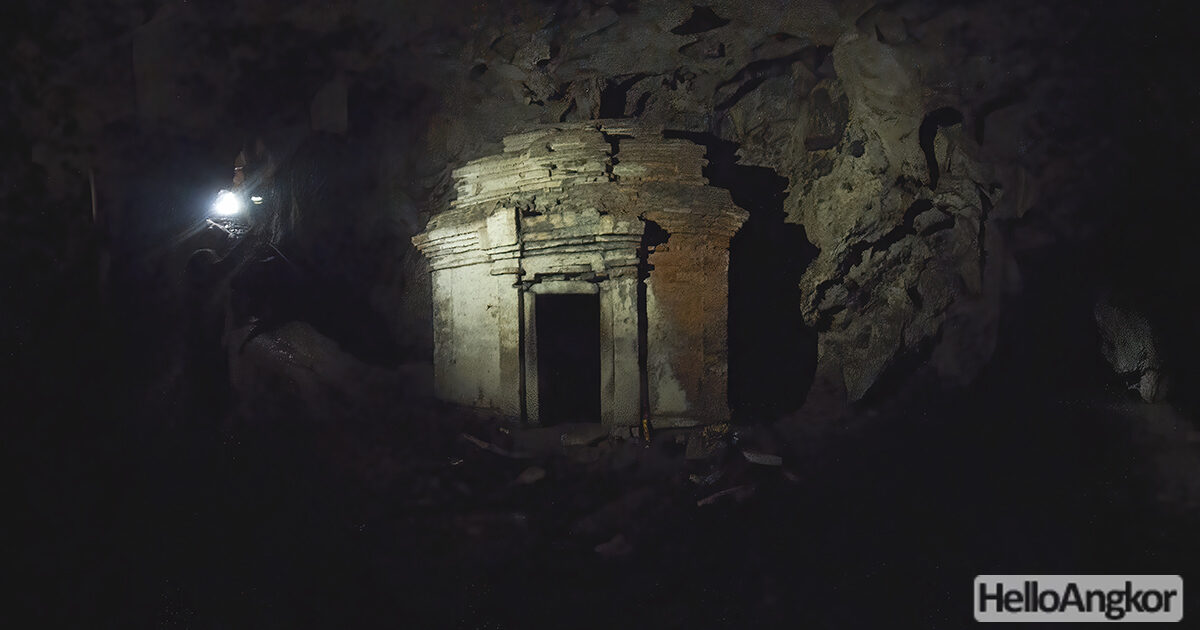
Located on the north side of a small mountain bearing the same name Phnom Khyong or Khyang Mountain, you can find a staircase leading up to a cave that houses a very ancient brick temple. A metal staircase leads down into a large cavernous area and straight ahead, take the small steel ladder to the … Read more
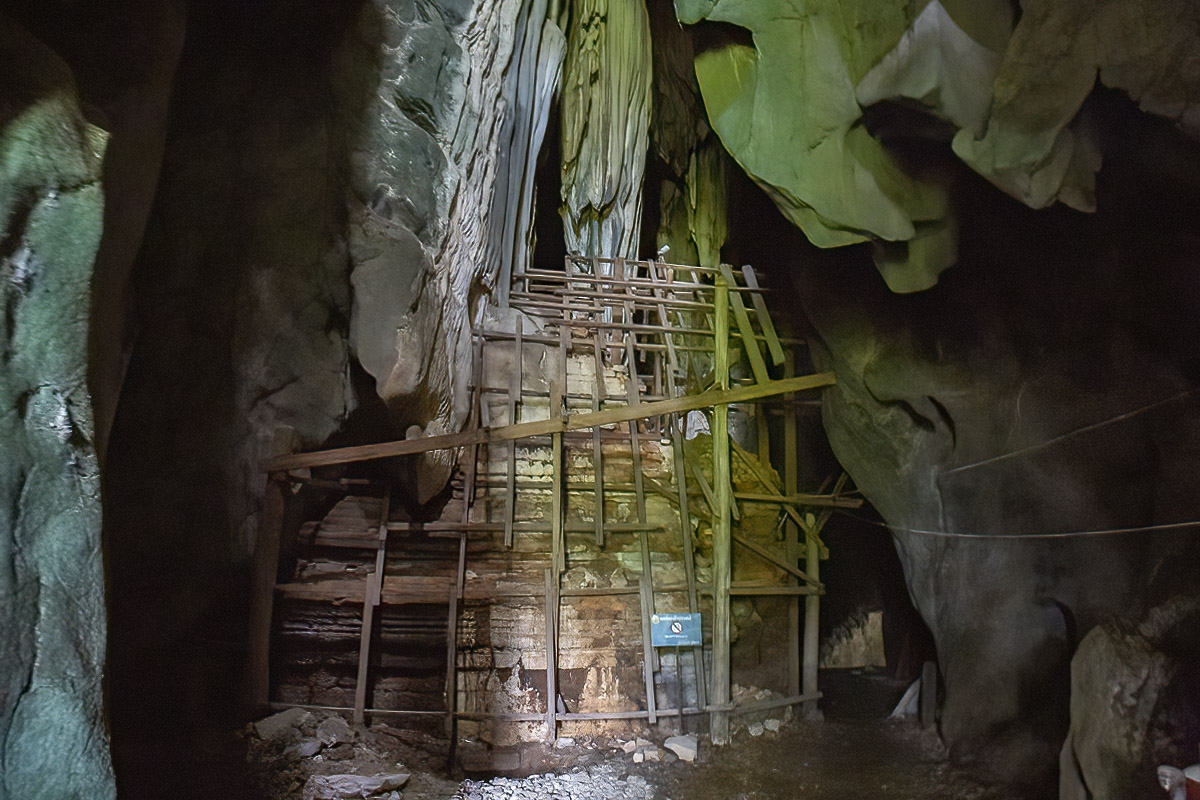
Also known as Phnom Totoeng Temple, Located on the side of a giant rock massif, within a cave, is a small but very ancient brick temple. The site is located at the eastern end of the mountain, or massif, and on its northern side. At the opposite end is a large cement factory. There is … Read more

Located around 12 km from Kampot, 25 km from Kep, and 140 km from Phnom Penh, Phnom Chhngok is a small mountain featuring a Buddhist temple on one side and on its western side a cave featuring an ancient temple dating to the 5th century Funan Era. From the site entrance on the western side … Read more
Located inside an army barracks. The soldiers were kind enough but under no circumstance could we enter unless we had a letter from the provincial authorities. They said the temple is only partially above ground but cared for. There are some photos of this site on the CISARK website under site #114. A sole partially … Read more
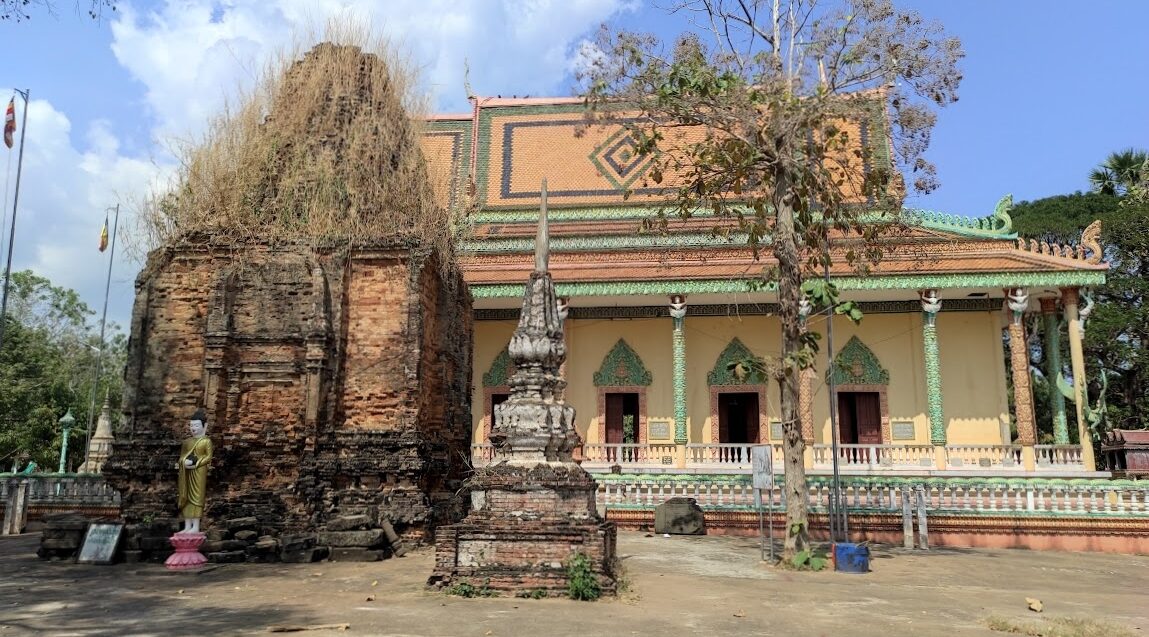
The monastery of Wat Hanchey overlooks the Mekong River from its hilltop location featuring ancient sites that date back to the 7th and 8th centuries during the Chenla Era. The monastery is area is large, featuring several sculptures, pagoda, halls, a recreation of an Angkorian era temple, seating with views over the massive Mekong river … Read more
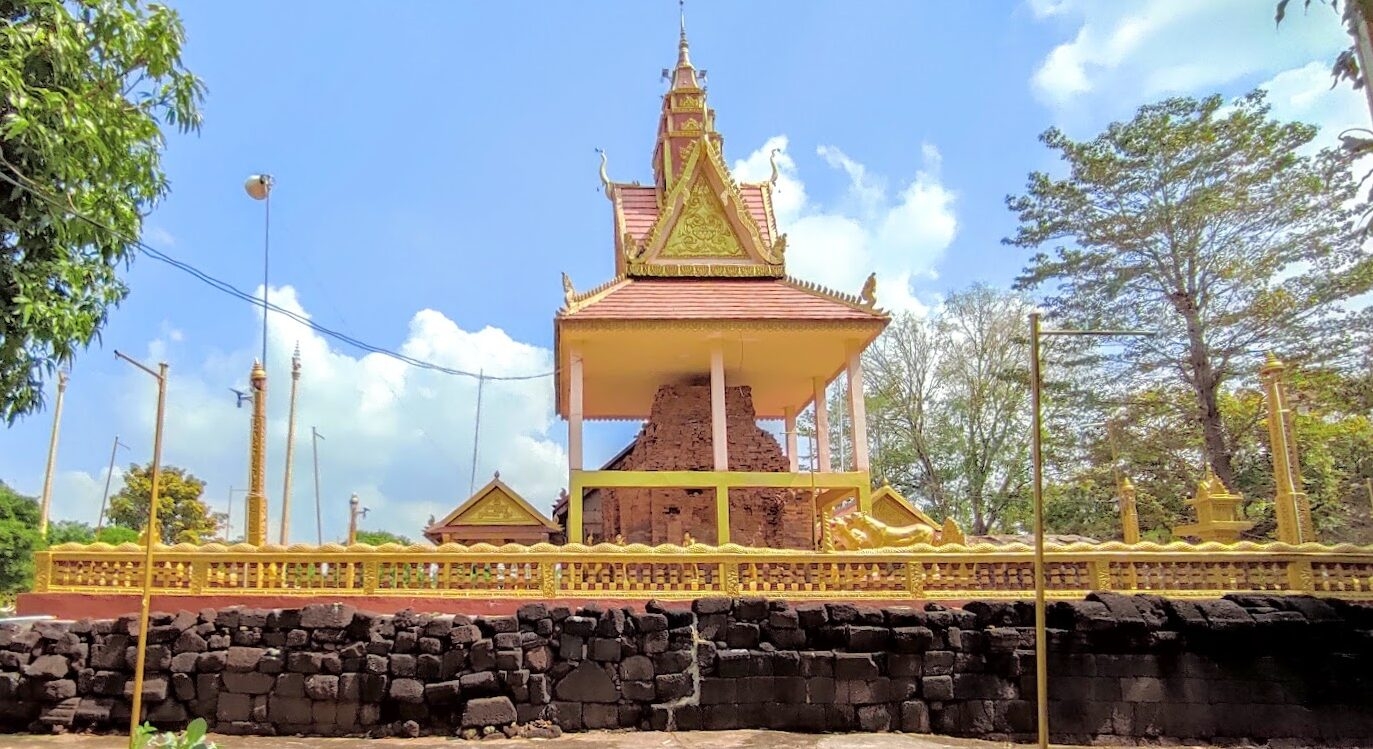
Located on monastery grounds are the remains of the central temple of what was originally a group of three brick temples with an outer laterite enclosure wall and entrance on the east. The remaining brick temple has been given an elaborate sheltering structure in recent times which is interesting in itself, enshrining the shrine. Around … Read more
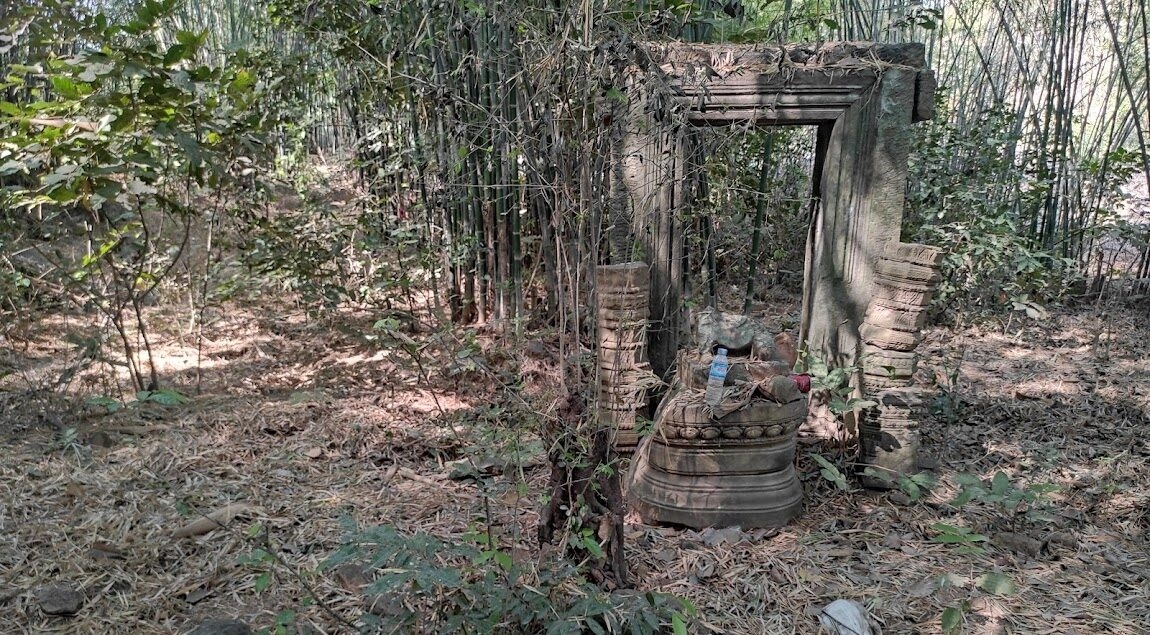
Also recorded as Phnom Trap A. Located on the side of a hill with a laterite-lined basin further to the east. The remains include a standing sandstone doorframe, pedestals, door columns, a decayed lintel, and the base of a small statue. The rectangular pedestal (if that’s what it is) is interesting and odd. Originally it … Read more
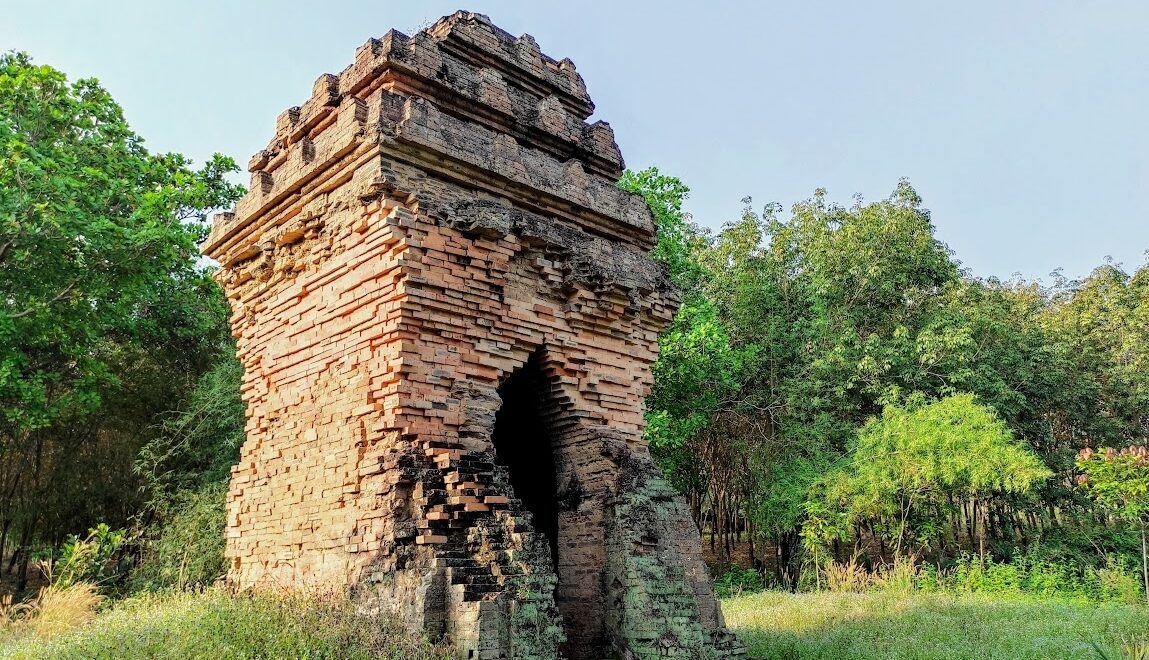
Within the walls of Banteay Prei Nokor, 250 m to the southeast of Preah Theat Thom, are the partially standing remains of what was originally a group of three brick temples that opened to the north. Only one brick tower remains and is believed to date to the time of King Bhavavarman I in the … Read more
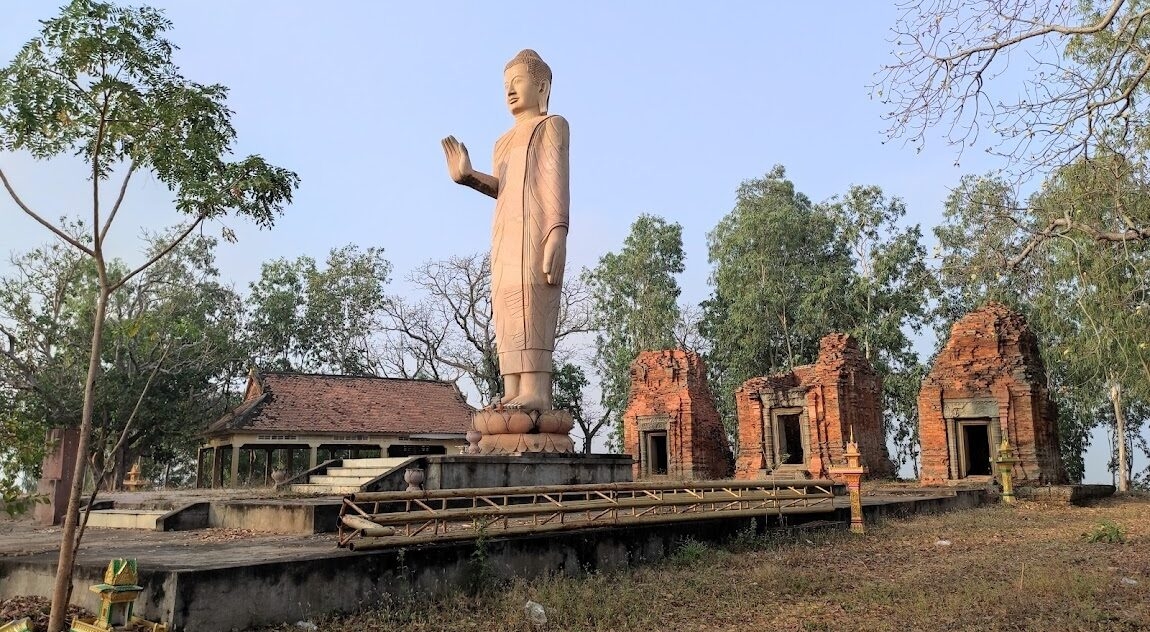
Also recorded as Phnom Trap D, Wat Praes Meas Temple (Khmer: ប្រាសាទវត្តប្រើសមាស). Originally a group of four brick temples, three of which are still standing, located on the hilltop of Pheah Ank Brampi Mountain (Khmer: ភ្នំព្រះអង្គរភ្នំប្រាំពីរ). The three remaining brick temples each feature impressive bas-relief carvings in the rear walls, sandstone doorframes flanked by ornate … Read more
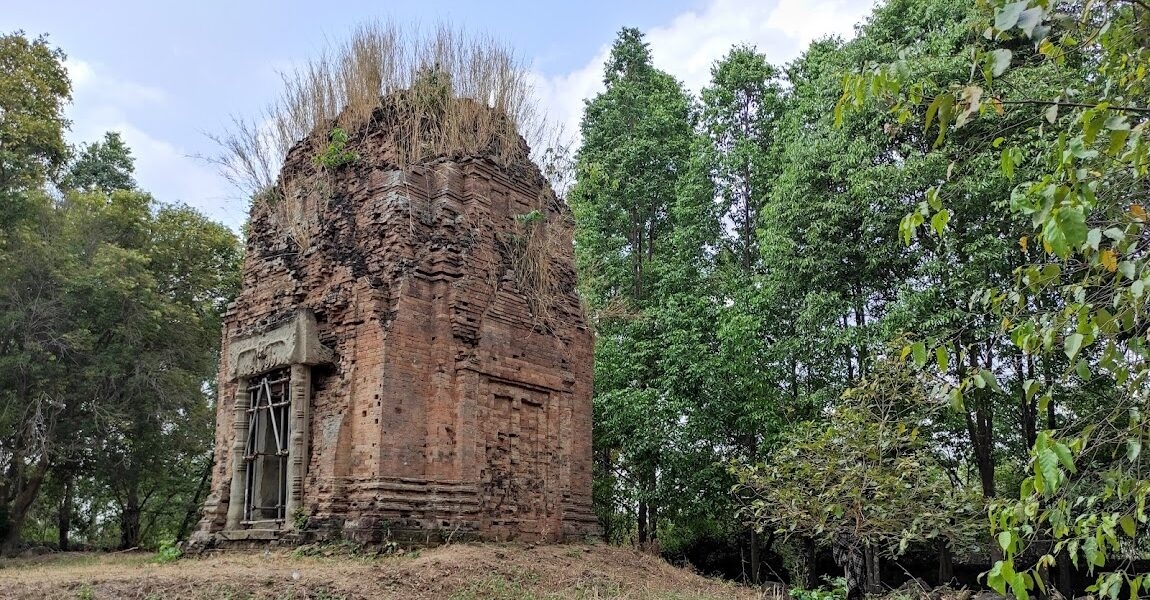
A tall brick temple with remains of an outer laterite wall and moat. Interestingly, the name locals use for the site today is the same as the ancient name of the site as recorded by an inscription which there is more on further below. The site is surrounded by a moat with an entrance on … Read more
Remains of a brick temple group.