Skip to content
Hello Angkor
  • Angkor
    • Top 30 Ancient Sites
    • Top 100 Ancient Sites
    • Angkor Small Circuit
    • Angkor Grand Circuit
    • Angkor Wat
    • Angkor Thom
    • All Angkor Sites
  • Temple Groups
    • Angkor
    • Roluos (Bakong)
    • Phnom Kulen
    • Beng Mealea
    • Koh Ker
    • Banteay Chhmar
    • Preah Khan of Kampong Svay
    • Prasat Preah Vihear
    • Sambor Prei Kuk Group
    • Longvek & Oudong
    • Ancient Bridges
    • Ancient Royal Road
    • Firehouse (Dharmasala/Vahni-griha)
    • Hospital Chapel
    • Buddhist Terrace (Angkor)
    • Wats & Pagodas
  • Provinces
    • Banteay Meanchey
    • Battambang
    • Kampong Cham
    • Kampong Chhnang
    • Kampong Speu
    • Kampong Thom
    • Kampot
    • Kandal
    • Kep
    • Koh Kong
    • Kratie
    • Phnom Penh
    • Preah Vihear
    • Prey Veng
    • Pursat
    • Mondulkiri
    • Oddar Meanchey
    • Ratanakiri
    • Siem Reap
    • Stoeng Treng
    • Svay Rieng
    • Ta Keo
    • Tbong Khmum
  • Books
    • Essential Siem Reap 2026
    • Ancient Cambodia – The Book
  • Events
  • About

Aymonier

Étienne François Aymonier (1844-1929), with local Cambodian assistants, was the first to comprehensively survey the temples and archaeological ruins of Cambodia and the greater ancient Khmer Empire. This work was published in three volumes: Le Cambodge I, II, & III (1900-1904). The map below features the sites in present-day Cambodia, that were documented in those volumes.

Peung Komnou

Located north of Wat Svay Leu and at the foothills of Phnom Kulen, Peung Komnou features stunning rock carvings. There are actually several separate carvings to see here on a group of rock monoliths. The trail leading to the site is suitable for moto/bike/hike although a vehicle could certainly make it part ways there. The … Read more

Peung Preah Put Kraom

Located on the north side of Phnom Kulen and south of the village of Kronhoung, there are numerous rock monoliths, many of which taper in at the bottom creating a natural shelter, it’s a fascinating place. This particular monolith appears to have been a hermit/ascetics lair, featuring several carvings and remnants of walls formed of … Read more

Peung Chhat

Located on the north side of Phnom Kulen and south of the village of Kronhoung, at the foot of the mountain slope, it’s a spectacular rock monolith that tapers in at the bottom creating a rock shelter. This natural shelter has in ancient times been put to good use, featuring quite a well-executed rock carving … Read more

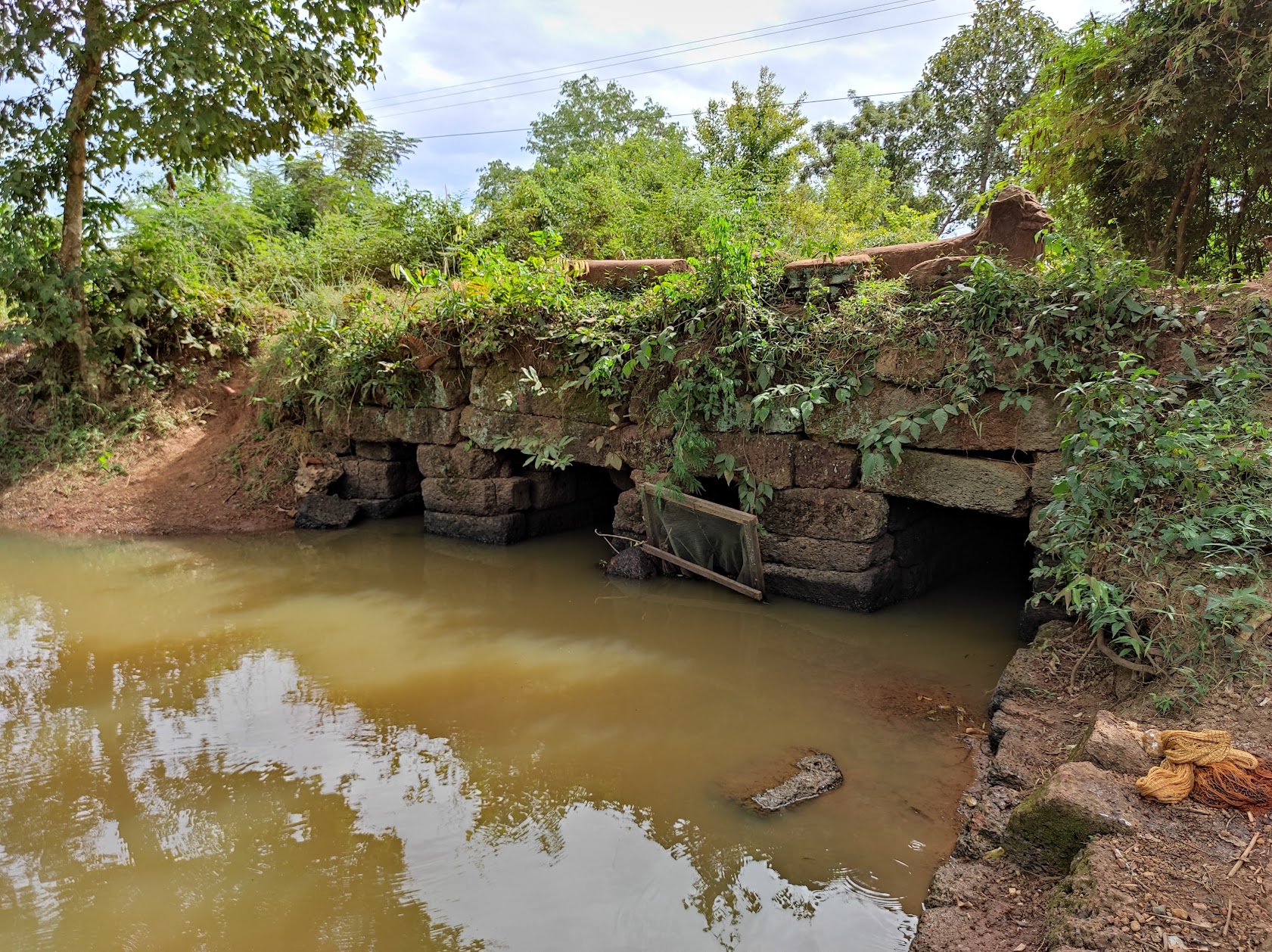
Spean Toch

A small laterite bridge with 4 arches with sandstone balustrade. It is recorded as measuring 12 m long, 8 m wide and 2.8 m high. Interestingly, it features very basic arches (post and lintel style construction) and is not typical of the beautiful corbelled arches seen on nearly all of the bridges along this route. … Read more

Ta En Temple

Prasat Ta En is a very ruinous “firehouse“, which was a common feature along the east and northwest roads of the ancient royal road network. It is believed that they were part of a larger resting place for travellers and pilgrims. It sits 60-100m north of where the ancient East Road once connected Beng Mealea to … Read more

Pram Temple (Khvav)

Another feature along the ancient royal road, Prasat Pram, was what the early French archeologists called “Temples d’étape” in simple terms, what they believed to be a temple that was part of a staging or stopping place. Other temples of this type include Prasat Toap Chey Thom, Prasat Chrei, and others, which are only found … Read more

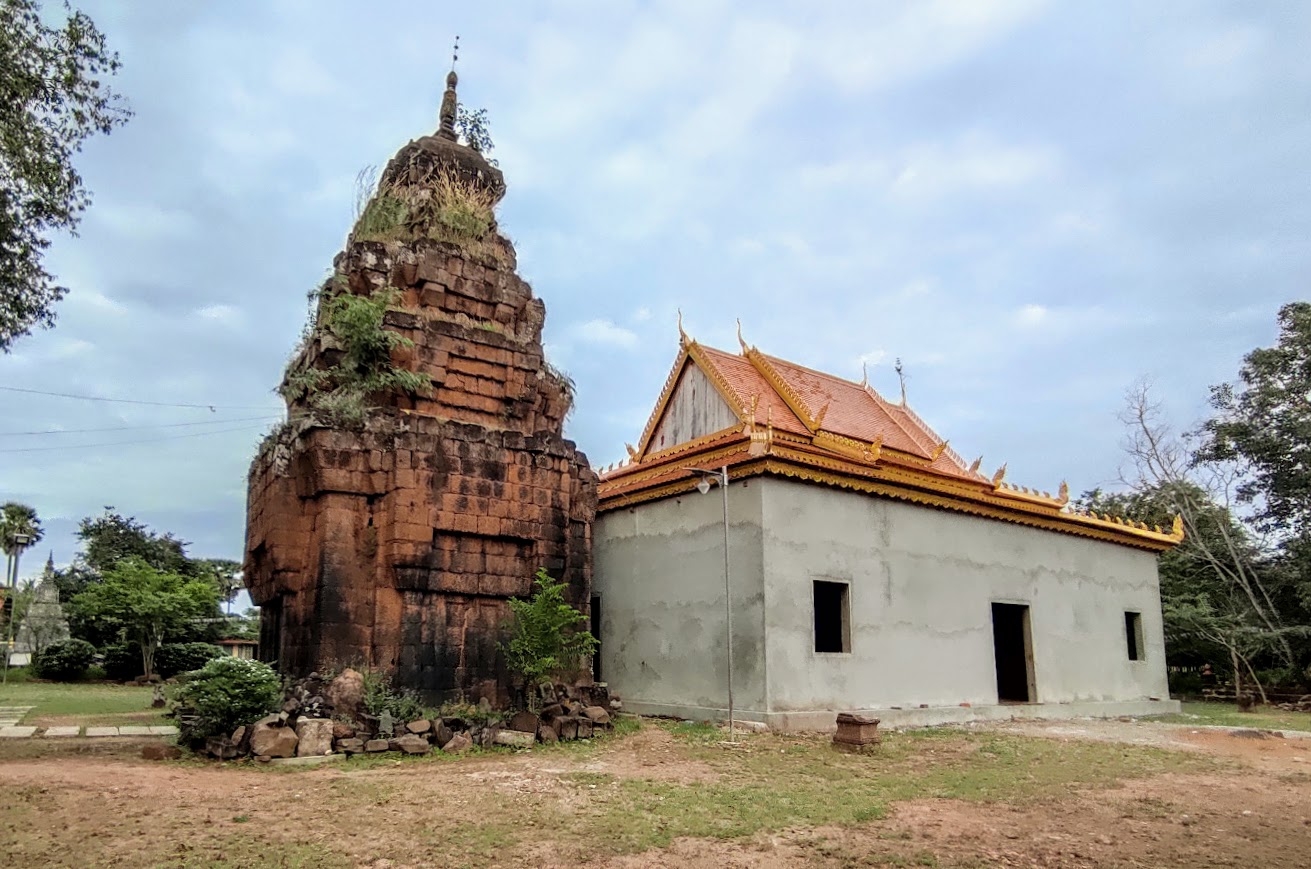
Preah Theat Khvav Temple

Located 4 km south of the village of Khvav, it’s a square laterite temple tower preceded by a terrace on the monastery grounds of Wat Preah Serei Rokha Theat. The site features an incredible collection of ancient temple remnants. The temple tower and terrace (now converted into a more contemporary pagoda) are demarcated by sandstone … Read more

Trâpeang Svay Temple (Ta Seng)

Remains of a brick temple site

Chhouk Temple

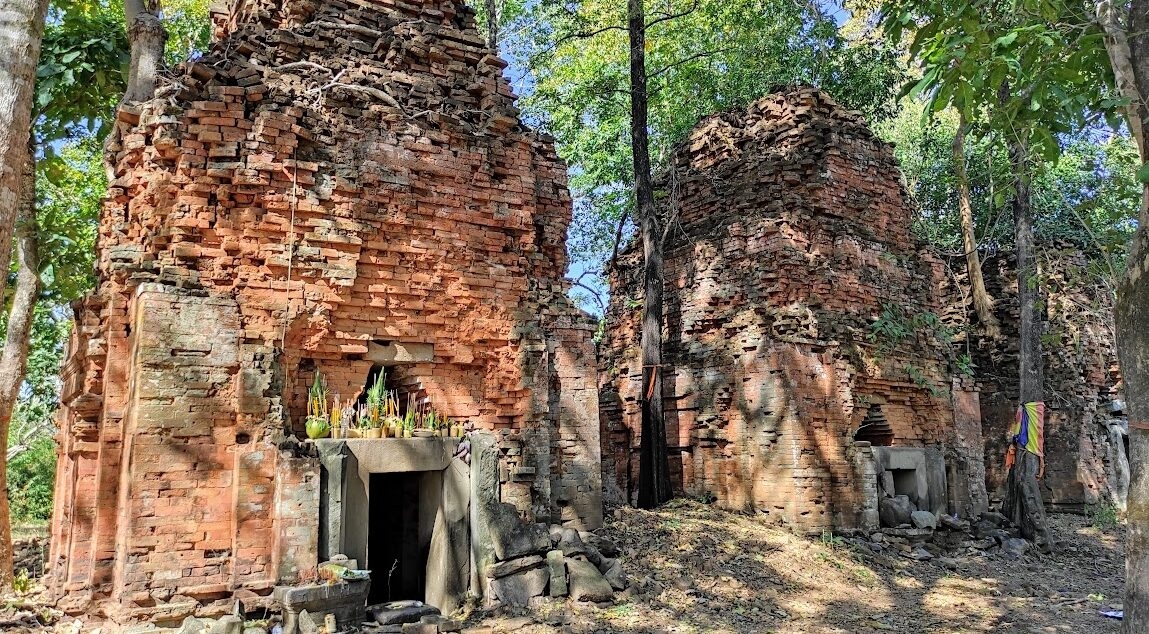
Also known as Prasat Chhuk, it is situated to the north of Preah Khan of Kampong Svay and west of Phnom Tnoat and sits at the southern end of a large basin recorded as Trapeang Chhouk. It features three well-preserved laterite towers that are aligned on a north-south axis, opening to the east, and further … Read more

Preah Pul

Cave temple located on Phnom Tnaot, also known as Prah Khpur and Preah Kpul. Historical Notes Prah Khpur. The cave designated by this name is located towards the middle of the eastern slopes of Phnom Tenot; it opens halfway up, at the bottom of a narrow and bushy ravine formed by the bed of a … Read more

Phnom Mrech Temple

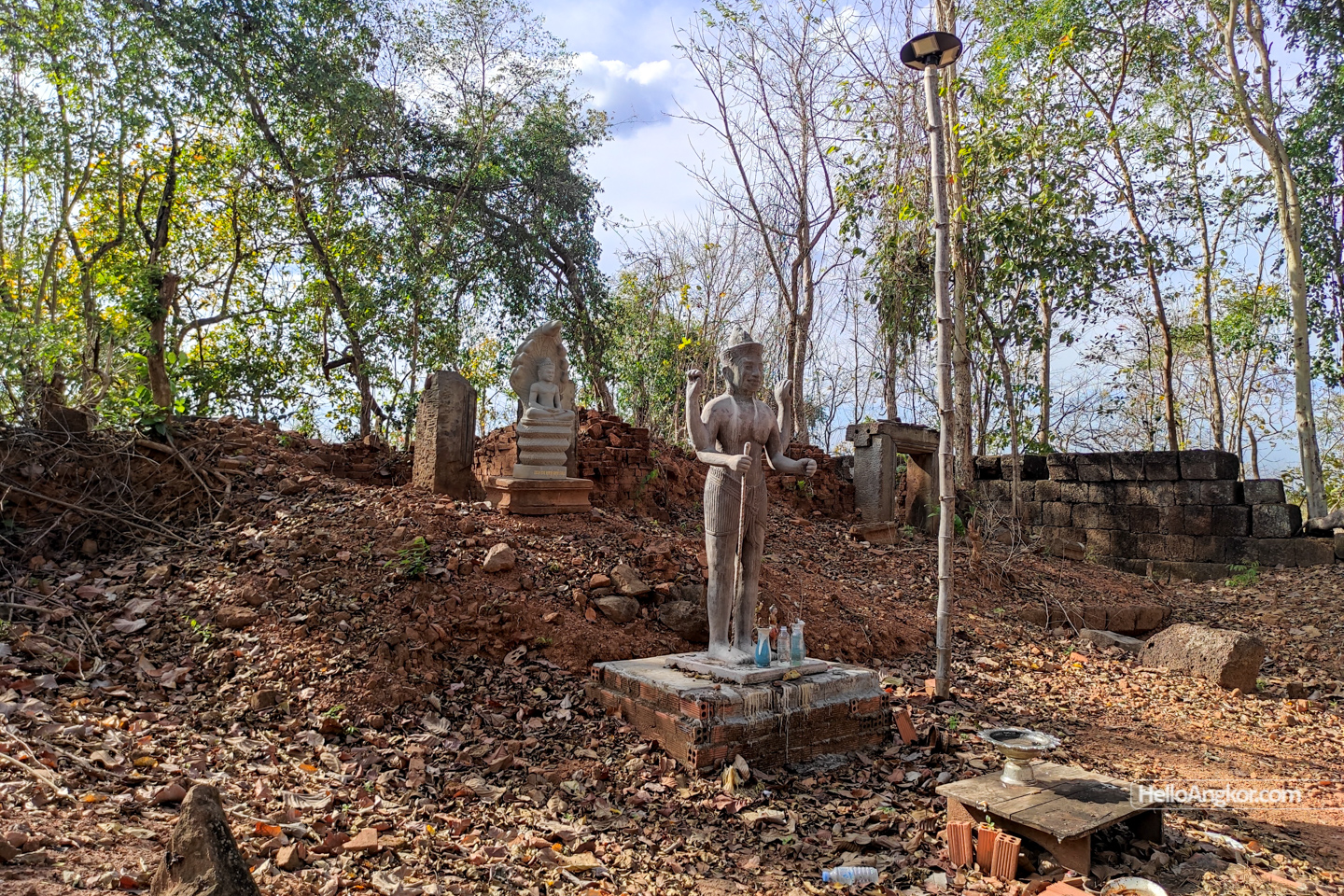
Located in Preah Vihear province, north of Phnom Tnoat and south of Kdak village, Prasat Phnom Mrech features a pair of ancient brick shrines situated on the mountain slope overlooking the beautiful plains below. The entrance to the site is flanked by two boundary markers depicting Buddha on Naga and a guardian devata on the … Read more

Reul Temple (O Pram Pheam Village)

Also known as Prasat Chamrek Chau, and located in Srayang Commune of Preah Vihear province, about 6km south of road 64 and 4km southeast of Prasat Pram, it’s the remains of three brick temples that were surrounded by an outer laterite enclosure with a gopura on the east and west. On the north side of … Read more

Nong Khou Temple

Also known as Prasat Nang Kou and Nong Kuh, it is located around 10km east of Svay Leu in Siem Reap Province. The site is located on the eastern side of a broad hill that overlooks farmland mostly being cultivated today to grow cassava and mango. On visiting in 01/2023, the site is quite overgrown … Read more

Dambok Khpuos Temple

Located north of Phnom Kulen in Svay Leu district, it is the remains of what were three brick towers. Presently the site is overgrown and only remnants remain. An inscription was recorded here under K. 196. The earliest report on the site comes from a brief note by E. Aymonier in the late 1800s, then … Read more

Pram Temple (Srayang – Preah Vihear Province)

Prasat Pram is a group of six temples comprising of an eastern row of three tall square brick temples on a north-south axis, immediately behind which on the western side are two smaller brick temples and the remains of a laterite construction. They are all open to the east. On the eastern row, the northernmost … Read more

Trapeang Kuk Temple

Remains of an (unusual) square sandstone cell with remains of an enclosure and basin in the east (report: Cisark). Location approximate

Phnom Preah Lean Temple

Preah Lean Temple features the remains of a square brick temple that opens to the east and is fronted on its eastern side by a cruciform-shaped sandstone structure whose purpose is unknown. The site is located atop a small rise right beside road 62 in Tbaeng Meanchey District and accessed by an easy flight of … Read more

Wat Boeng (Balang)

Location of a contemporary monastery and pagoda that is also the location of an ancient site known as Prasat Samroang Preah Theat or Tuol Balang. The site features a new pagoda and an older wooden vihara/pagoda. The olden wooden vihara is perhaps not as old as it looks, but its foundations may well date to … Read more

Banteay Yuon Temple

Samlanh Temple

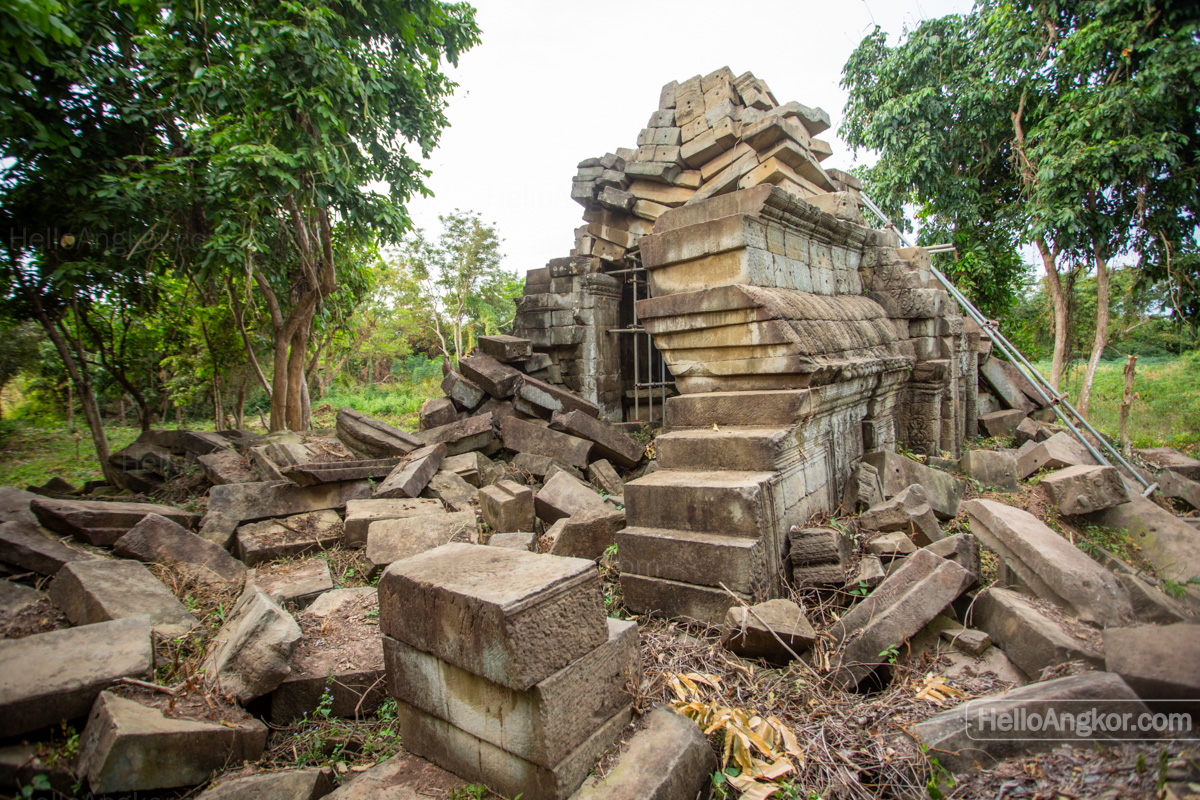
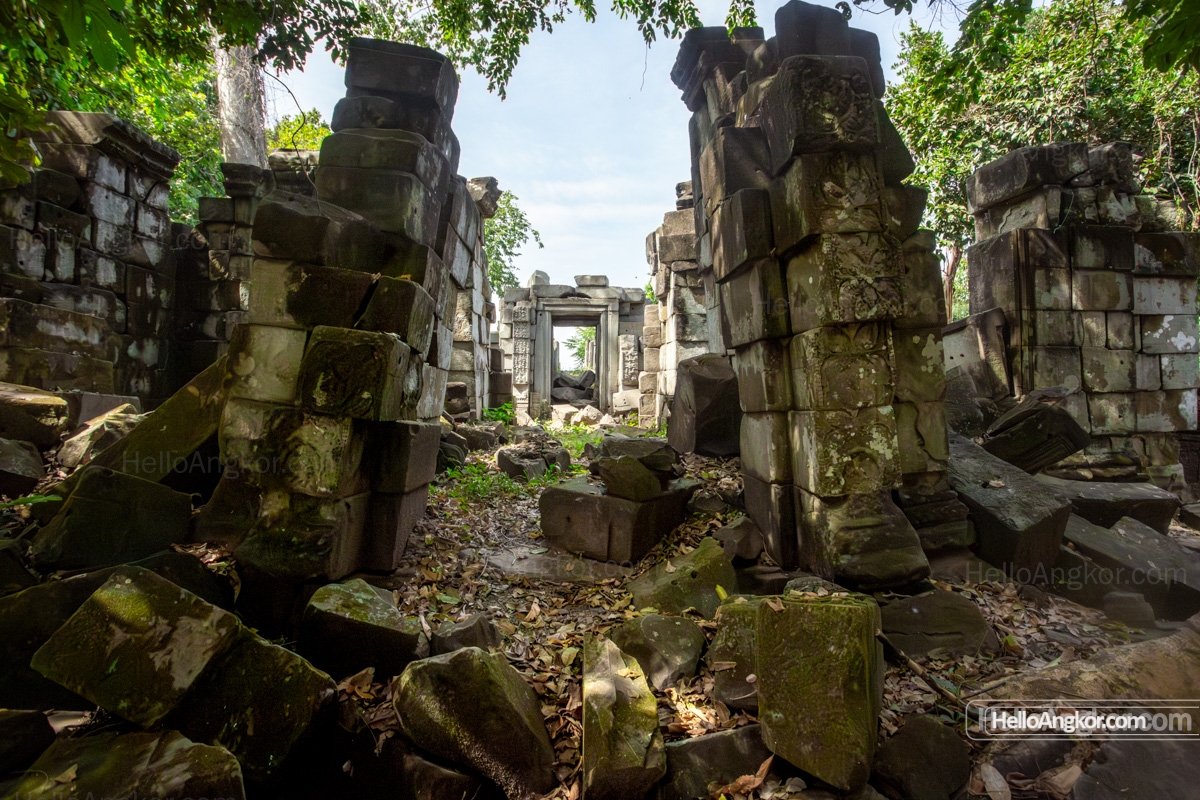
Partially standing remains of three laterite temples

Charek (N.T.)

Boeng Paen Chum Temple

Trapeang Khnar Sen Keo Temple

Located around 12 km south of Kulean in Preah Vihear Province, Prasat Trapeang Khnar Sen Keo is the remains of a sandstone temple complex that featured a large basin to the north, another basin to the east, bollarded and paved entrances on the east and west that crossed a large moat, then, a tall sandstone … Read more

Pram Temple (Koh Ker)

Prasat Pram, or Pram Temple, of Koh Ker is another of the must-see temples and one of the iconic photo spots of the area. It is a group of three square brick temples built on a common terrace fronted by two “library” buildings, one in brick and one in laterite. The site is surrounded by … Read more

Neang Khmau Temple (Koh Ker)

Also recorded as Neang Khmaw Temple or Prasat Neang Khmao, it is a large square temple constructed of laterite atop a sandstone base that is surrounded by a laterite wall. It features several false levels reducing in size to the top that have accent pieces and at each corner a “mini prasat” decorative piece. The … Read more

Rohal (Koh Ker)

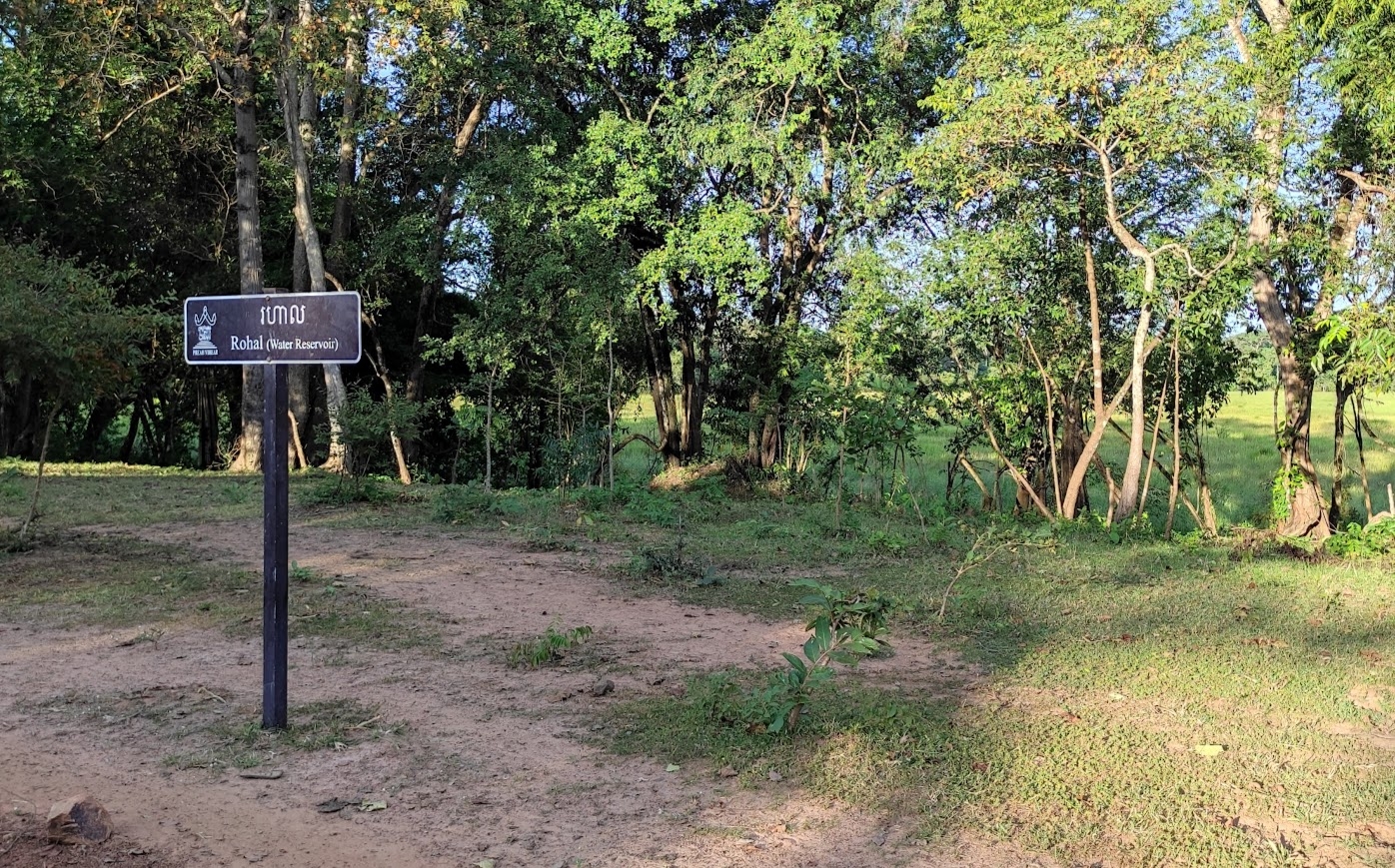
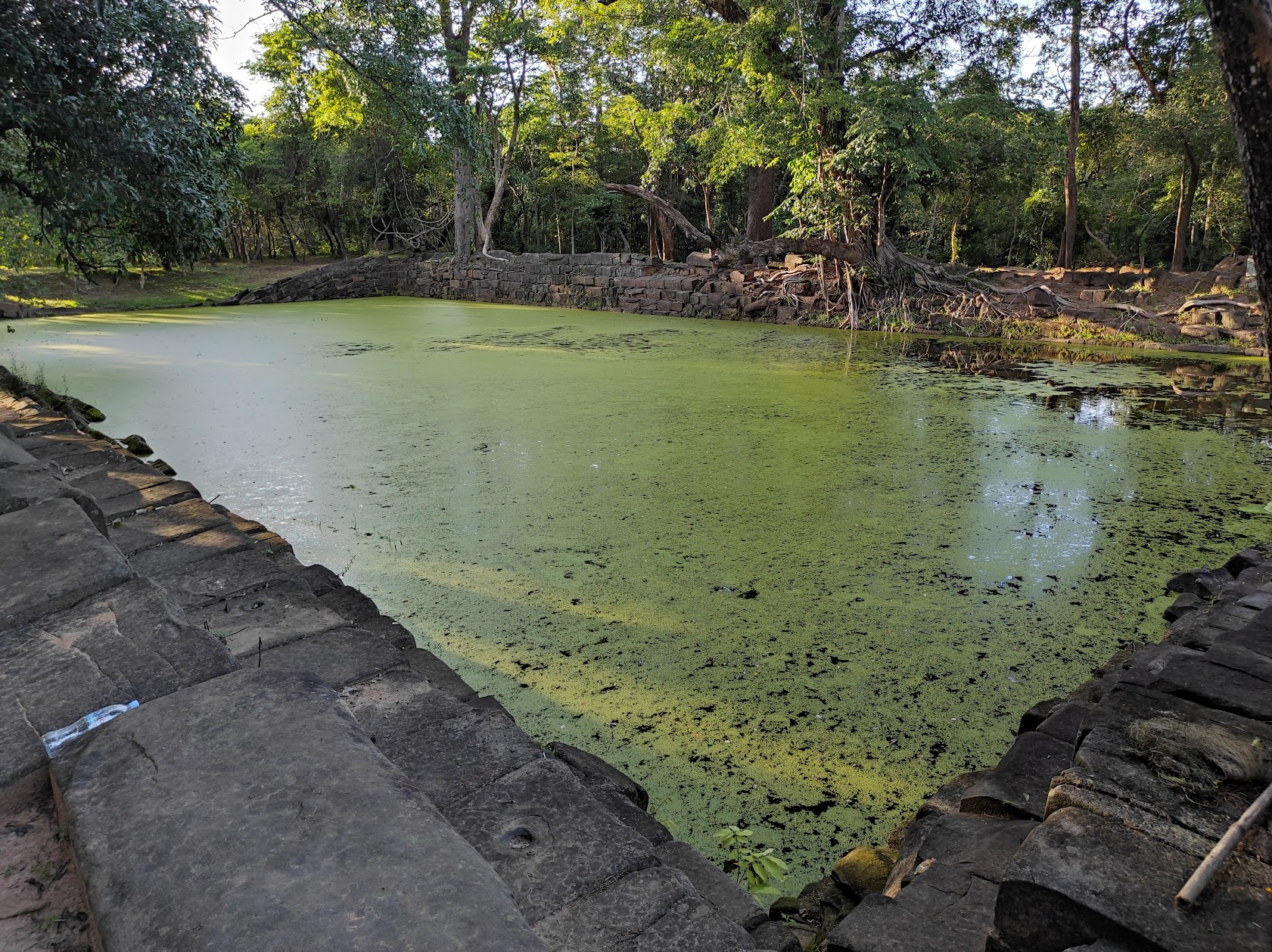
Also recorded as Rahal. Whilst there is not much to see today, in the heydey of ancient Koh Ker this large basin (baray) would have been a pivotal feature at the center of Koh Ker group measuring approx. 1200 m long and 600 m wide. It is noted by researchers that the outlying streams and … Read more

Andong Preng

Ancient basin with sandstone capping, 50 m x 25 m. Henri Parmentier’s description from L’Art khmèr classique , monuments du quadrant Nord-Est, 1939 Andón Prén 273 (M. H. 263). I also borrow in part the description of I. de Lajonquière for the Andón Prén by correcting it or completing it in italics: It is a basin … Read more

Prasat Chen (Koh Ker)

Prasat Chen, or Chen Temple of Koh Ker is a group of three laterite temples on a common terrace that was fronted and flanked by two brick “library” buildings, an enclosure wall of laterite with brick entrance gopura to the east and west followed by another laterite enclosure wall that featured a long laterite terrace. … Read more

Prasat Thom (Koh Ker)

Prasat Thom is the principal temple complex of the Koh Ker group and also encloses some 21 shrines and the iconic pyramid, Prasat Prang on its western side behind which is the great mound, known as the Tomb of the White Elephant, whilst on its far eastern side are the remains of two structures connected … Read more

Choan Sram Temple

Also recorded as Prasat Chin Srom, it’s a remote but large ancient temple site that dates to around the 10-11th century. It’s a fascinating site that’s made all the more interesting by its nowadays remote location north of Koh Ker and nearby the small village of Prey Veng. The site is cleared (01/23) and consists … Read more

Older posts
Newer posts
← Previous Page1 … Page7 Page8 Page9 Page10 Next →

Articles

  • Ancient History & Temples
  • Ancient Ways
  • Cambodia Primers
  • Hotel Reviews
  • News Bites
  • Property
  • Siem Reap
  • Sight Seeing
  • Temple Visiting Guides
  • Tour Journals
  • Transport
  • Travel Tips
  • Trekking
  • Uncategorized

Research Tools & Books

  • Index of French classics and contemporary resources - Early Angkor Research and References Collection
  • A noiseless search engine for temple research - Angkor Search Engine
  • Our publications and books we love - Angkor & Cambodia Books
  • Ancient Cambodia - Photo Journey & Archaeological Guide

Discover the Khmer Empire – Start Here

  • The Temples of Angkor
  • Angkor Wat
  • Angkor Thom
  • Small Circuit & Grand Circuit
  • Angkor Pass

Temples & Attractions by Province

  • Banteay Meanchey Province
  • Battambang Province
  • Mondol Kiri Province
  • Kampong Cham Province
  • Kampong Chhnang Province
  • Kampong Speu Province
  • Kampong Thom Province
  • Kampot Province
  • Kandal Province
  • Kep Province
  • Koh Kong Province
  • Kratie Province
  • Phnom Penh
  • Prey Veng Province
  • Preah Vihear Province
  • Pursat Province
  • Ratanakiri Province
  • Siem Reap Province
  • Stung Treng Province
  • Svay Rieng Province
  • Ta Keo Province
  • Tbong Khmum Province
  • Oddar Meanchey Province

Find us on

  • Facebook
  • Twitter
  • Instagram
  • Bluesky
  • Goodreads
  • Academia

Navigate the Khmer Empire

  • The Temples of Angkor
  • Angkor Wat
  • Angkor Thom
  • Small Circuit & Grand Circuit
  • Angkor Pass

Recent Posts

  • A Journey into the Ancient Khmer World, 1000 Years Before Angkor
  • Our New Book: Essential Siem Reap 2026 – The new Explorer’s Manual to Cambodia’s Ancient Heartland
  • In Pictures: The Siem Reap Giant Puppet Parade 2026
  • Rescuing the Bayon: Three Decades of Discovery & Defiance
  • Search Khmer Temples by Historical Names & Inventory Numbers

Contact us

Hello Angkor is based in beautiful Siem Reap Cambodia – Find out more & Contact. About Privacy and TOC, Data and Reference


Social

  • Find us on
© 2026 Hello Angkor • Built with GeneratePress