
Kôk Moeun Duong (6978)
Mound of bricks with sandstone pedestal.
Trapeang Svay (Puok)
The site features a basin in the east, which has the appearance of an Ankorian-era temple site. It was recorded on Cisark as “Mound with a basin in the east.”. On visiting the site, an older lady told us she remembered there being laterite blocks many years ago, but someone had taken them away.
Prei Neak Ta
Mound with remnants of pedestal, sandstone and laterite blocks.
Kneeling Elephant of Phnom Kulen

The kneeling elephant sculpture is also recorded as Damrei Krap. Not to be mistaken with the temple of the same name that lies some way further to the east, here nor the monolithic elephant of Srah Damrei. The trail here is reasonable and passes through a small village community. A little further along the trail, … Read more
Trapeang Snao Temple
Scant remains of a brick temple
Preah Si Ar
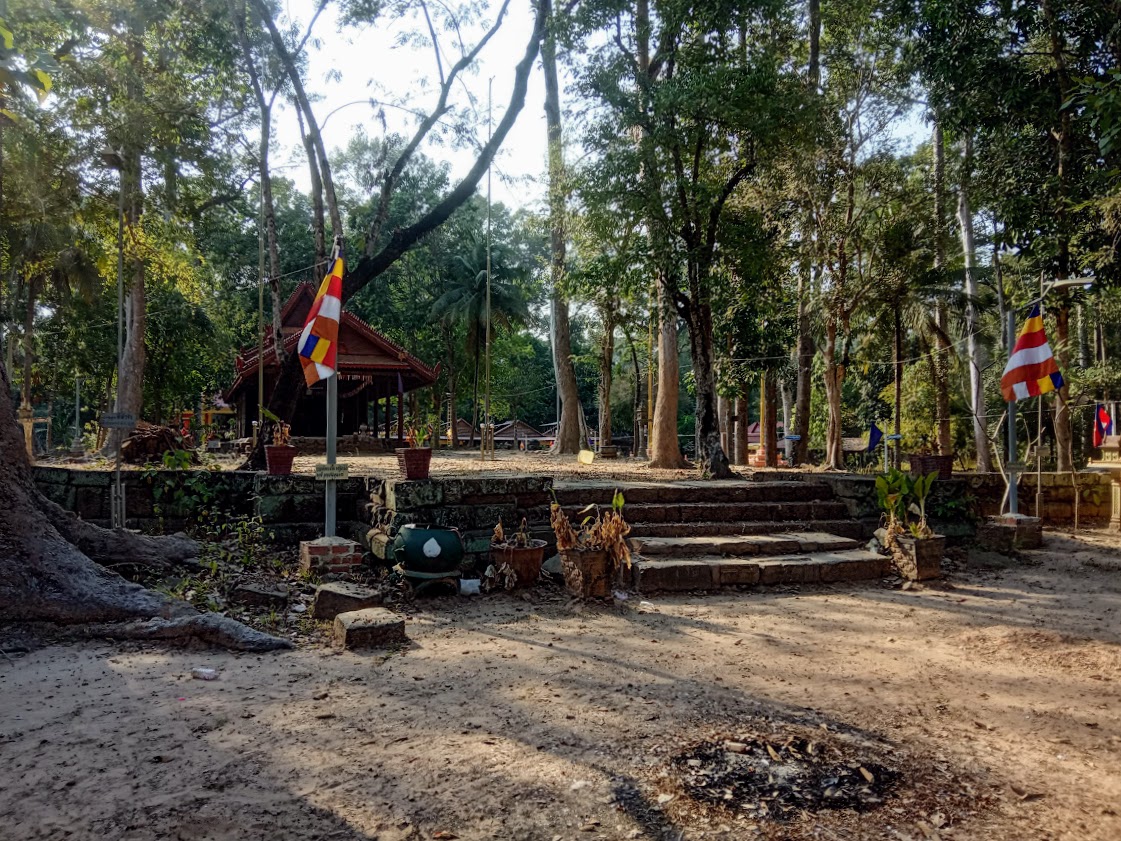
A Buddhist Terrace with two tiers, the top tier reconstructed, featuring multiple bas-relief panels of garuda. Sixteen sema stones were found here, noted as being decorated with a bas-relief depicting a seated figure of Yama wearing a headdress with three points and holding a sword in his right hand. An inscription was also registered from … Read more
Spean Khmeng (Toek Lich)
Laterite bridge reported as being 15m x 7m. Location unconfirmed. Noted as being “On the road linking Angkor to Beng Mealea, about 2 km southwest of Beng Mealea and 1.2 km south of the village of Toek Lich”
Spean Ta Meas
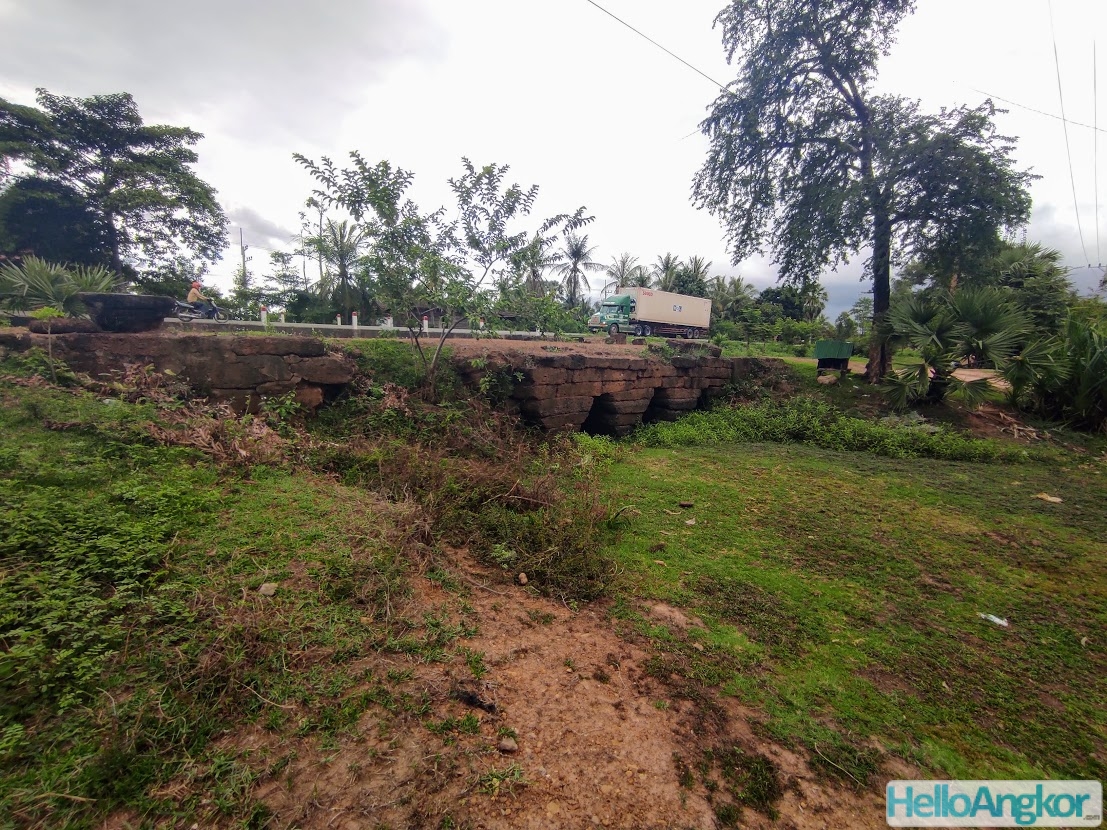
A laterite bridge with 5 arches, 18.5 m long, 7.8 m wide and 2.5 m high. It’s one of the many ancient bridges located along the ancient Southeast Royal Road which is replicated by National Road 6.
Spean
Laterite blocks distributed on both sides of the roadway indicative of the presence of an old bridge.
Spean O Chen Chien
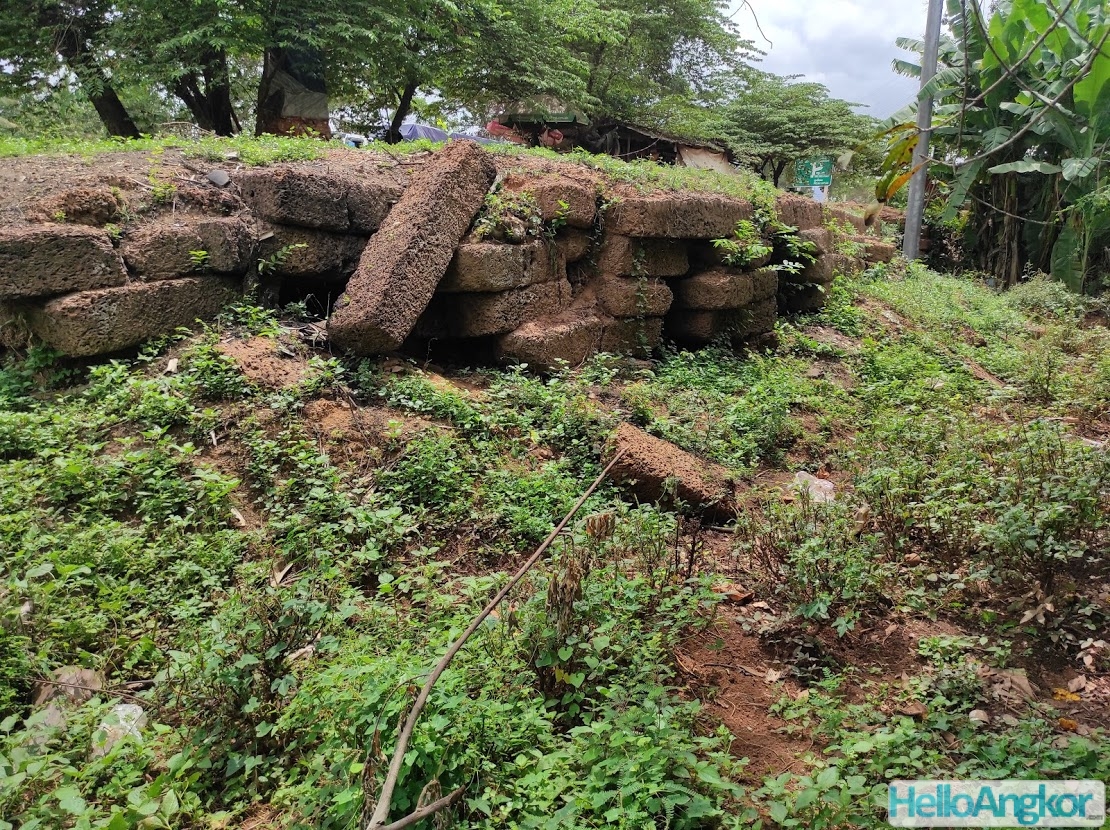
Partially buried remains of a laterite bridge with 16 arches. It is/was 45 m long, 10 m wide and 3.5 m high.