
Wat Ang Sdok
Contemporary monastery that may have been built on an ancient site.
Prasat O Toub
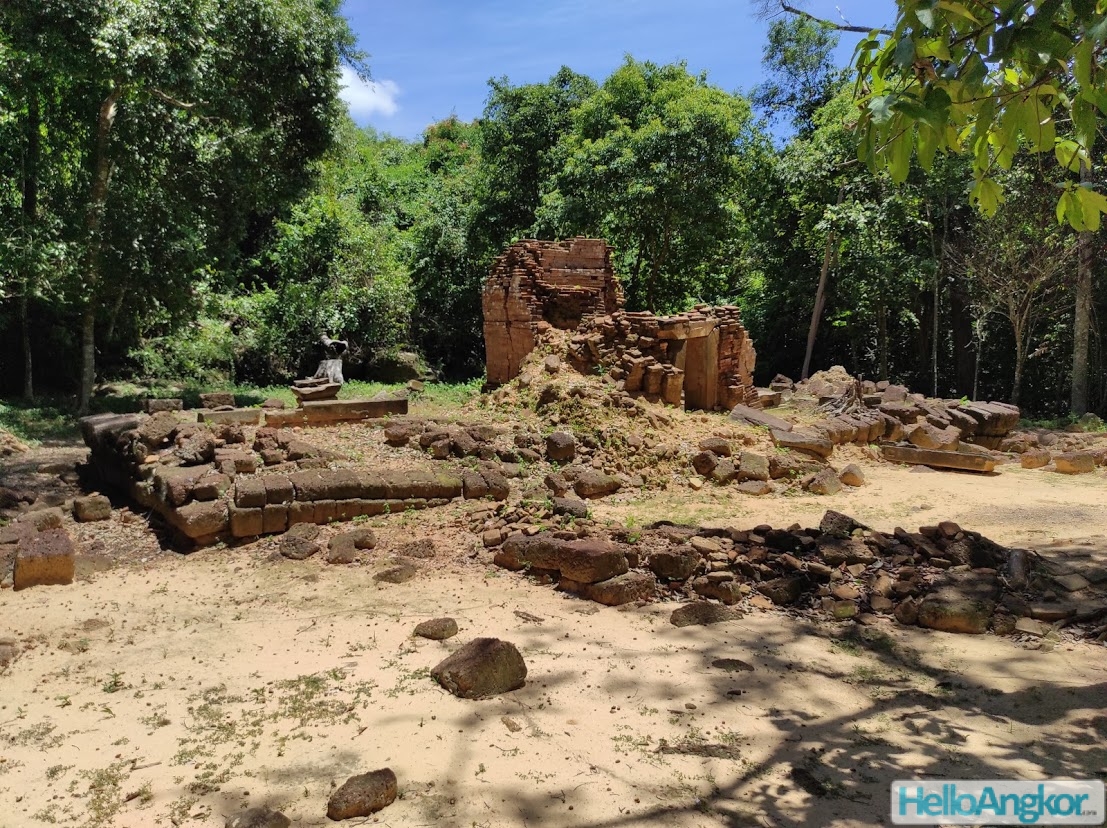
A ruinous brick temple that sits atop an elongated laterite base. Originally it was believed to have had three towers but only one remains partially standing today. Nearby are the scenic and spectacular rock carvings of Peung Moha Ey Say. In front of the site, there is a large exposed section of natural bedrock that … Read more
Mebon (Banteay Chhmar)
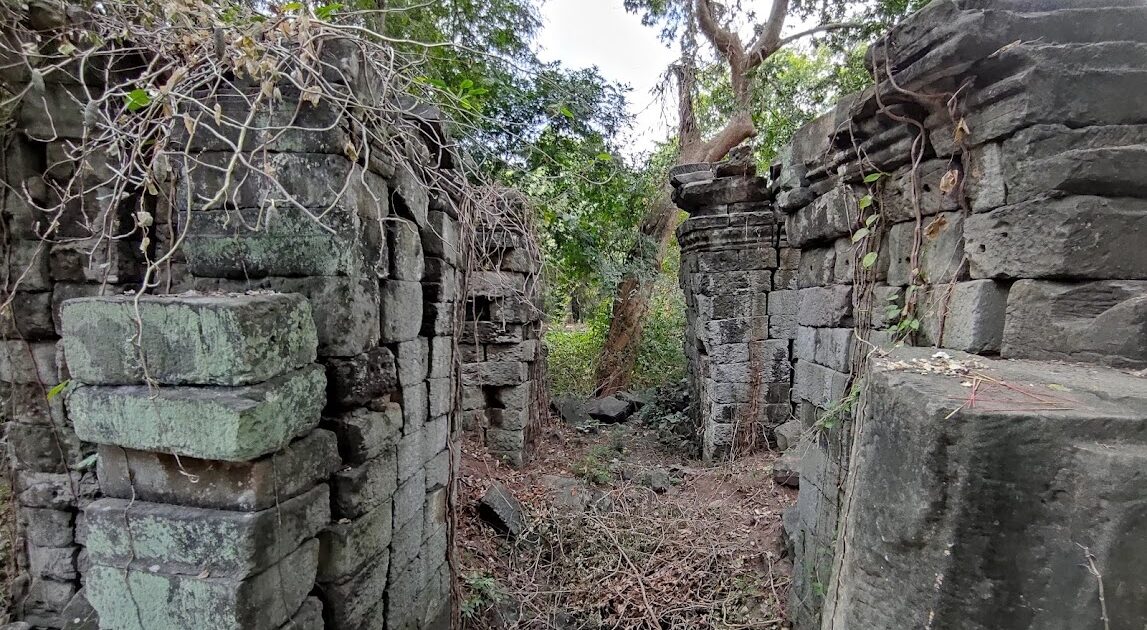
The island at the center of the large baray featuring the remains of a sandstone cruciform temple with some decorative elements preserved including carvings of deity and ascetics. The site is mostly ruinous but also featured two library buildings, a laterite enclosure wall, a moat, and then an earthen embankment where it meets the waters … Read more
Prasat Ta Phlang
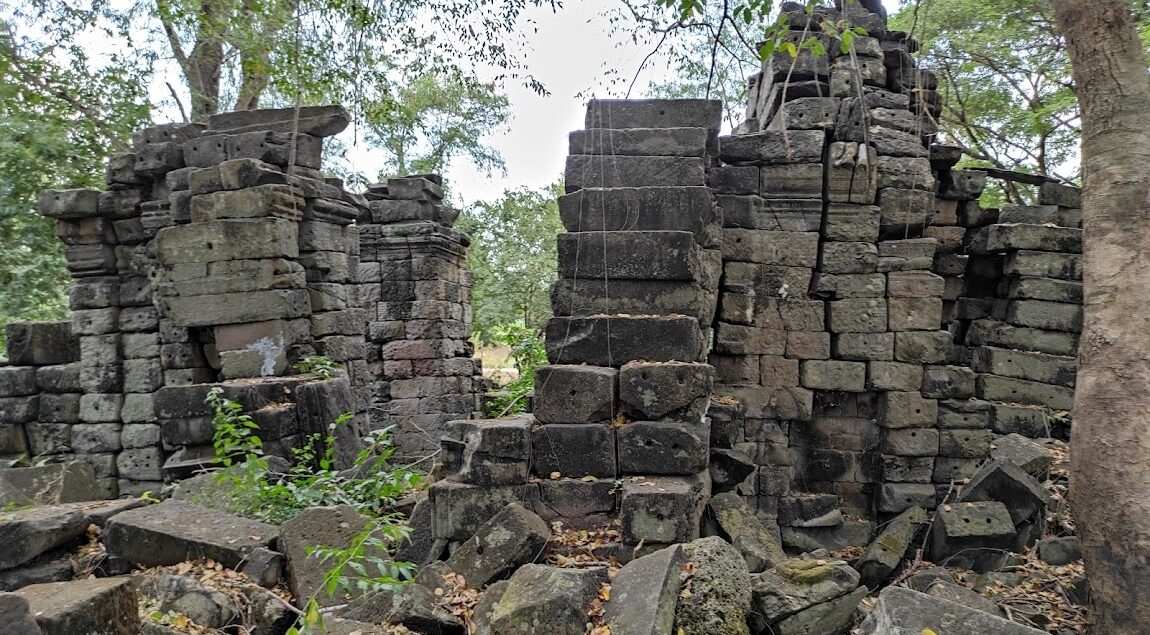
Partially standing remains of a cruciform-shaped sandstone temple that featured a “library” building and outer enclosure wall.
Prasat Samnang Ta Sok
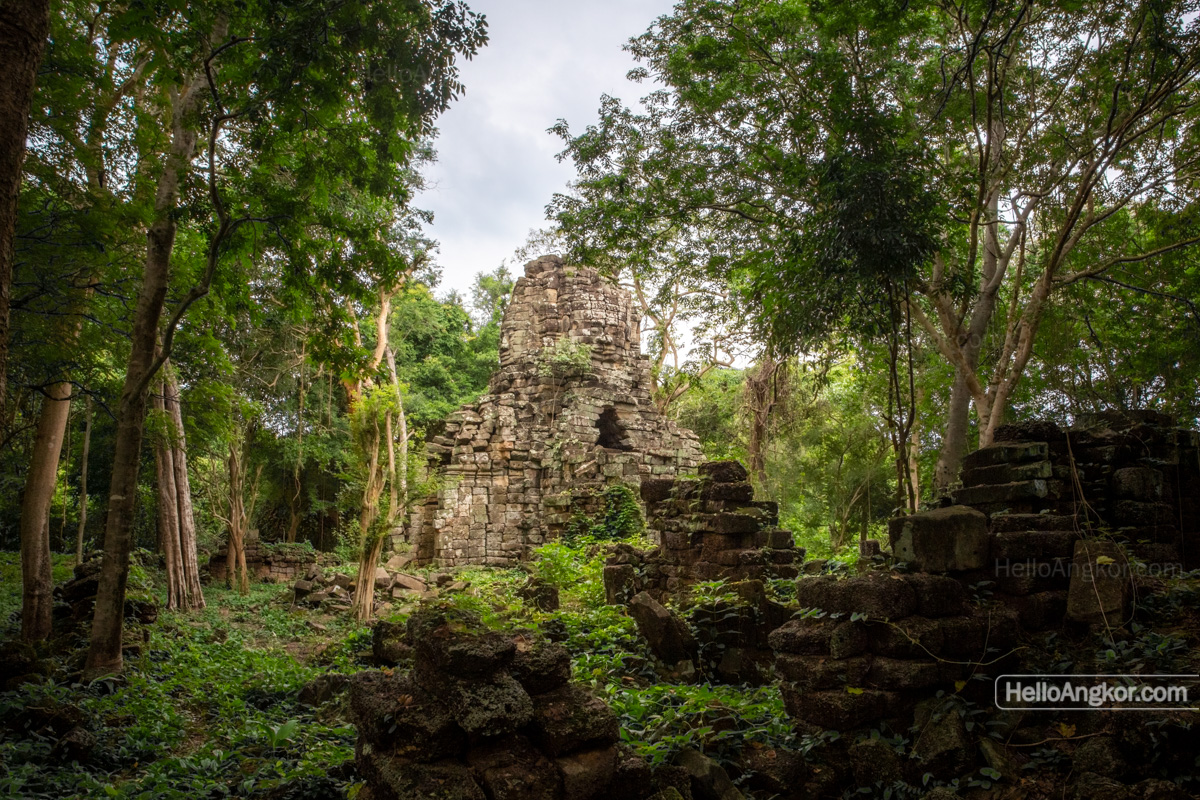
Located around 740m west of Prasat Ta Naem and almost 1km west of the outer enclosure of Banteay Chhmar temple, Samnang Ta Sok temple is one of best preserved of the eight satellite temples. It sits along the east west axis of the main temple and entered from the east by a earthen causeway, in … Read more
Prasat Ta Naem
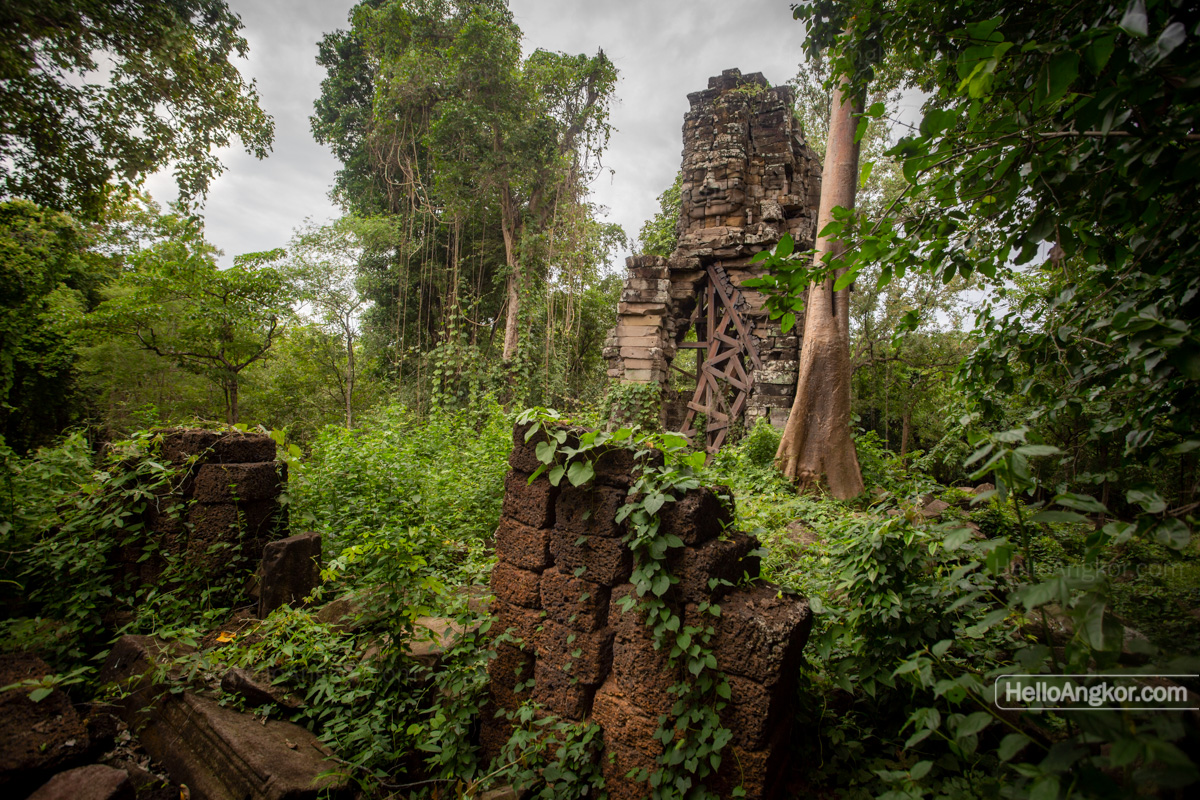
A single sandstone temple, library building, and outer enclosure wall with entrances on the east (main) and west (lesser). It is one of the inner satellite temples that surround the grand temple of Banteay Chhmar. Further to the west is Prasat Samnang Ta Sok. The superstructure of the temple is only partially standing on all … Read more
Prasat Yeay Kom
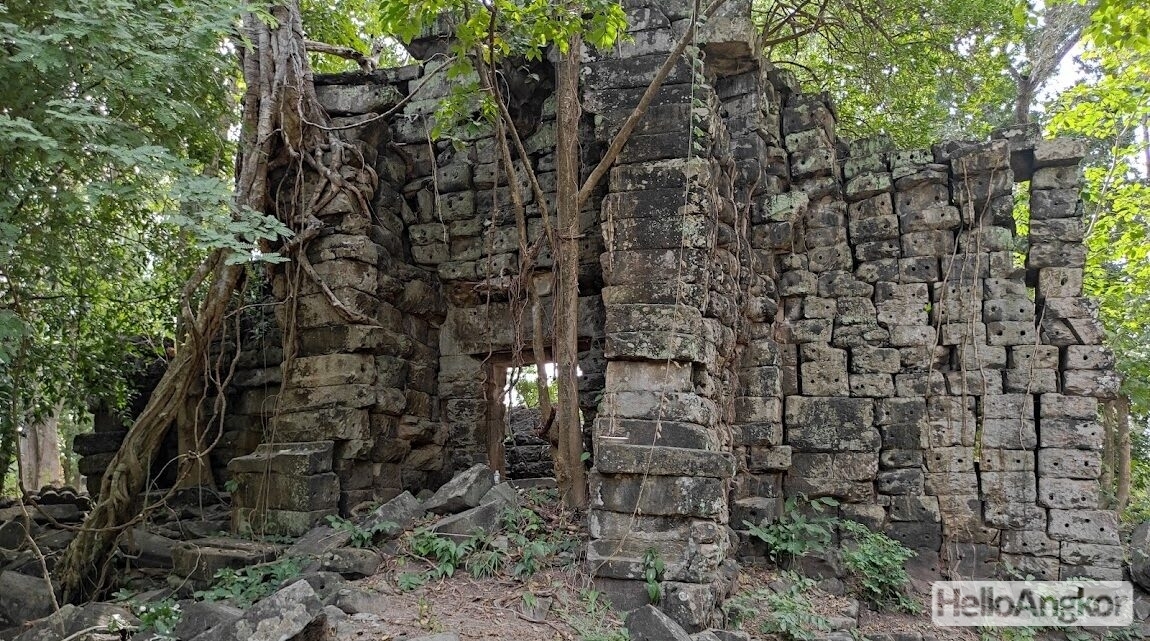
Remains of a sandstone cruciform temple, with library building, and laterite outer enclosure wall with entrance pavilions on the east and west. Of all Banteay Chhmar’s satellite temples this is perhaps the most ruinous with only one lower section of the wall with a doorway remaining upright along with the doorframe of the entrance pavilion.
Prasat Ta Im
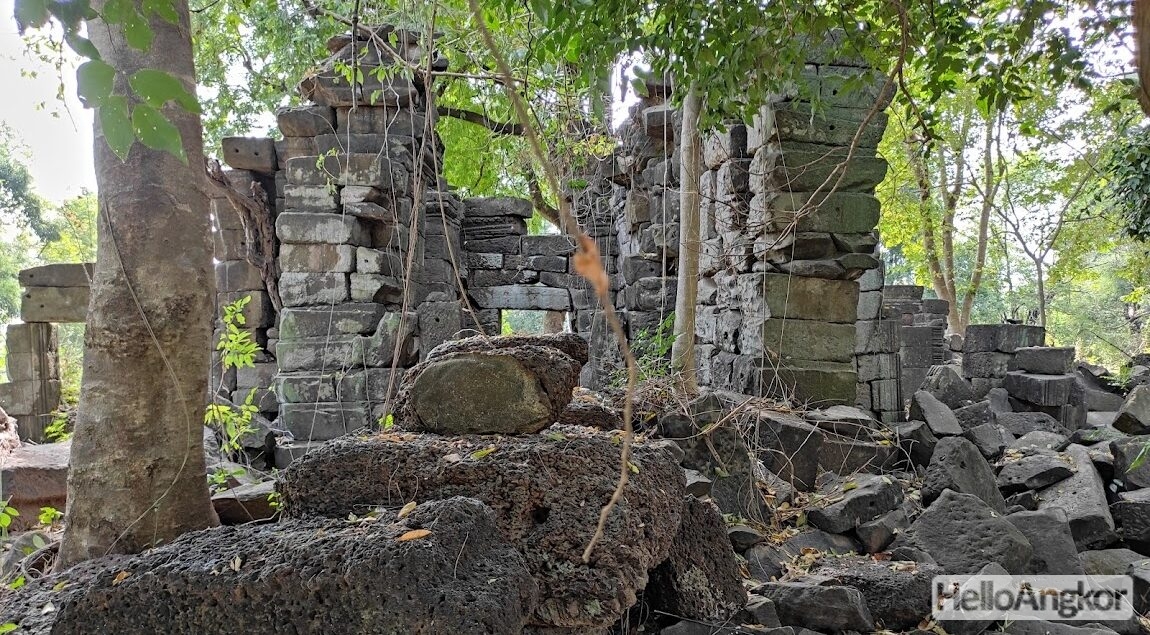
Remains of a cruciform sandstone temple, with library building, outer laterite wall, moat, and another outer enclosure wall. There’s also a small basin. The site is almost completely in ruin bar parts of the outer laterite wall, and some walls of the central temple and eastern entrance pavilion.
Yeay Chou
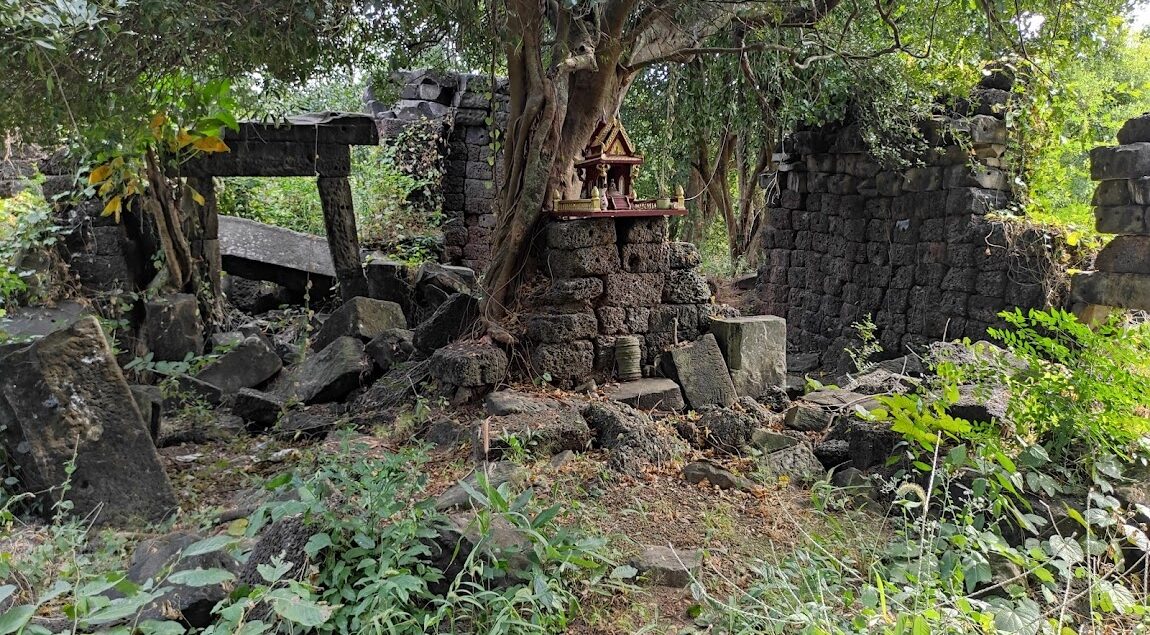
Partially standing remains of a laterite temple that was a cruciform shape with a small library building, outer wall, moat, and remains of a further enclosure wall.
Soriya Rong Ko
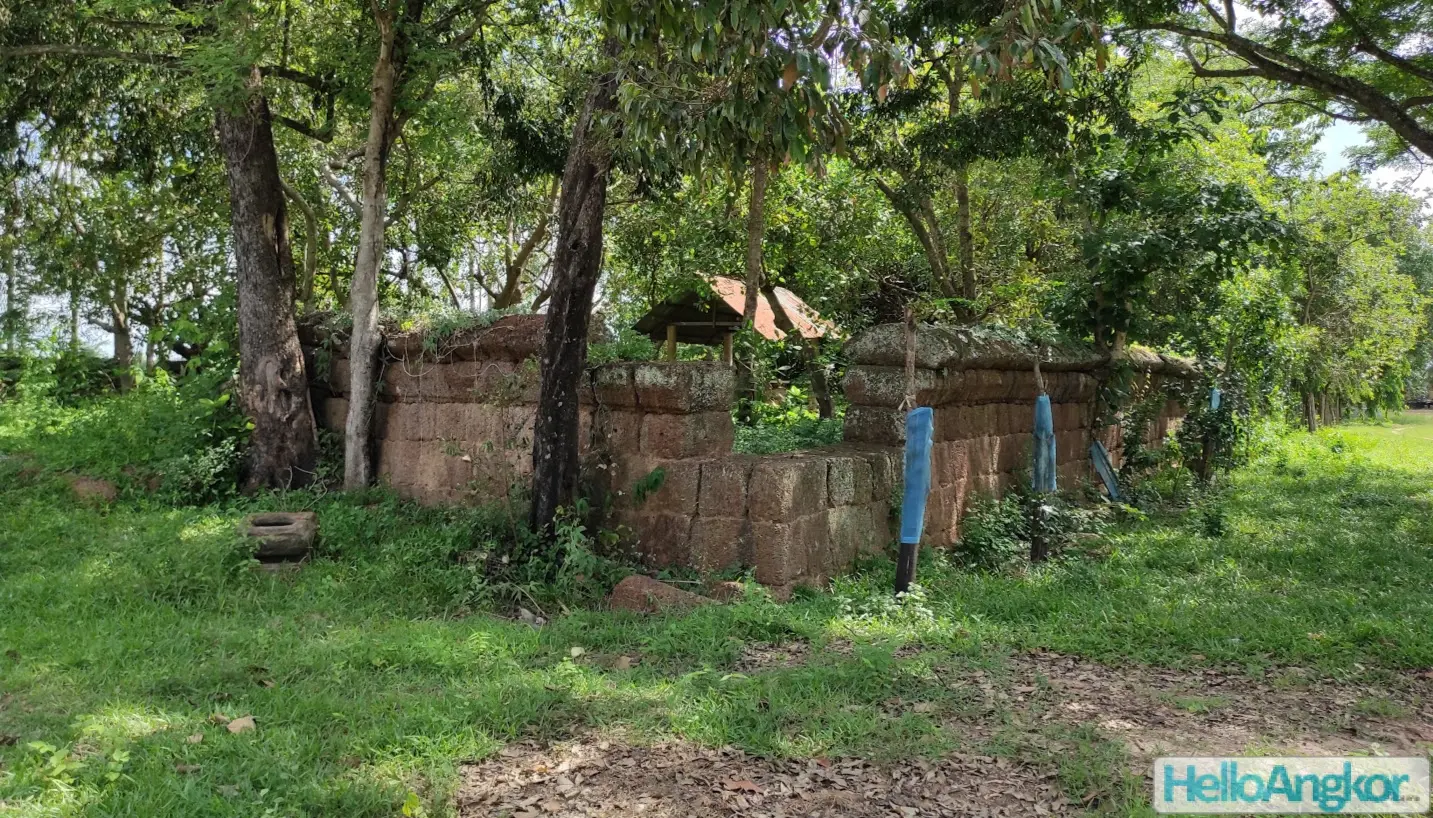
Ancient walled site located beside a contemporary monastery. The walled site is not large, around 25 m x 35 m long with a sandstone doorframe still standing on the east and a large opening on the west which may well be a later modification. The temple itself is no longer to be seen bar a … Read more
Terrace Rahal
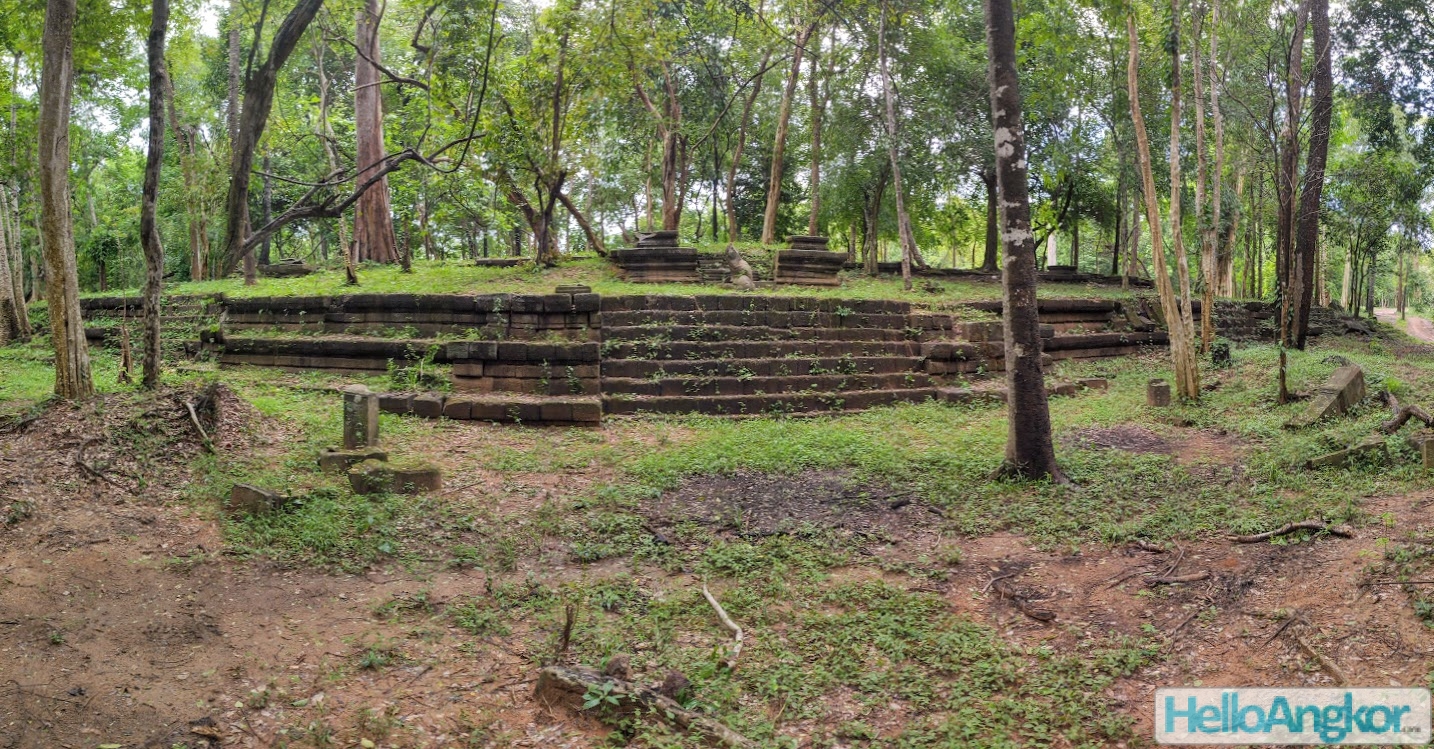
Located on the western side of Beng Mealea’s baray, or Rahal Baray as early French archeologists recorded it, is a very large cruciform sandstone terrace that connects to the eastern entrance of Beng Mealea via a bollarded causeway. At a guess, it is around 70 m long on its east-west axis and 40m wide in … Read more
Terrace B2 – Angkor Thom

An as yet unprepared site for visitors (05/2021). The site was originally noted by Henri Marchal back in the 1900s as group of two sites, Terrace B and this one, B2. Both are related to Theravadan Buddhism that became predominant in the post God-King era/late Angkor period. The site, overgrown, features a tall stepped structure, … Read more
Necropolis
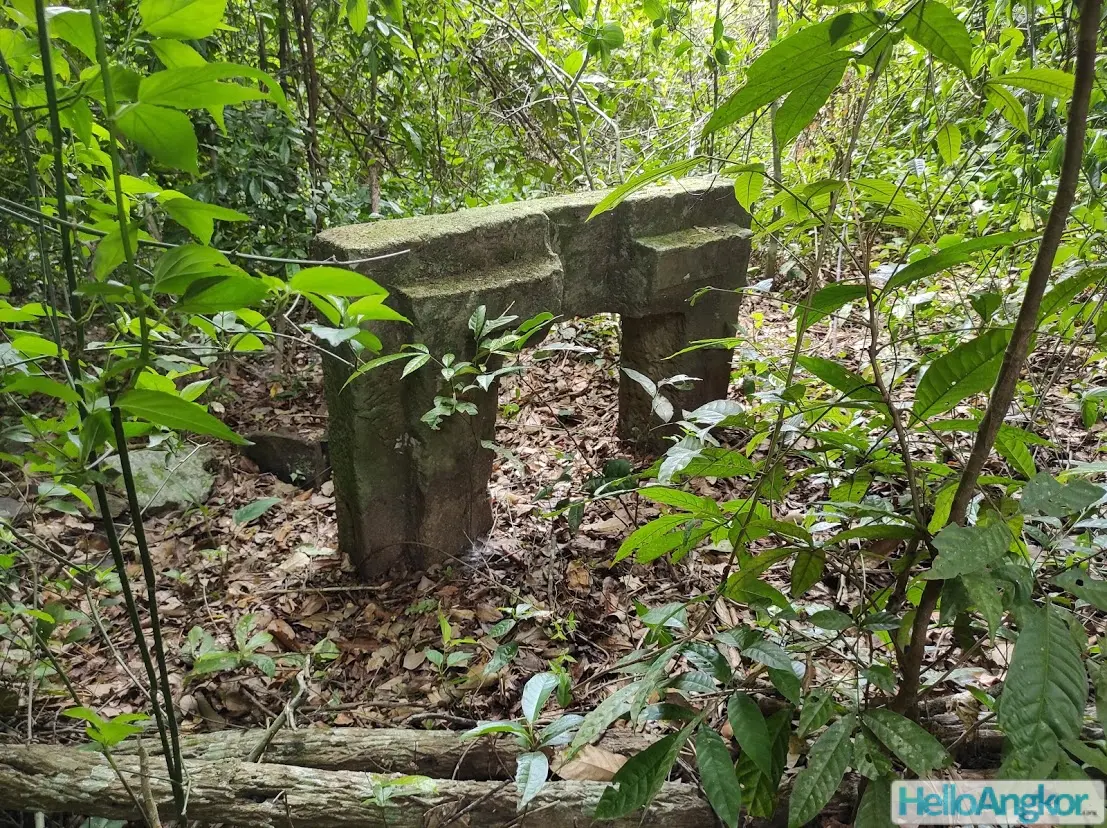
An uncleared site and unprepared for visitors. Located along the northeastern edge of the Beng Thom (a large basin) is a mostly continuous mound running east-west of almost 250 m in length and perhaps 30 m wide and several meters tall. On its northeastern end can be seen a laterite structure, a sandstone plinth, various … Read more
North Bank Wall
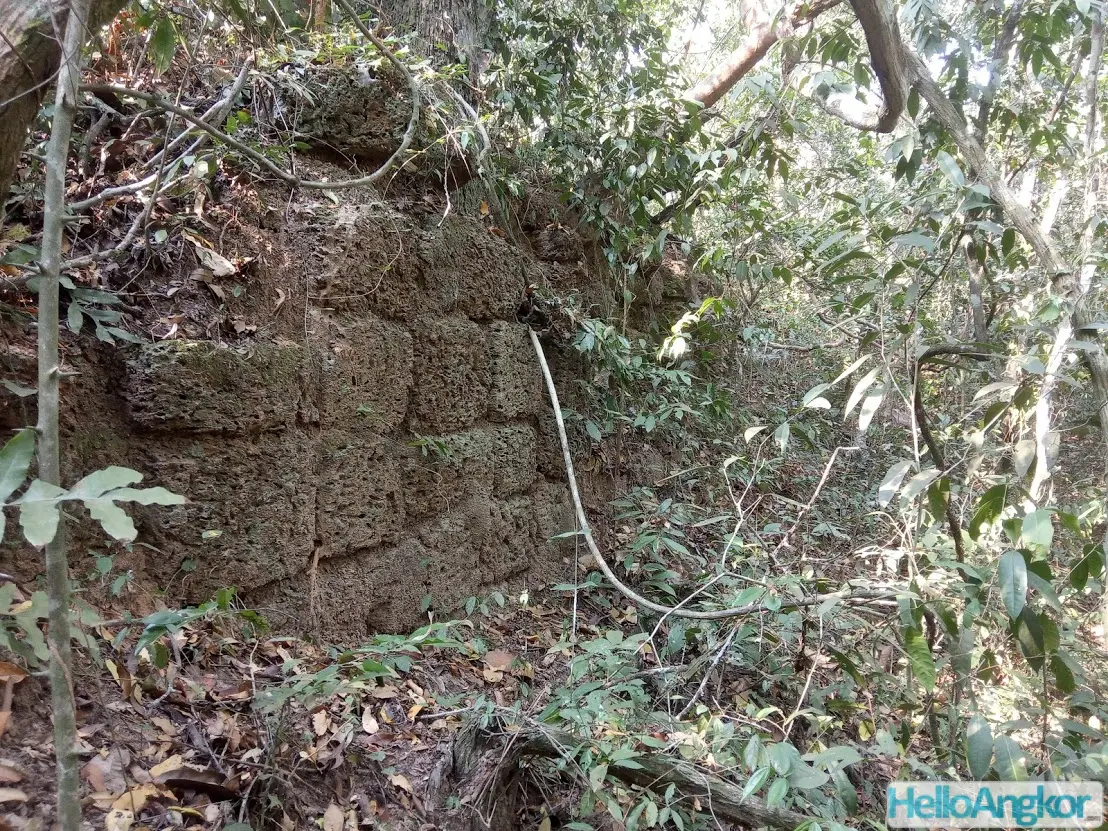
Remnants of a tall earthen wall with a laterite substructure that connects in between Angkor Thom and the East Baray. Running parallel on the northern side is a modern laid dirt trail and a canal that connects into the moat of Angkor Thom. It may have also spawned a bridge at its western end while … Read more
Sdok Kok Thom
Sdok Kak Thom, is an 11th-century Khmer temple in present-day Thailand, located about 34 km northeast of the Thai border town of Aranyaprathet. It is the last (known) temple on the southwestern ancient Khmer Royal Road network see map. The site is notable for its much-discussed inscriptions registered under K235 and K1087.
Phimai
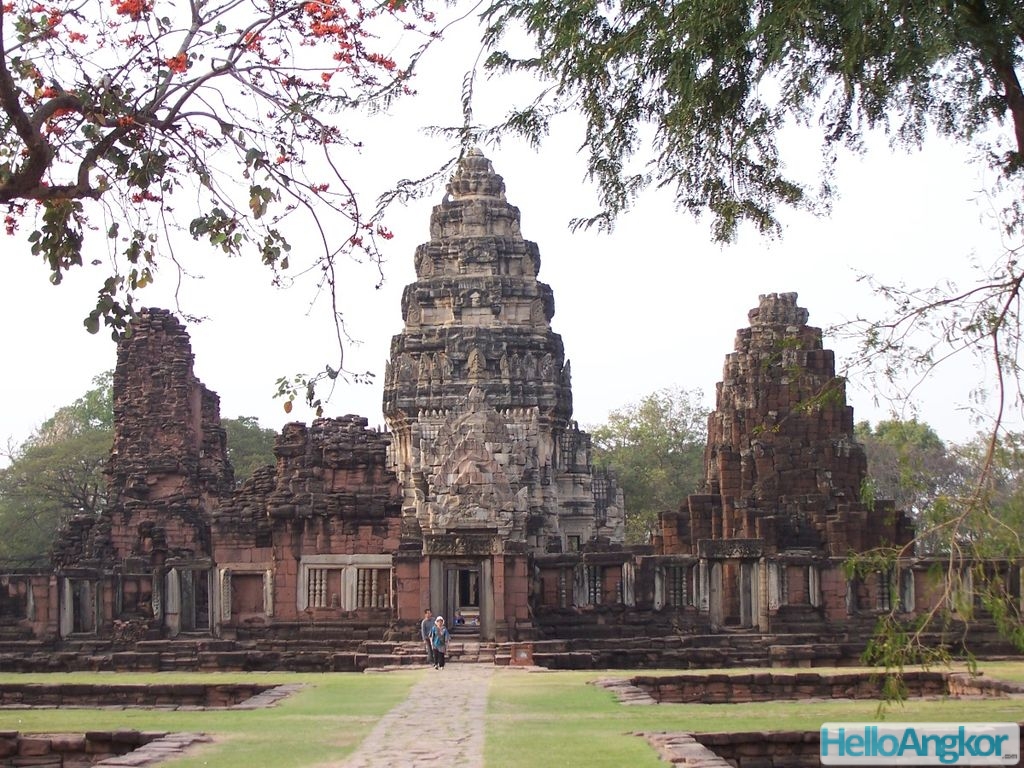
Phimai Temple (now in present-day Thailand) was an important outpost at the time of the Khmer Empire. The temple Prasat Hin Phimai, located in the center of the town, was one of the major Khmer temples connected with Angkor by ancient Royal Roads and the last temple on the Angkor-Phimai Royal Road. The site is … Read more
Wat Phu
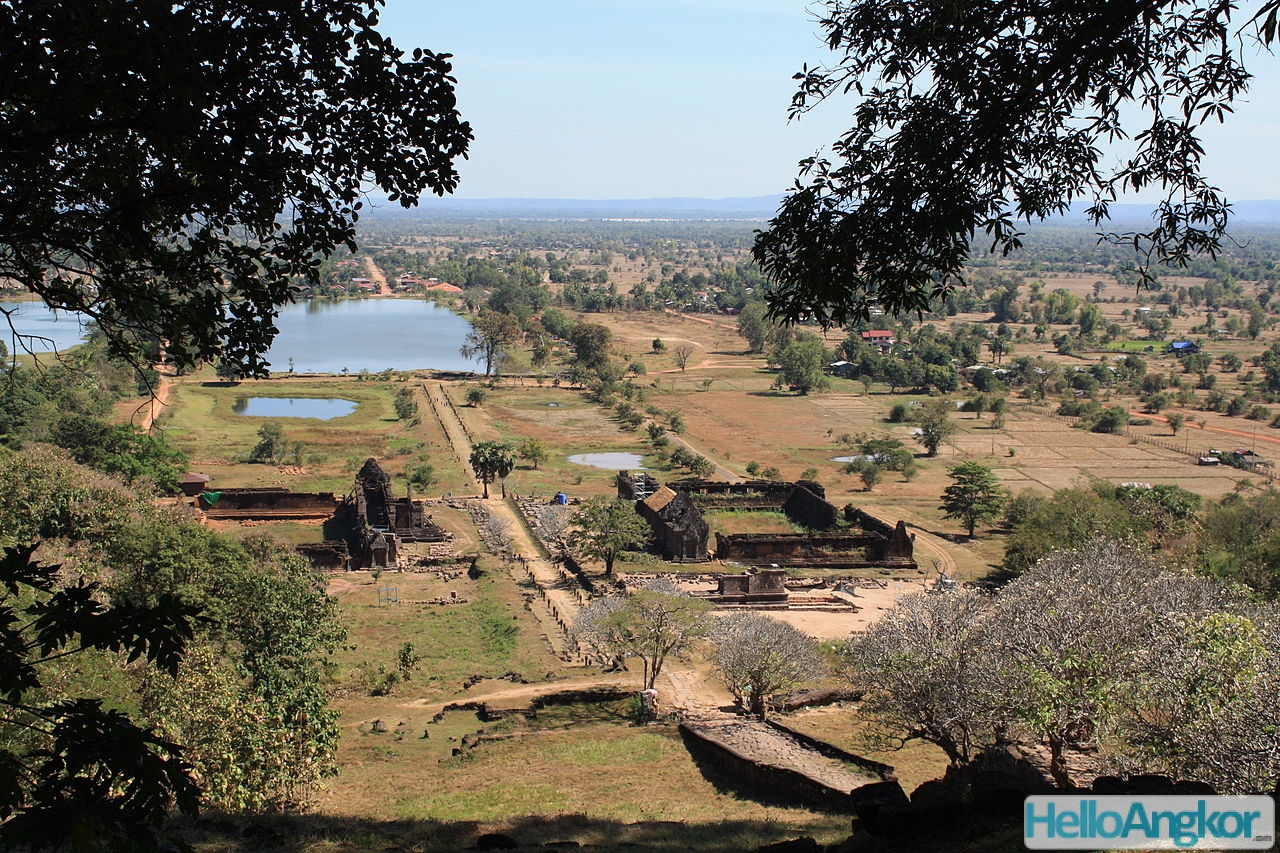
Vat Phou (or Wat Phu; Lao: ວັດພູ [wāt pʰúː] temple-mountain) is a ruined Khmer Hindu temple complex in southern Laos. It is at the base of mount Phou Khao, some 6 kilometres (3.7 mi) from the Mekong in Champasak Province. There was a temple on the site as early as the 5th century, but the … Read more
Phnom Sandak Temple
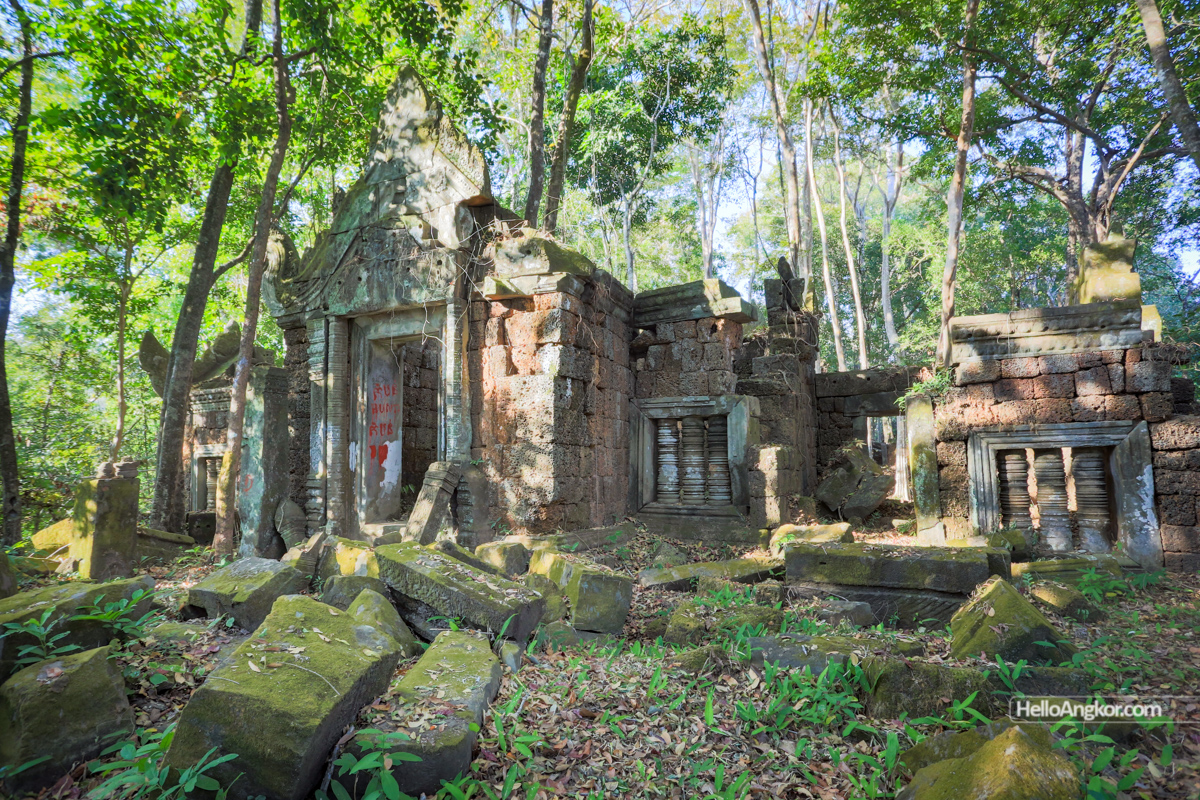
Also known as Prasat Phnom Sandok. It is a remote site but quite an incredible site, not only for its incredible location and its size but also for being one of the most important sites in the ancient Khmer empire due to its fascinating inscriptions. Whilst it’s not the easiest site to reach presently (01/23), … Read more
Kon Chen Temple
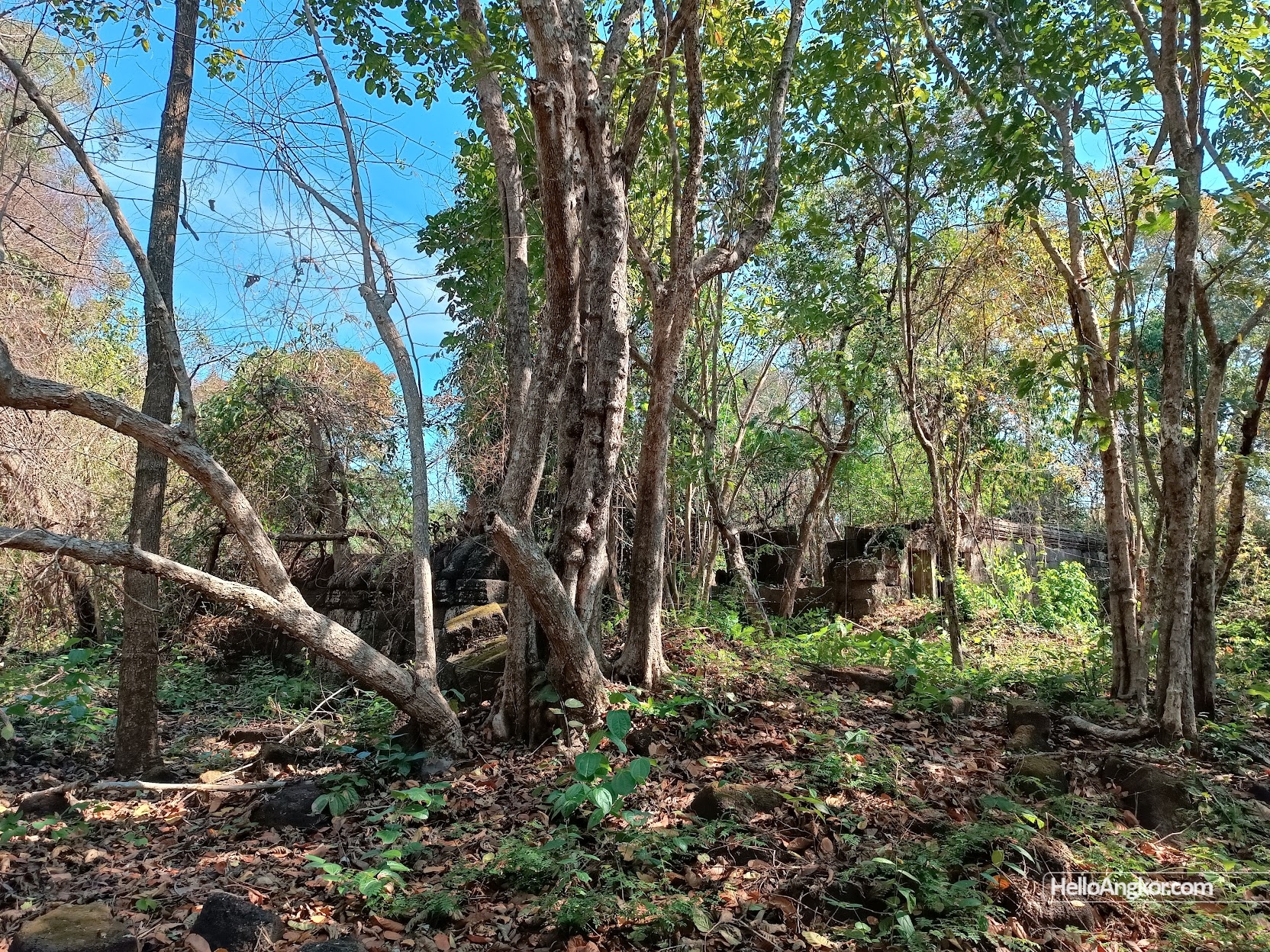
Located north of Prey Veng village and south of Tel Village in Preah Vihear province, Prasat Kon Chen (also known as Pr. Kon Chin) is a small temple site related to the nearby grand temple of Phnom Sandak. It’s a building type that the French researchers from the early 1900s would label “Palais” and features … Read more
Firehouse at Ta Prohm

Located inside the outer enclosure of Ta Prohm and preceding the first moat on the eastern side is a single sandstone building which is referred to as a Firehouse, or in some literature as a Dharmasala. In either respect, these firehouses were an important feature along the ancient royal road network. This particular one being … Read more
Wat Krang Tnung
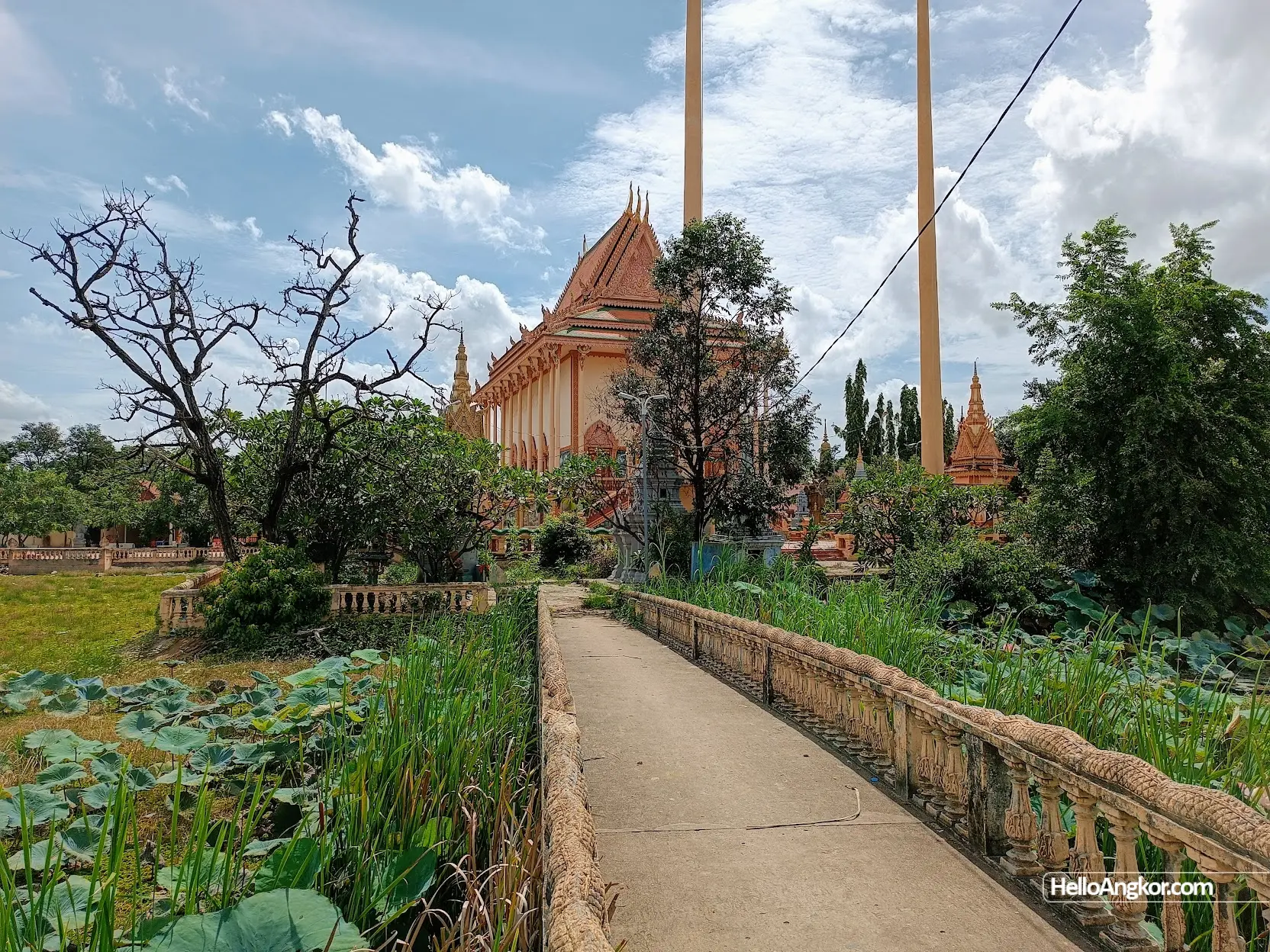
Also recorded as Wat Krang Thnong. A contemporary monastery and pagoda that is partially surrounded by a moat, and, where ancient temple remnants were found and registered under K 796.
Wat Kôk Khsach
Monastery where were found registered under the registration number K.763 and a statuette fragment. (Parmentier, 1935 – Cisark)
Wat Kôk Banhchân
Monastery partially surrounded by a moat with a large basin in the east, where were found a stele representing deities 9 (Navagraha) sandstone, a deity figure, a bell bronze, laterite blocks and bricks.