
- Area: Siem Reap Province > Krong Siem Reab > Sangkat Nokor Thum
- | Type: Ancient Remains & Temples
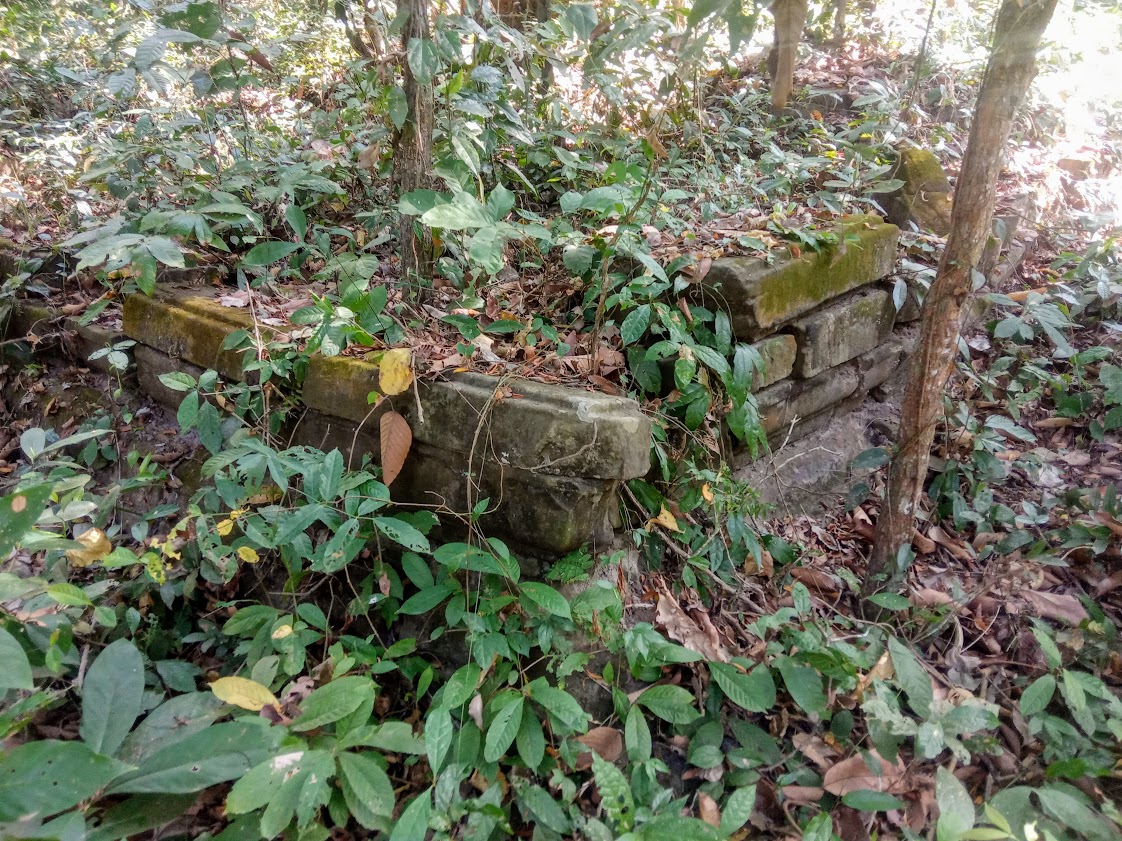
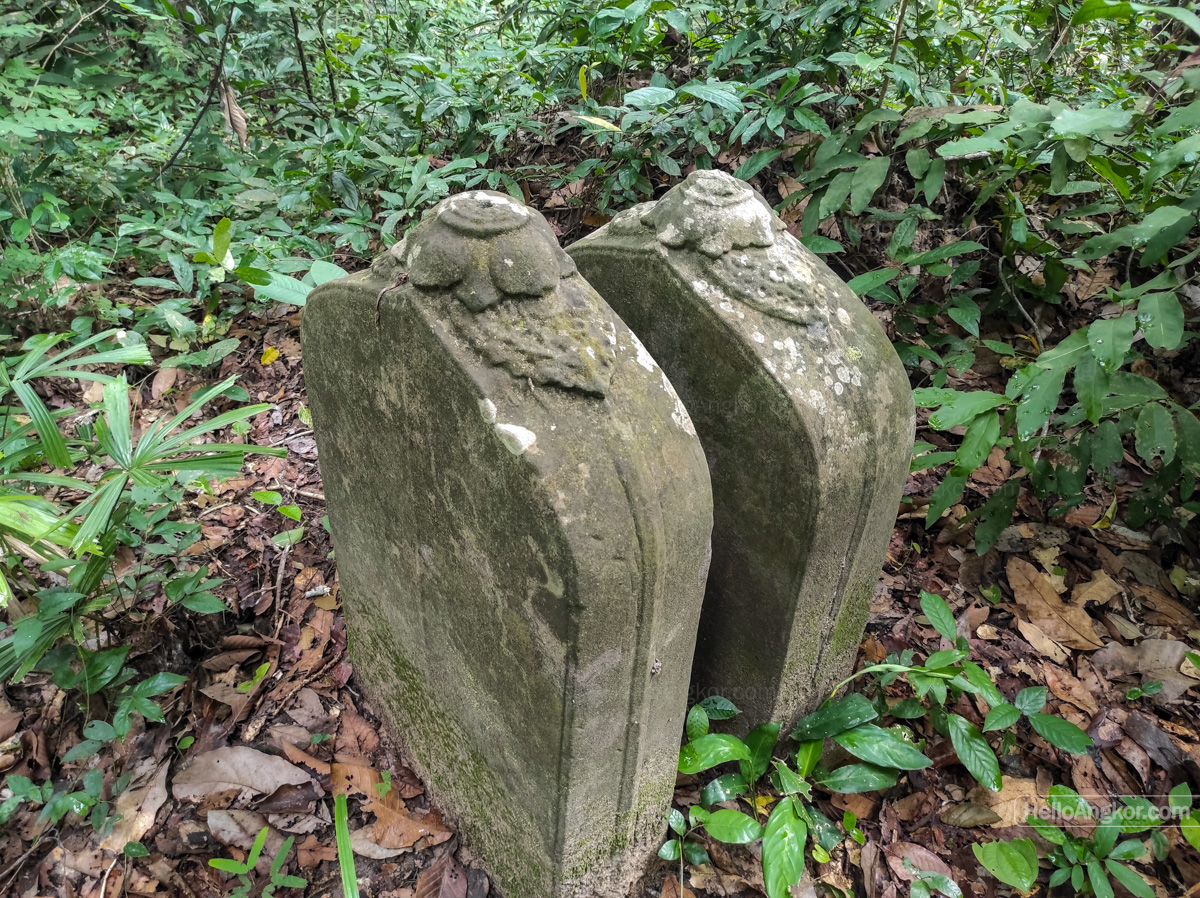
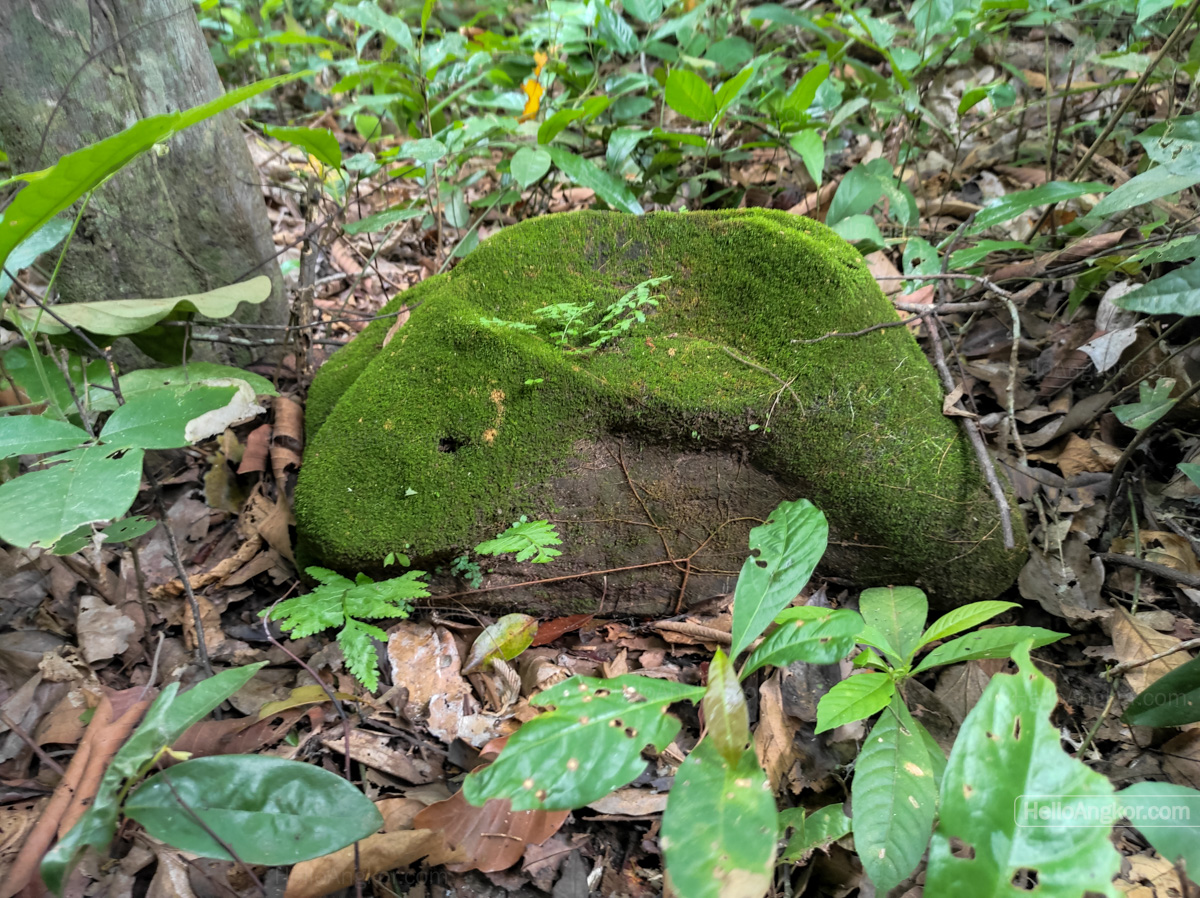
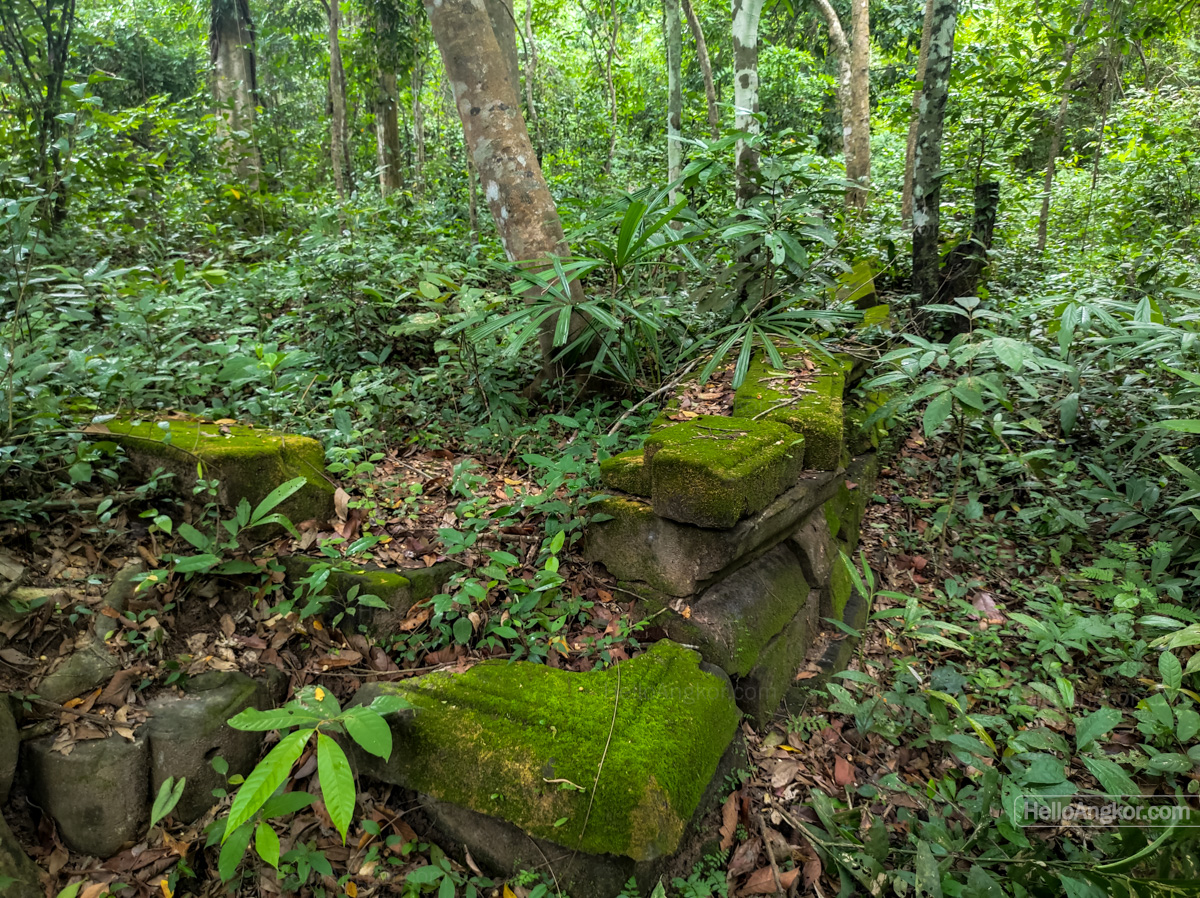
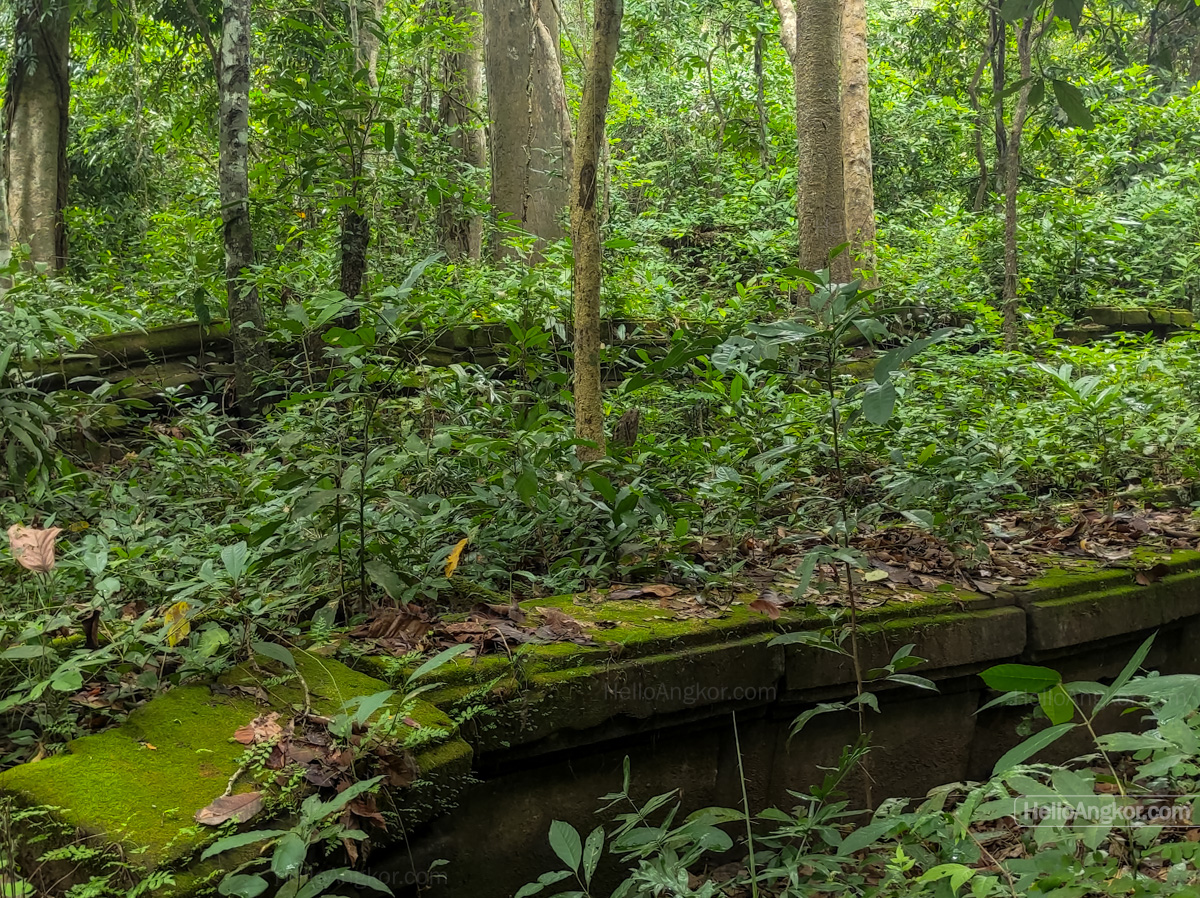
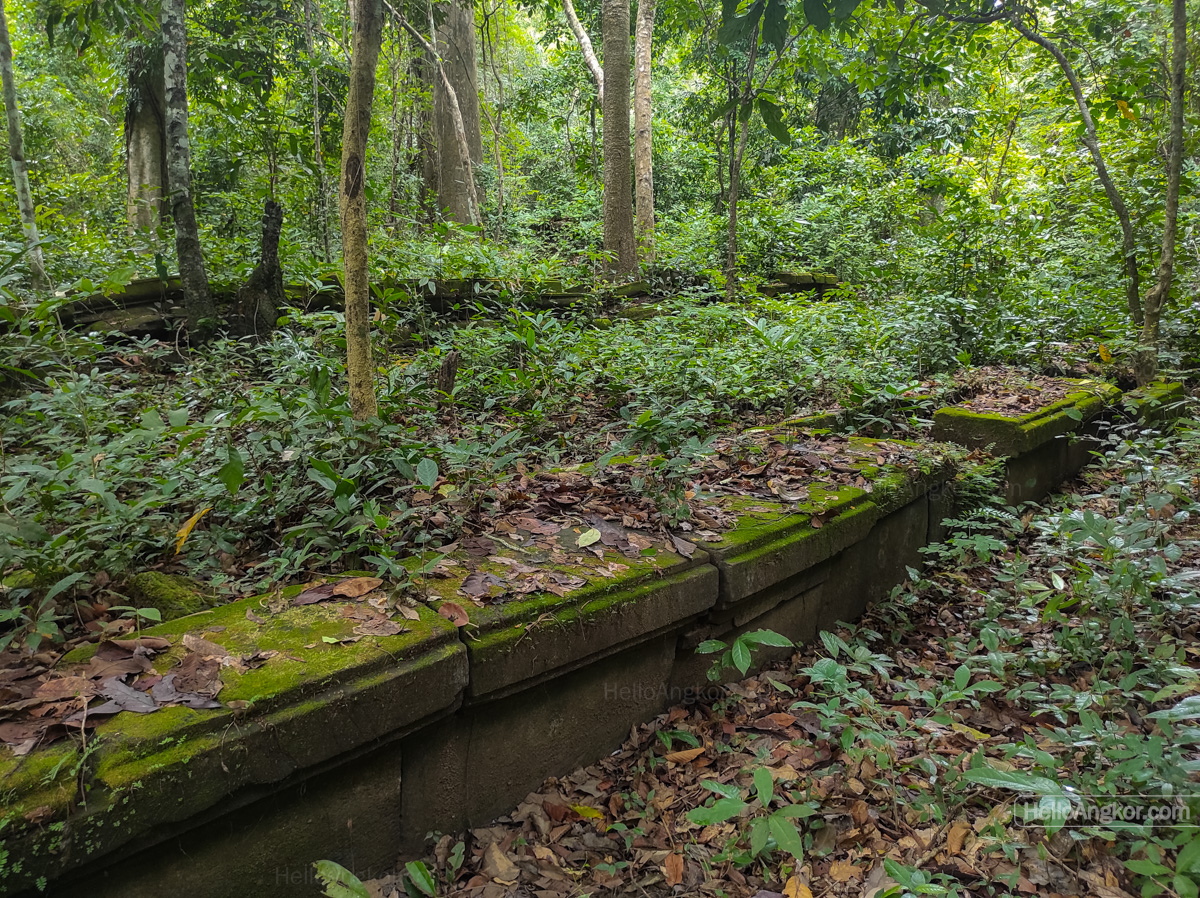
A presently uncleared site, first uncovered in 1918 by Henri Marchal and referred to as Terrace #3, it’s a large sandstone terrace, near to 40 m long and 20 m wide, surrounded by sema stones, and opening to the east with a small laterite building of only around 3m sq. It is suggested to be one of the earlier terraces in the transition away from temple building in the late/post-Angkorian era (c. 13th-16th centuries).
Images: June 2021
Contemporary Research
In 2019, the Angkor Vihara Project published a report on their fieldwork, illuminating more of the site. The site was inventoried as ATV007. This was the first clearance and excavation of the site since the early 1900s, when Henri Marchal documented the site, carrying out only a minor excavation beneath a sima stone, revealing ritual deposits (animal bones and a bronze object).
The site’s first tier was measured at 33x17m and .9m tall, which was topped by a second tier of 17×7.5m of about 30cm in height. Topping the western end of the second tier is a 2x2m and 1m high pedestal/balan. All of which is constructed of sandstone covering a laterite and earthen inner core.
Near the western end of the structure, a spouted sandstone pedestal was discovered along with a round piece that may be an upturned statue. Meanwhile, at the eastern end, a porch extends 2.25m.
For more details see: 2019, Harris, Soeng, Angkor Vihara Project, Activity Report, 2019 Field Season
Research on the Buddhist Terraces of Angkor Thom is ongoing.
Historical Notes
Here is the translation of the archaeological description:
Buddhist Terrace No. 3
This terrace is located to the north of the road leading to the Victory Gate, almost level with Monument 487. It faces east and consists of the two usual superimposed platforms.The Lower Platform
The lower platform measures 33 meters by 17 meters. The perimeter wall is made of sandstone, molded with a single band at the upper section, and stands one meter high. Access is gained from the east via a flight of steps 2.50 meters wide, bordered by two stringpiece bases of 1.80 meters; this staircase creates a two-meter offset from the terrace wall.The Upper Platform (Prâh Vihâr)
Ten meters west of these steps, the second platform corresponds to the prâh vihâr. Raised by 0.80 meters, it consists of a sandstone perimeter wall with a molded profile composed of a band and a quarter-round, repeating symmetrically along a horizontal axis. Dimensions: 17 meters long by 7.50 meters wide.Eastern Section
It offsets to the east to form a 3-meter by 3-meter forepart (avant-corps), which appears to be at a slightly lower level.Southern Features
The low wall—or rather, the stone sill—which runs alongside the southern wall for a length of 2 meters (forming a lateral bay in front of the bàlàn) is clearly visible. Its position is further confirmed by the traces of a tiny access stairway found at the eastern end.In the usual position at the west of the platform, the pedestal of the bàlàn, made of molded laterite, is still visible. However, the heavily weathered state of the stone makes it difficult to reconstruct its profile. It is probable that this pedestal was once covered in plaster; however, there is no definitive evidence to confirm this. It measures approximately 2 meters on each side by 1.15 meters in height and rests on sandstone paving. Today, it supports only insignificant Buddhist statuettes, fragments, and debris from antefixes.
Archaeological Finds
At the base of the bàlàn, the following items were unearthed:
– A terracotta vase: Measuring 0.065 m in height with a diameter of 0.07 m.
– A cylindrical metal box: Complete with a lid, made of a metal known as ton dèn (bronze). It measures 0.035 m in height and 0.037 m in diameter.Both the vase and the box contained calcined (cremated) bones. A small cup made of ton dèn was also recovered during the excavations.
Boundary Markers (Sīmās)
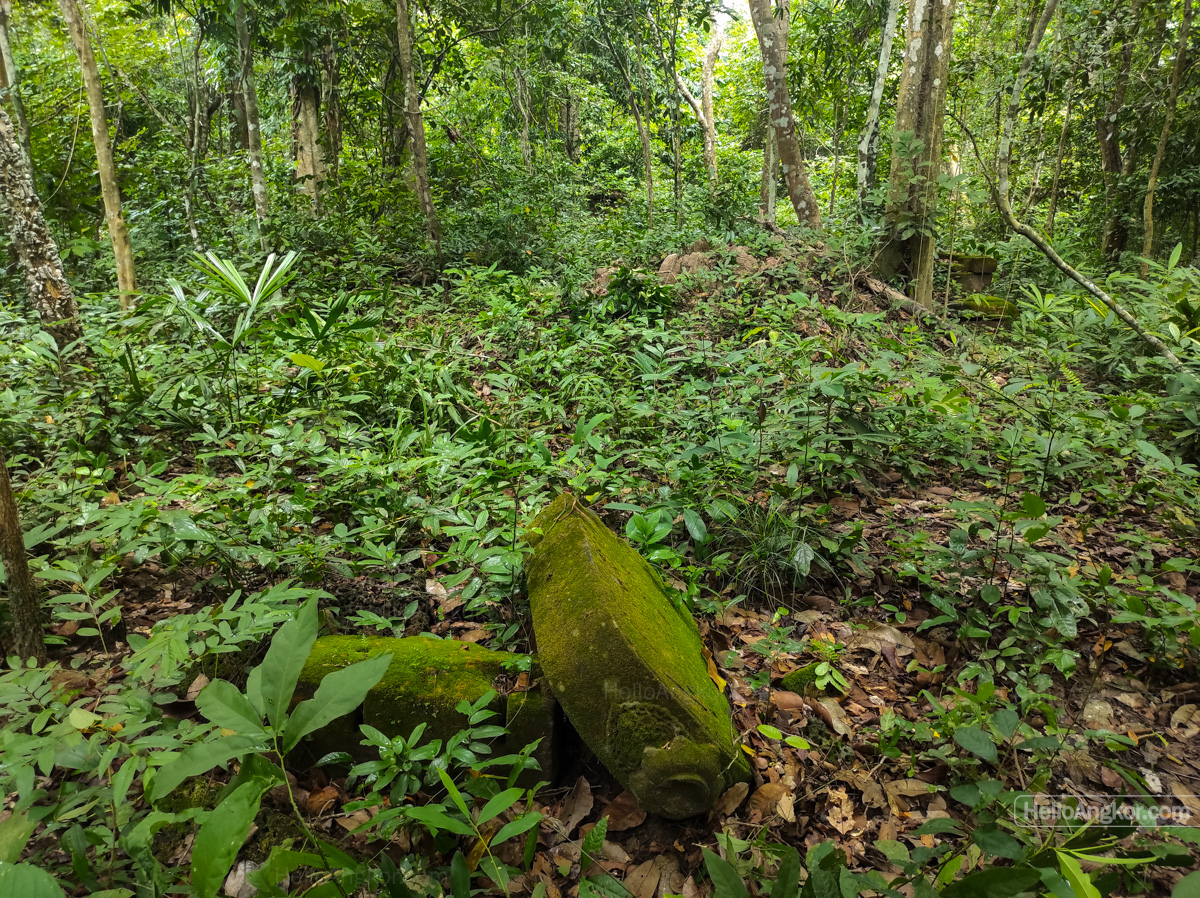
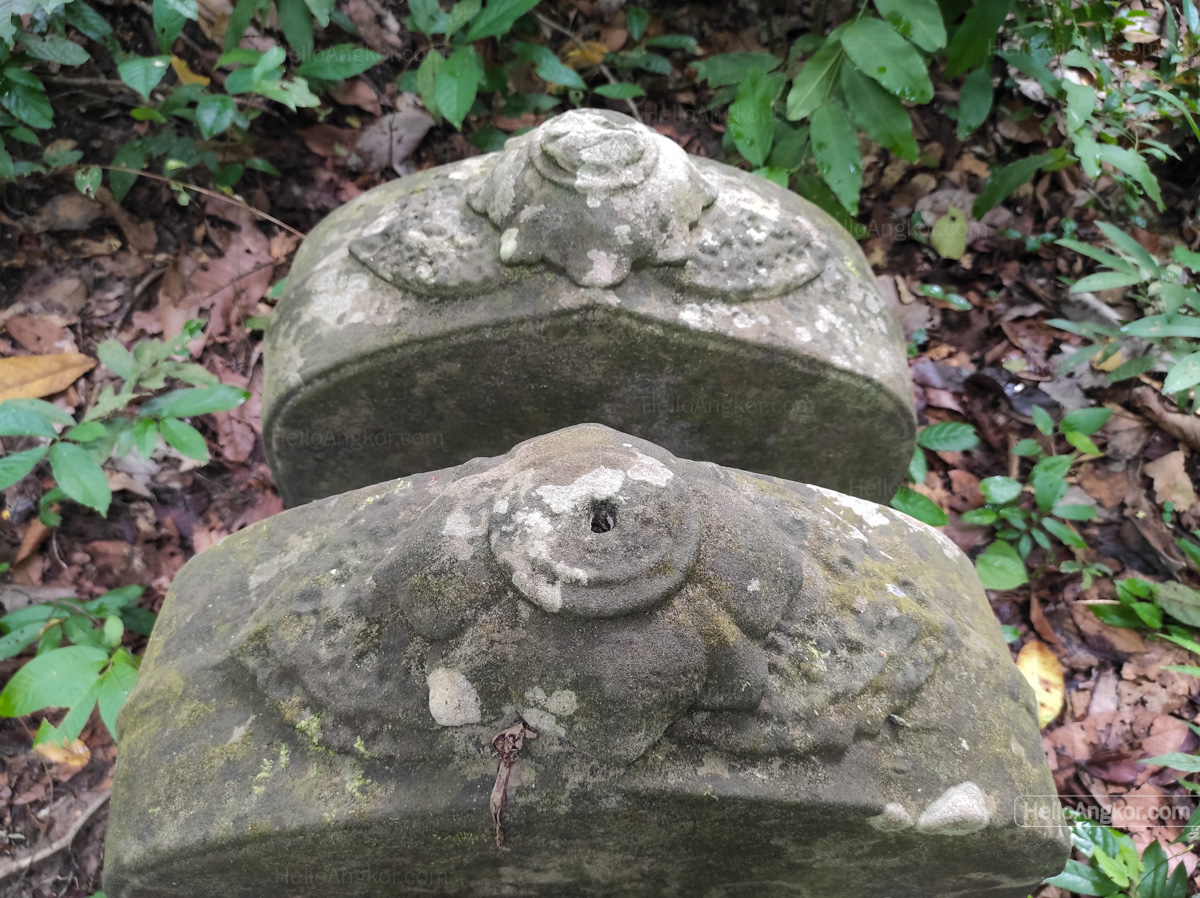
The sīmās (boundary stones) are located in their usual positions, marking the limits of the prâh vihâr. About twenty meters from the eastern steps, two sīmās were found on the ground, broken into several pieces. Slightly further south, another was found intact; it is quite short and stocky, reflecting the mediocre craftsmanship typical of such pieces.1918, Marchal, Monuments Secondaires et Terrasses Bouddhiques d’Angkor Thom
Map
Site Info
- Reference ID: HA11961 | Last Update: February 23rd, 2026
- Site Name: Angkor Thom Terrace | Khmer: អង្គរធំ
- Other Names: Angkor Thom (Terrace N° 3), Monument 89
- Location: Siem Reap Province > Krong Siem Reab > Sangkat Nokor Thum
- Inventaire Khmer IK: 471.89
- MoCFA/EFEO Inventory - CISARK: 678
- Angkor Vihara Project - AVP: ATV007
- Georges Trouvé Inventaire - GT: 89
- Tags/Group: 14th-15th Century, Angkor, Angkor Thom, AVP, Buddhist Terrace, Temples
Bibliograghy
- 1908, Chronique, in Bulletin de l'Ecole française d'Extrême-Orient, 8, p. 290 (under IV. Découvertes)
- 1918, Marchal, Monuments Secondaires et Terrasses Bouddhiques d'Angkor Thom, p. 15 (Site: Terrasse Bouddhique #3)
- 2019, Harris,Soeng, Angkor Vihara Project, Activity Report, 2019 Field Season
- 2022, Harris, Towards a temporal assessment of Angkor Thom’s Theravada “Buddhist Terrace” archaeology
- 2019, Harris, An Old Ritual Capital, a New Ritual Landscape: Understanding the Transformation of Angkor Thom, Cambodia through the Construction and Placement of Theravāda »Buddhist Terraces«
- 2022, Shimodo, A Typological Study of Theravāda Buddhist Monasteries in Angkor Thom, Cambodia
