
- Area: Siem Reap Province > Krong Siem Reab > Sangkat Nokor Thum
- | Type: Ancient Remains & Temples
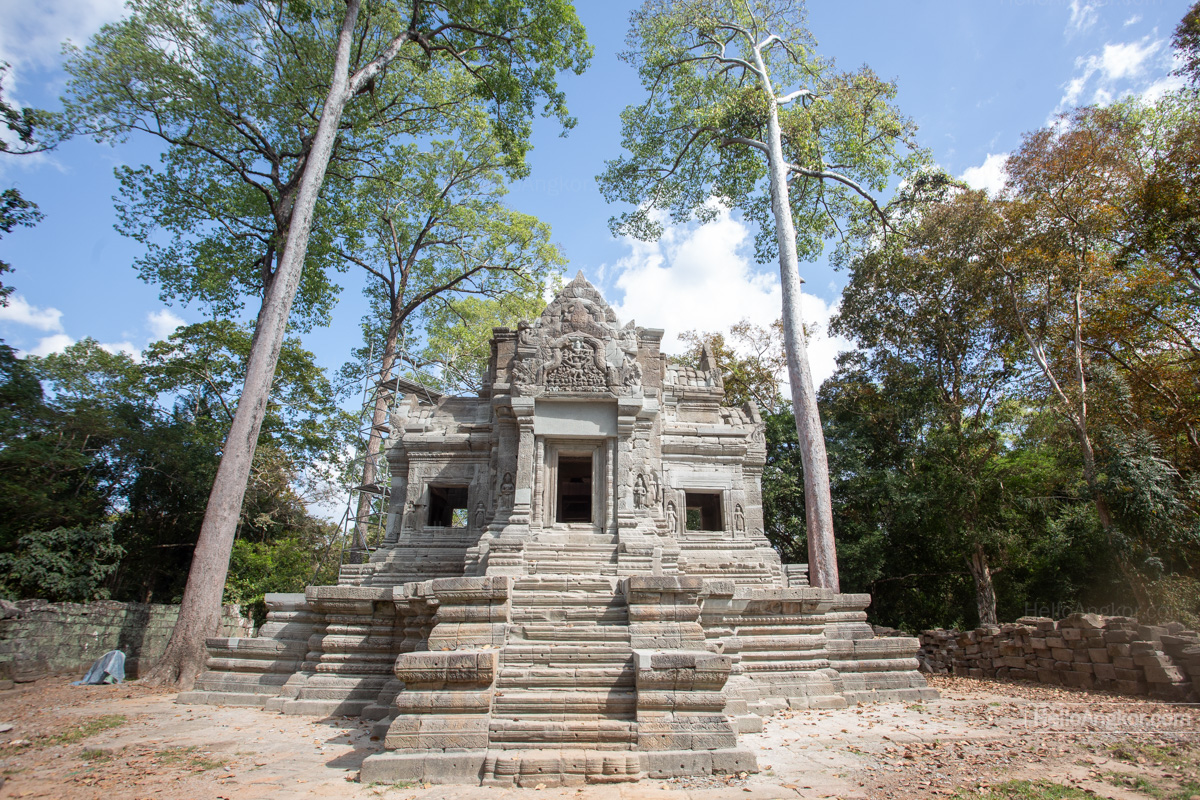
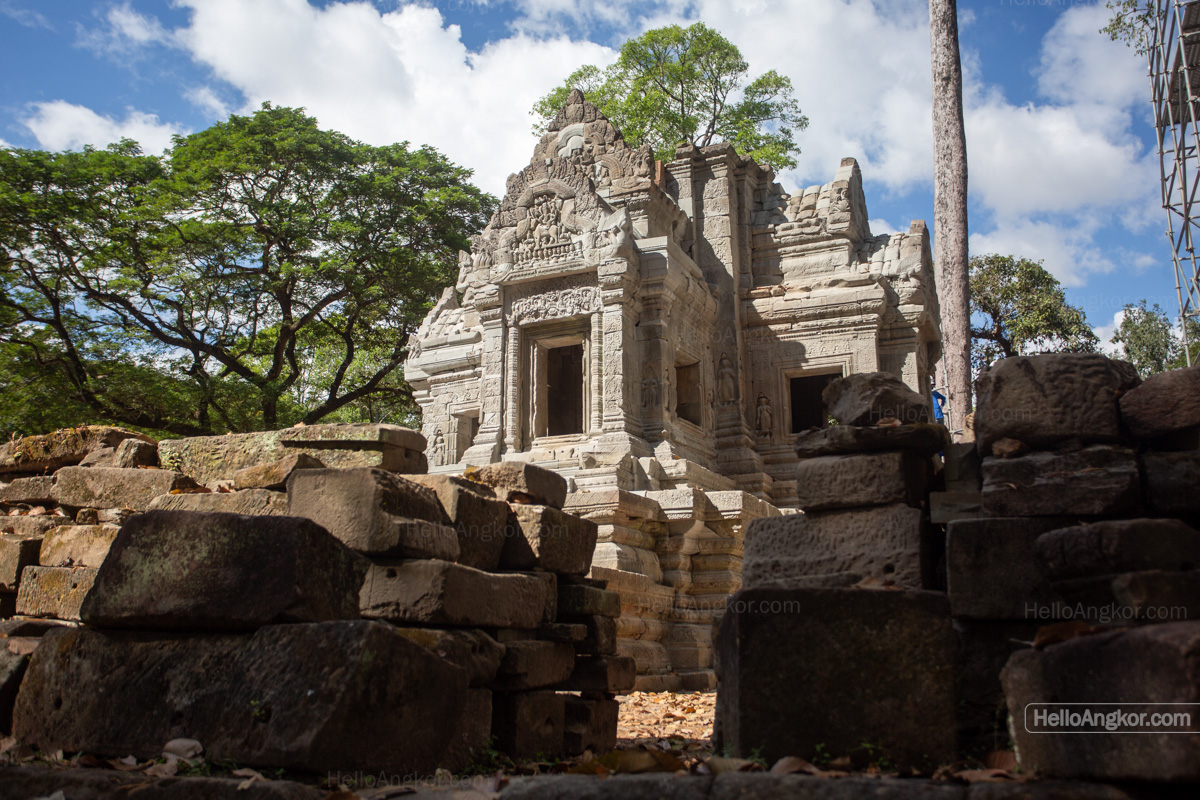
Prasat Chorm, or Preah Pithu U, or Chorm Temple, is a small sandstone temple, surrounded by a wall, and sharing an “island” created by an outer moat with Preah Pithu T (Kor Sak Temple).
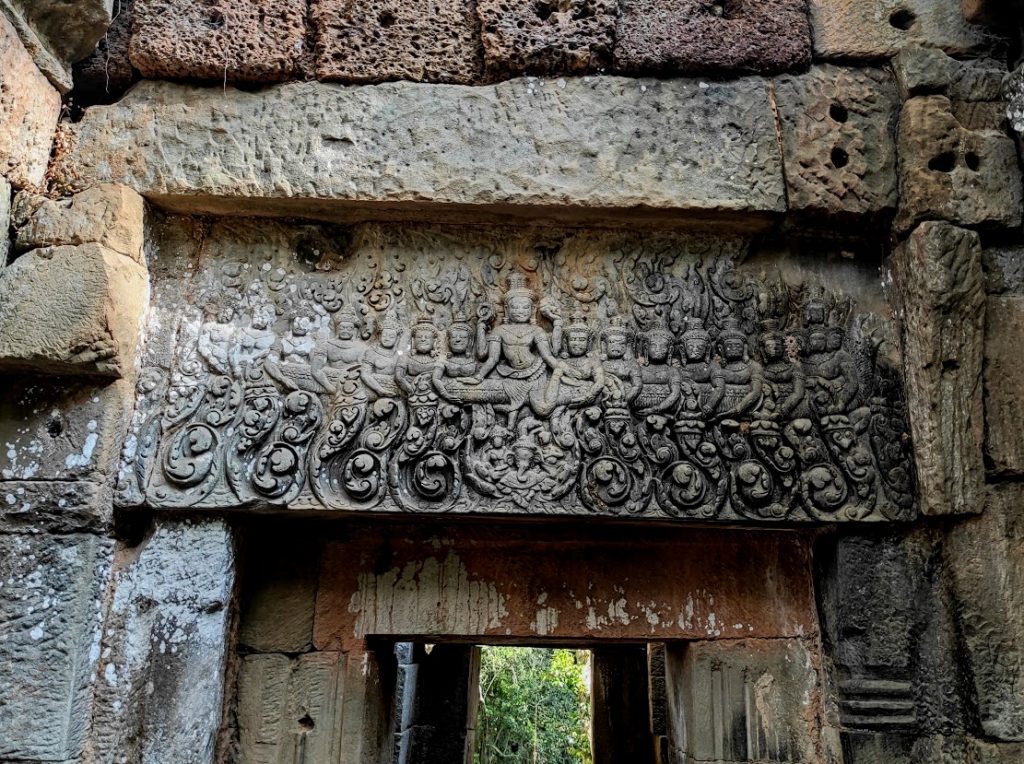
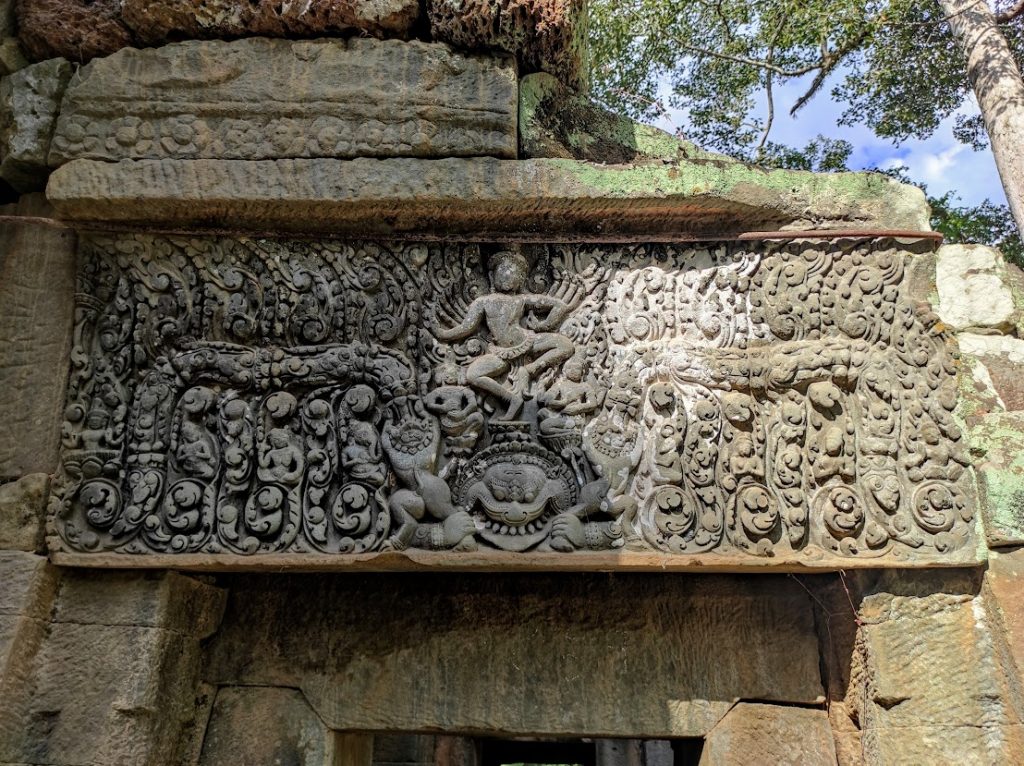
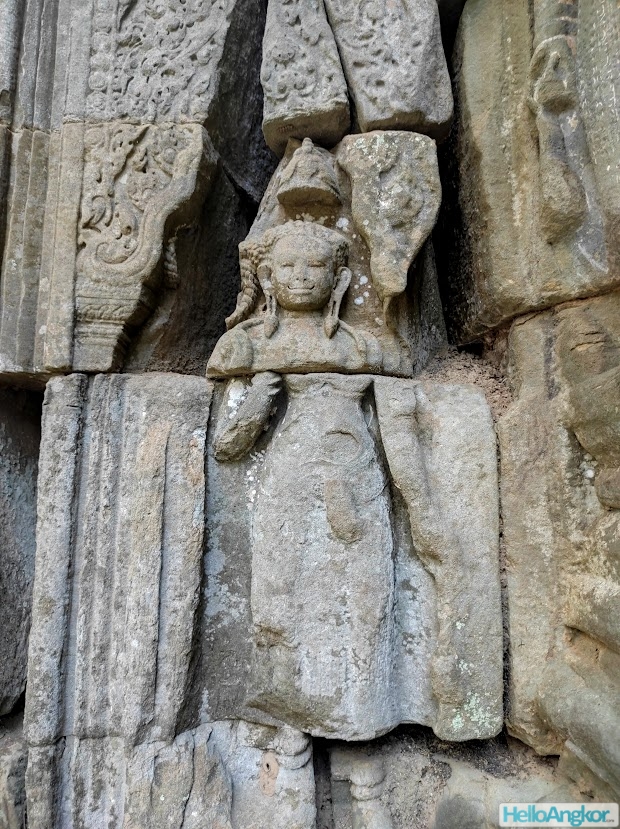
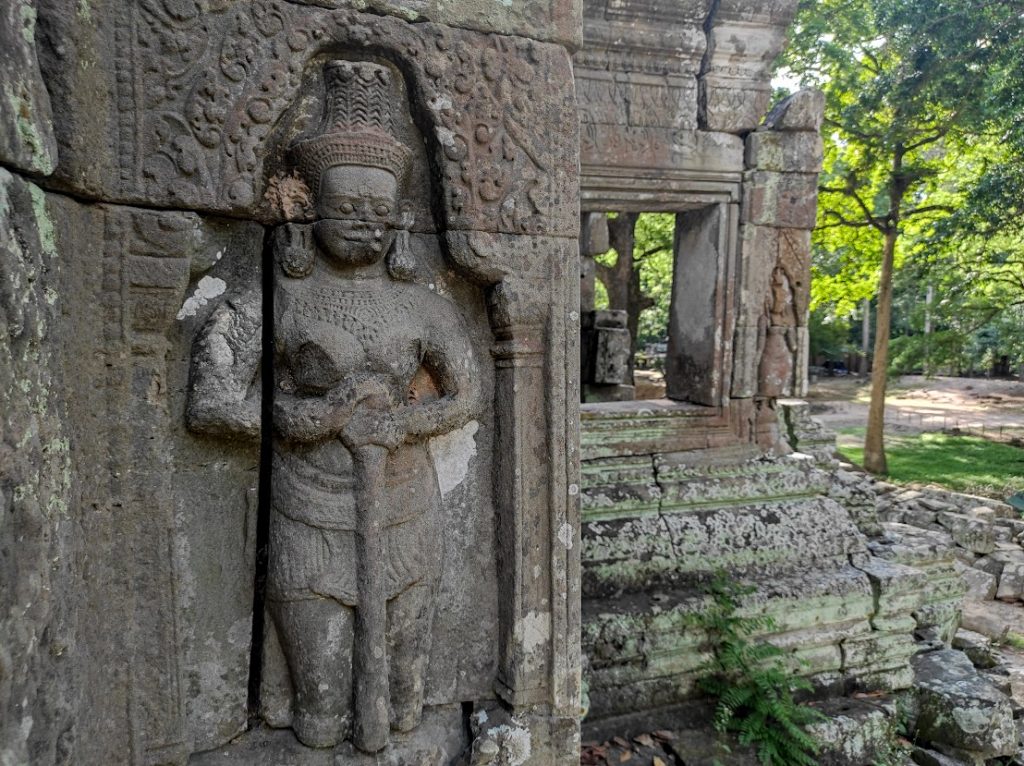
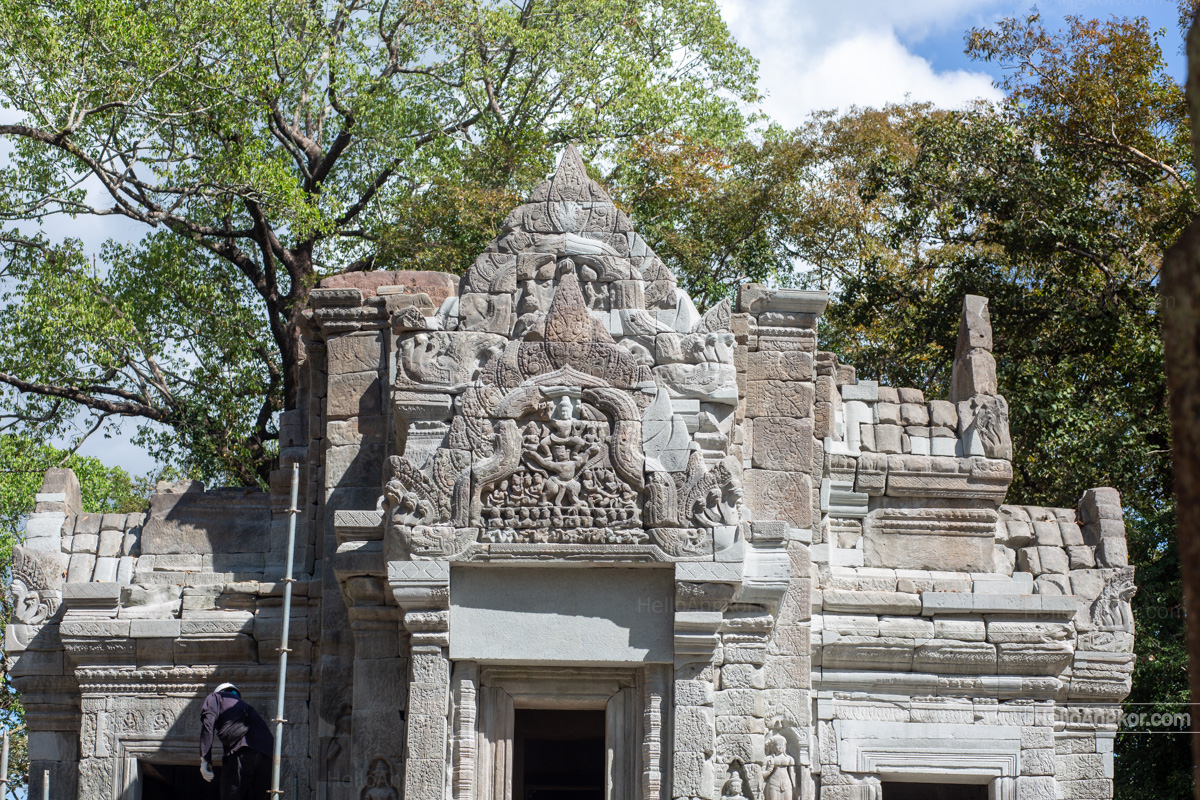
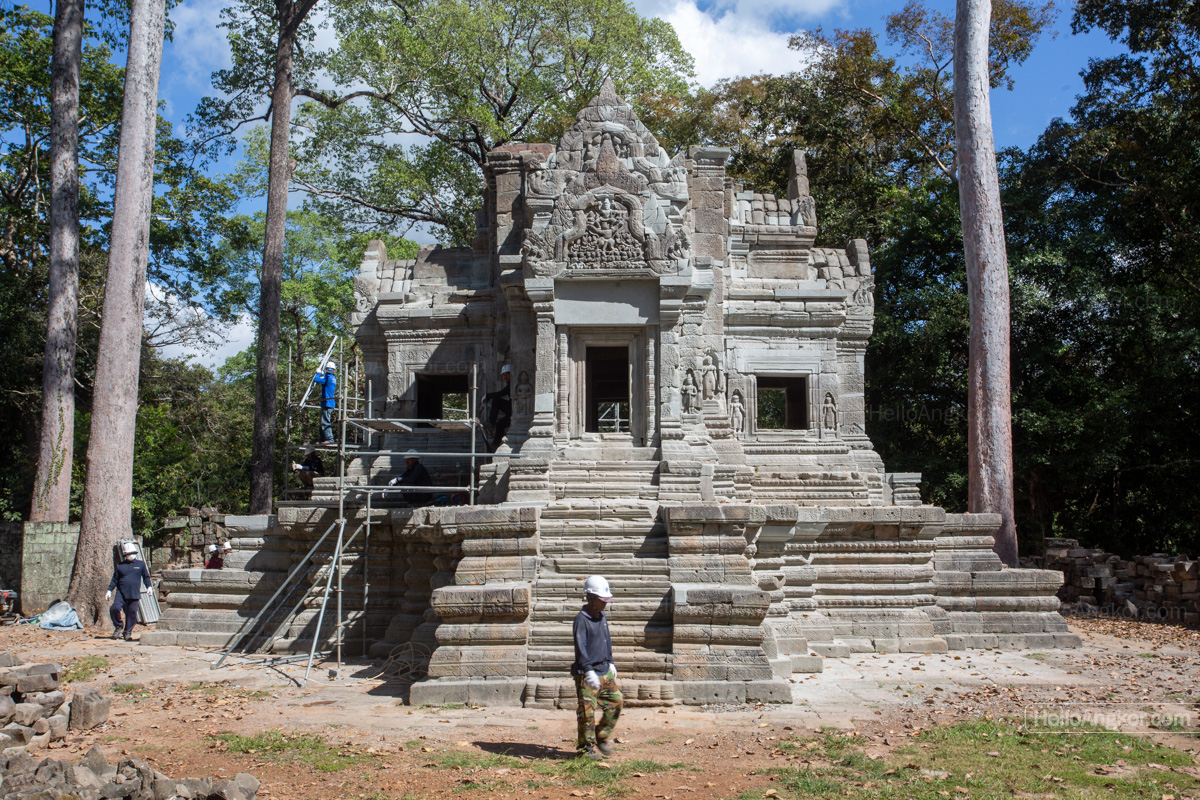
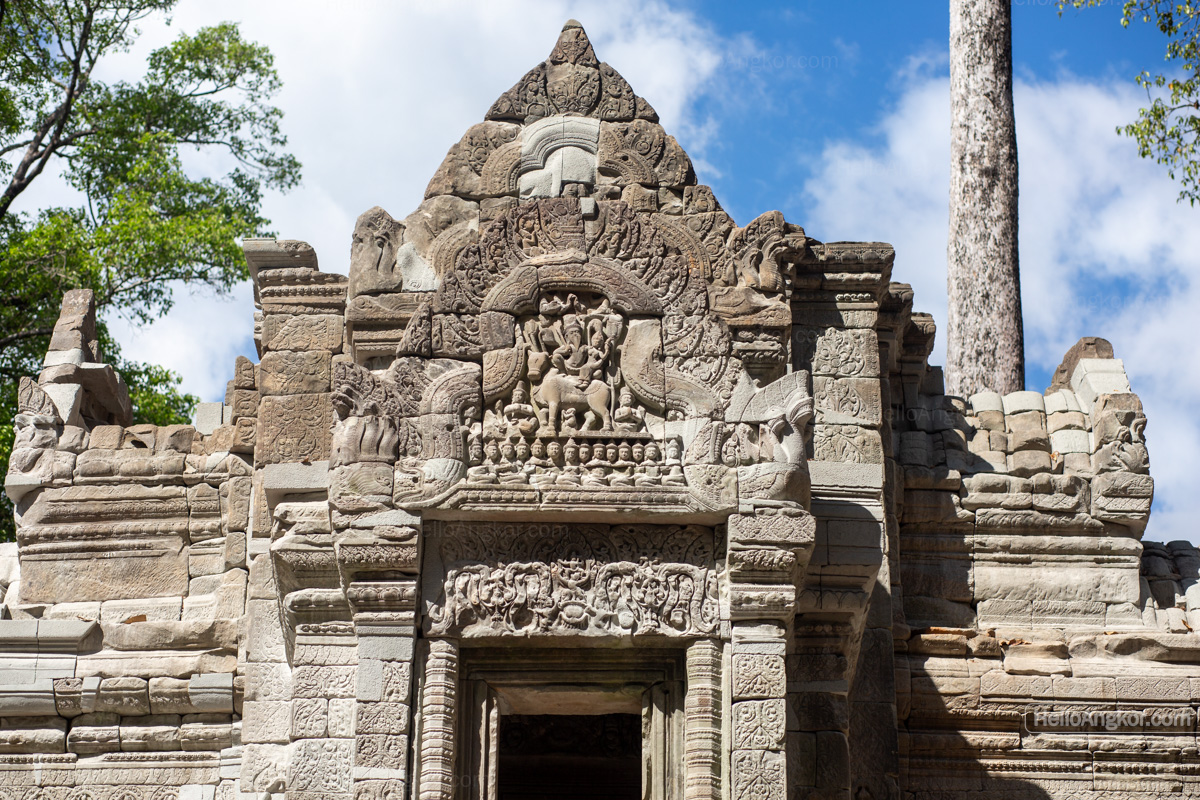
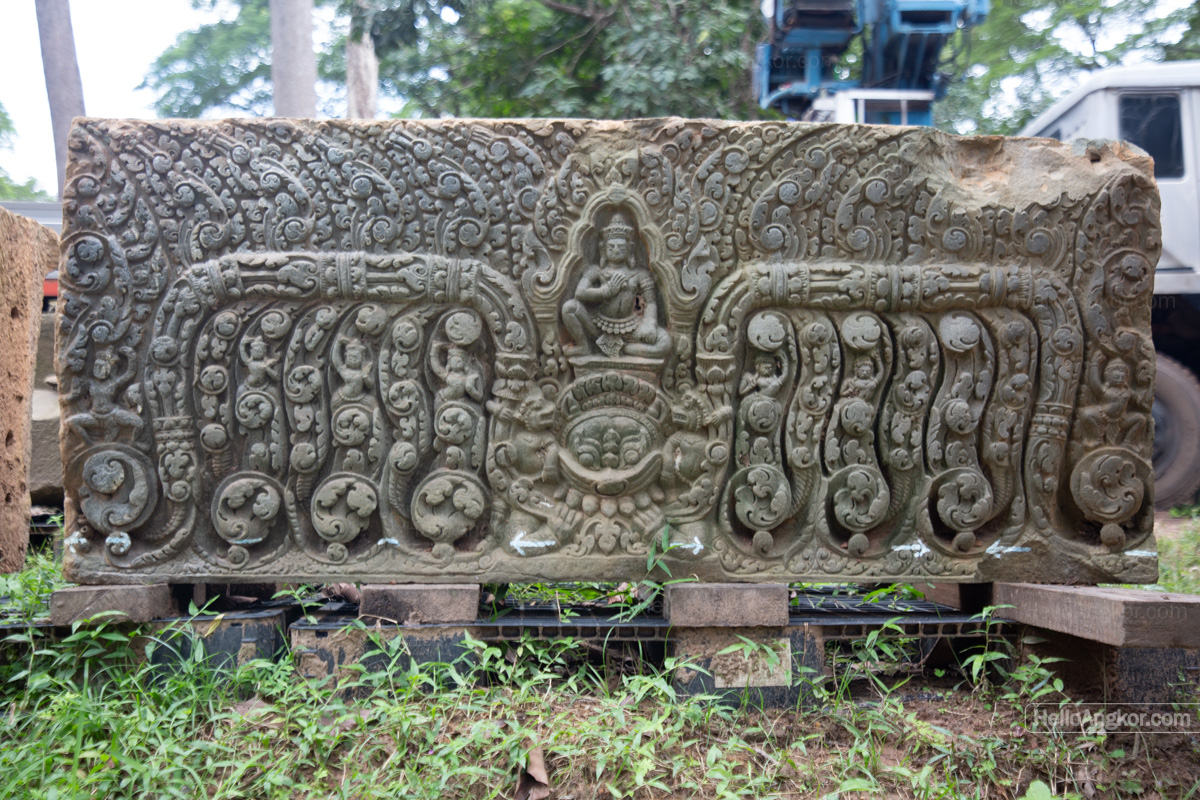
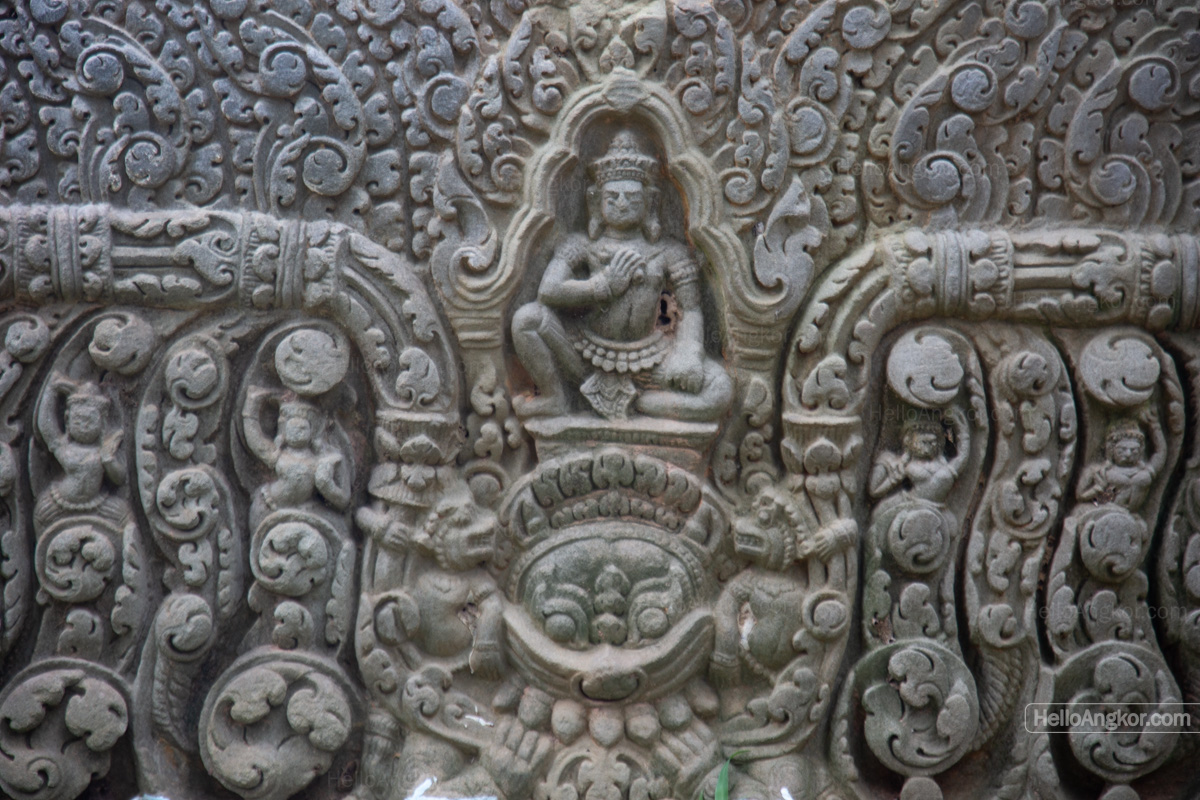
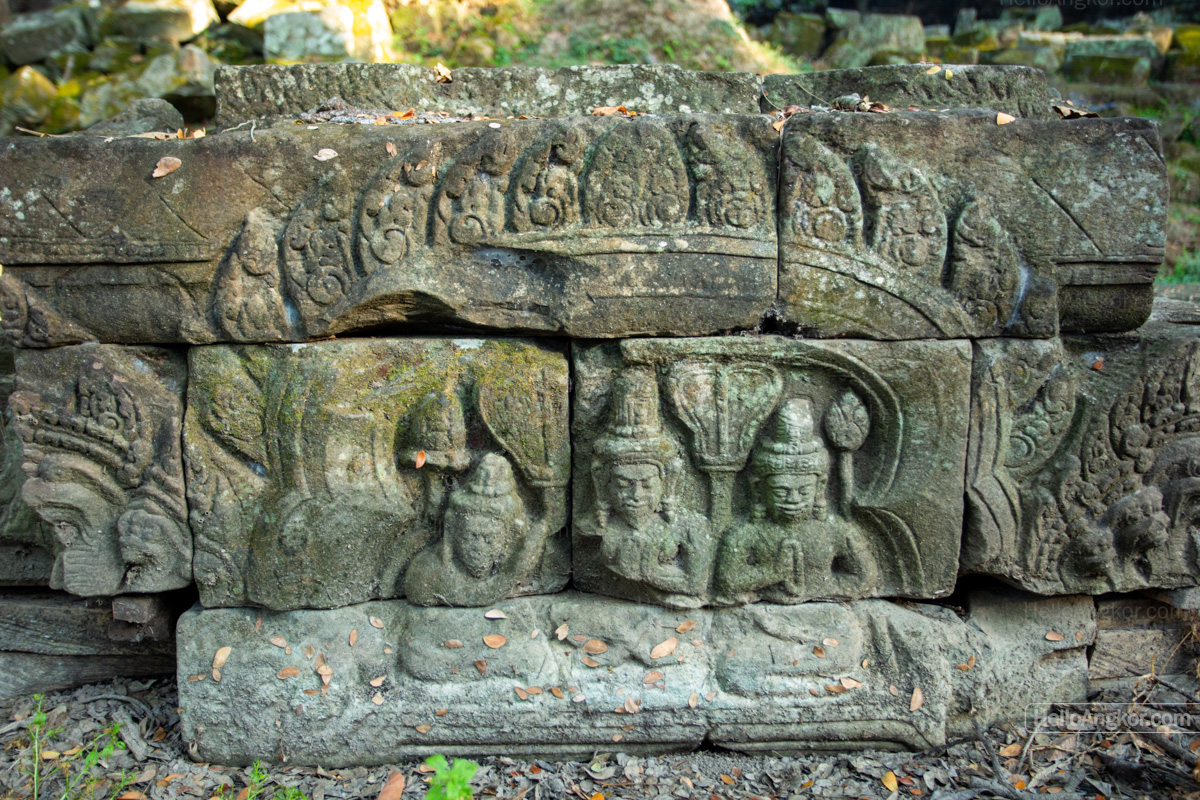
The outer wall, with entrances at each cardinal point, leads to the small cruciform shaped temple that rises up on a stepped base. Featuring chambered entrances and a lot of styling/motifs compacted into a small space. Such that they managed to fit six devatas per side plus door guardians. It also features several well-preserved/restored lintels.
The temple was dedicated to Shiva and recorded as belonging to the early 12th century, although that date is questionable given the style of devata alone, which suggests the late 10th-11th century (yet, there is convincing evidence that it’s neither, more further below). The site was quite ruinous and has been undergoing restoration for some time (update 2025: that restoration is now complete).
Images – May 2021

Restoration
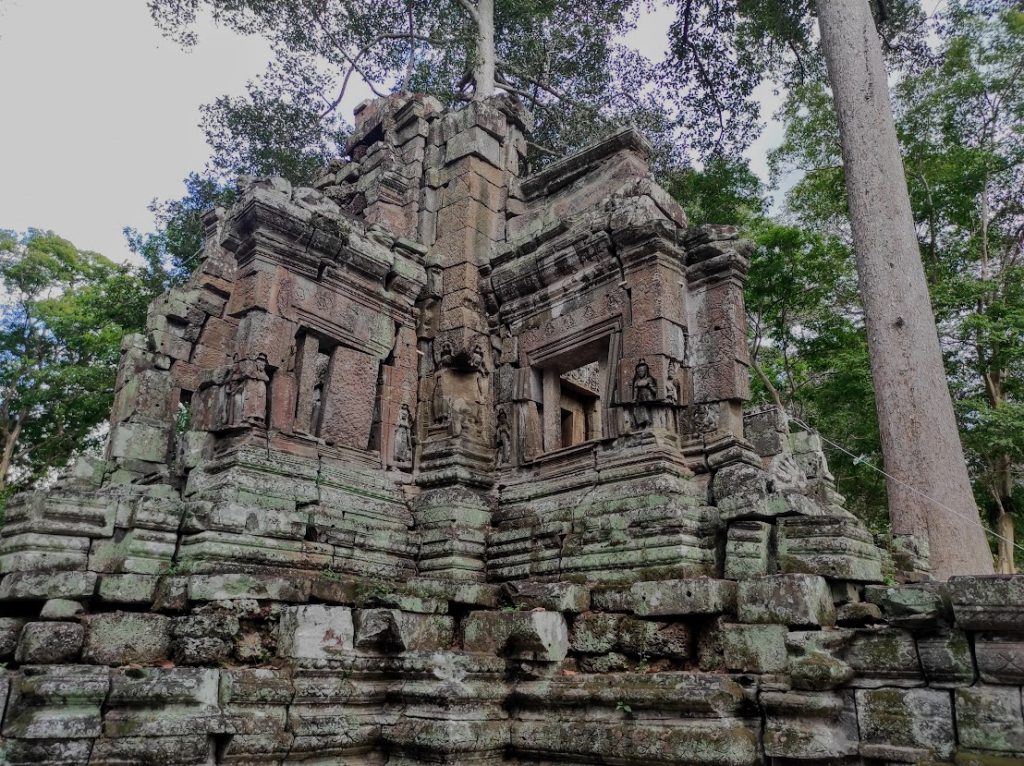
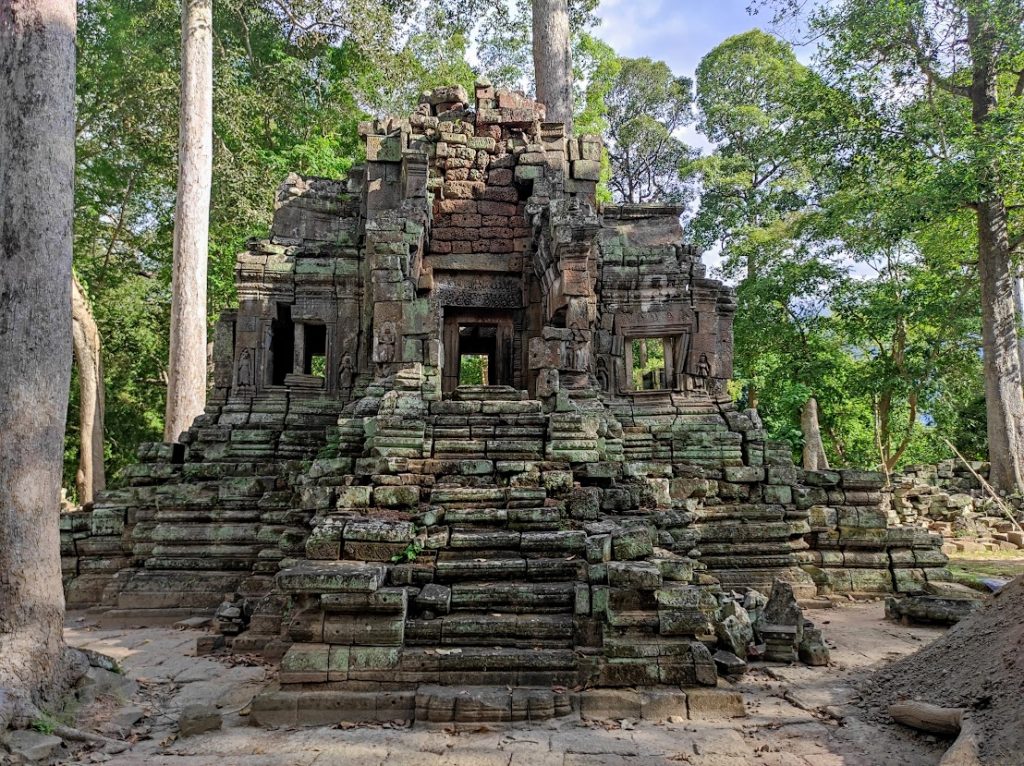
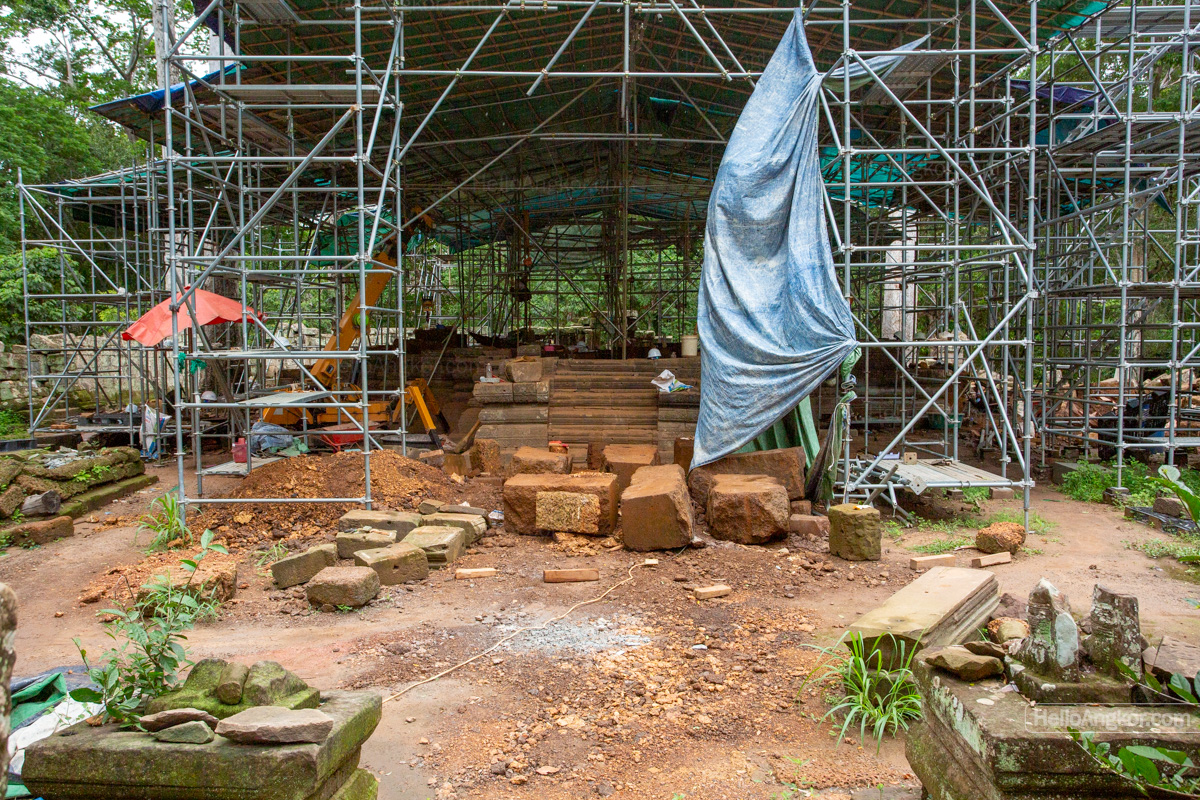
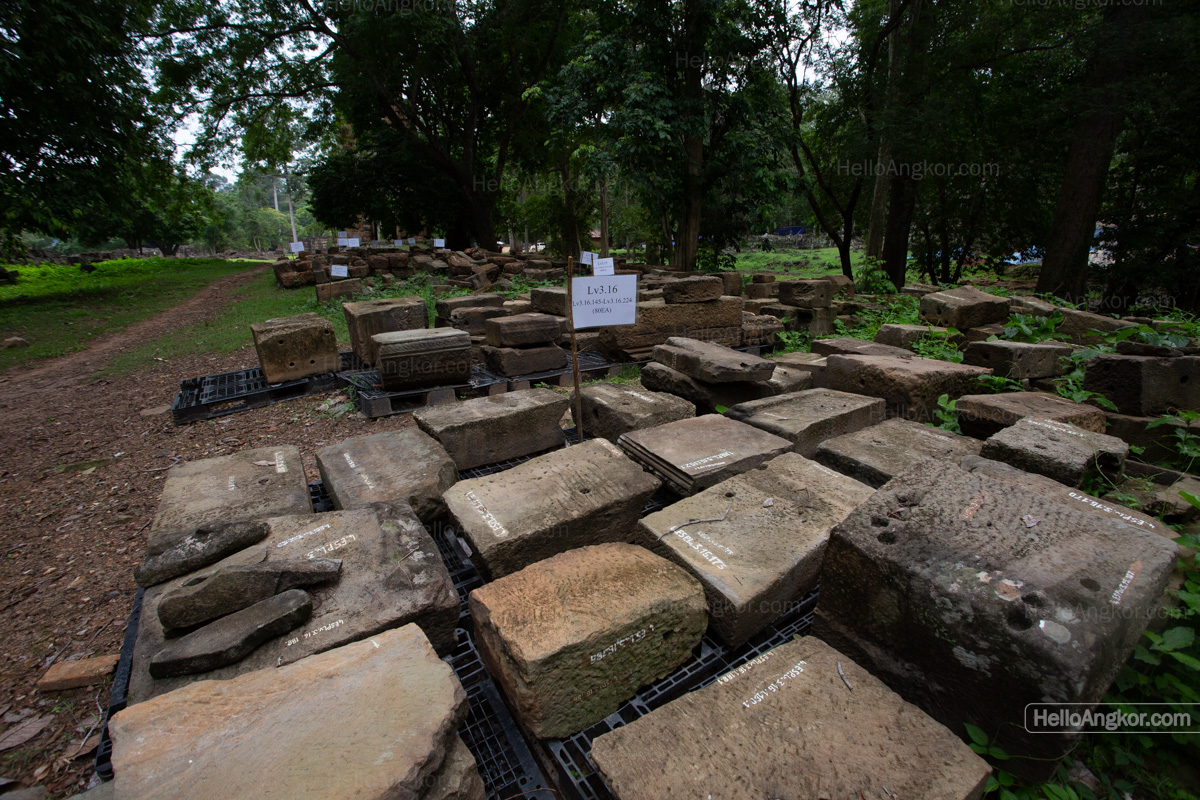
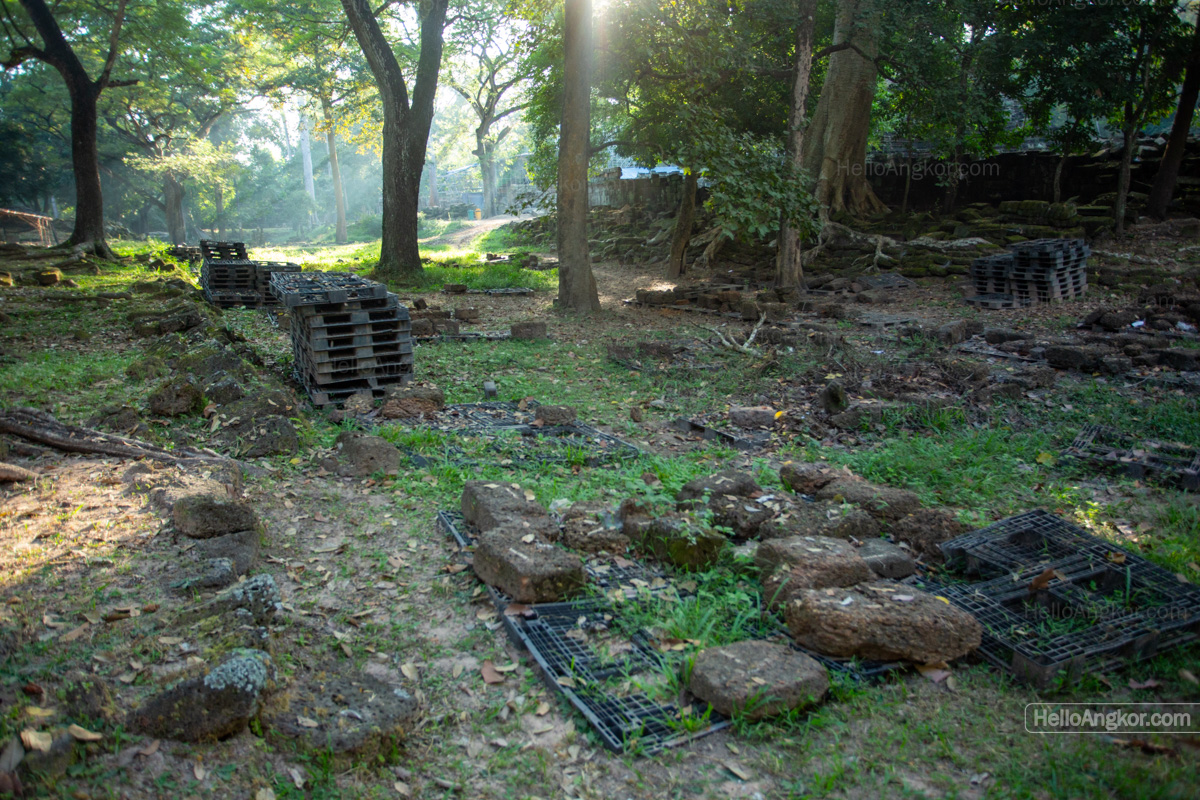
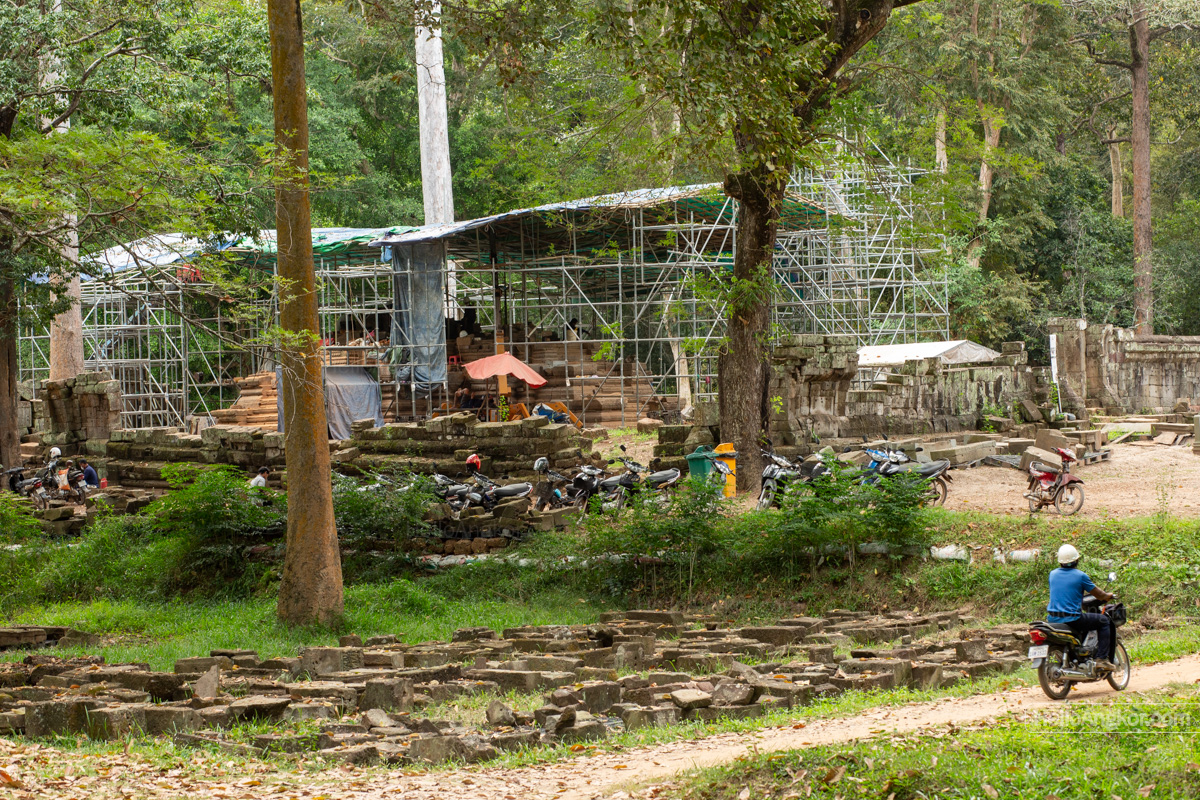
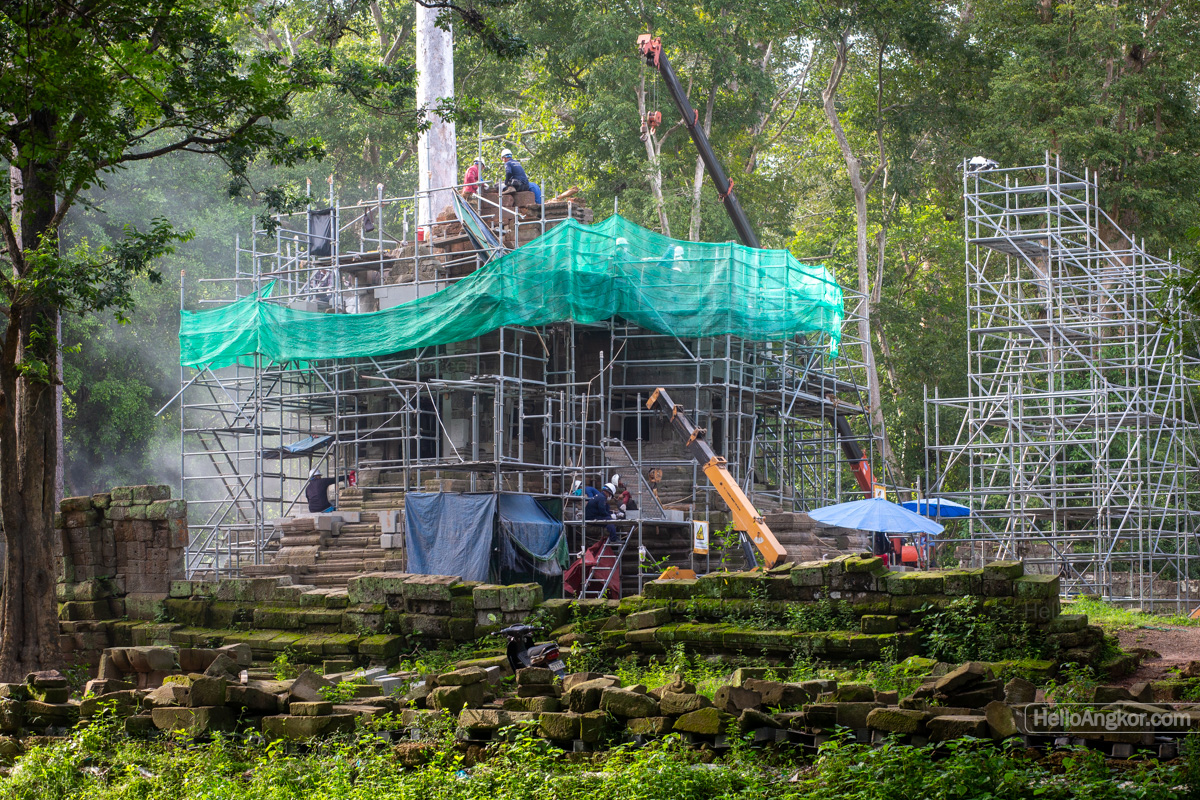
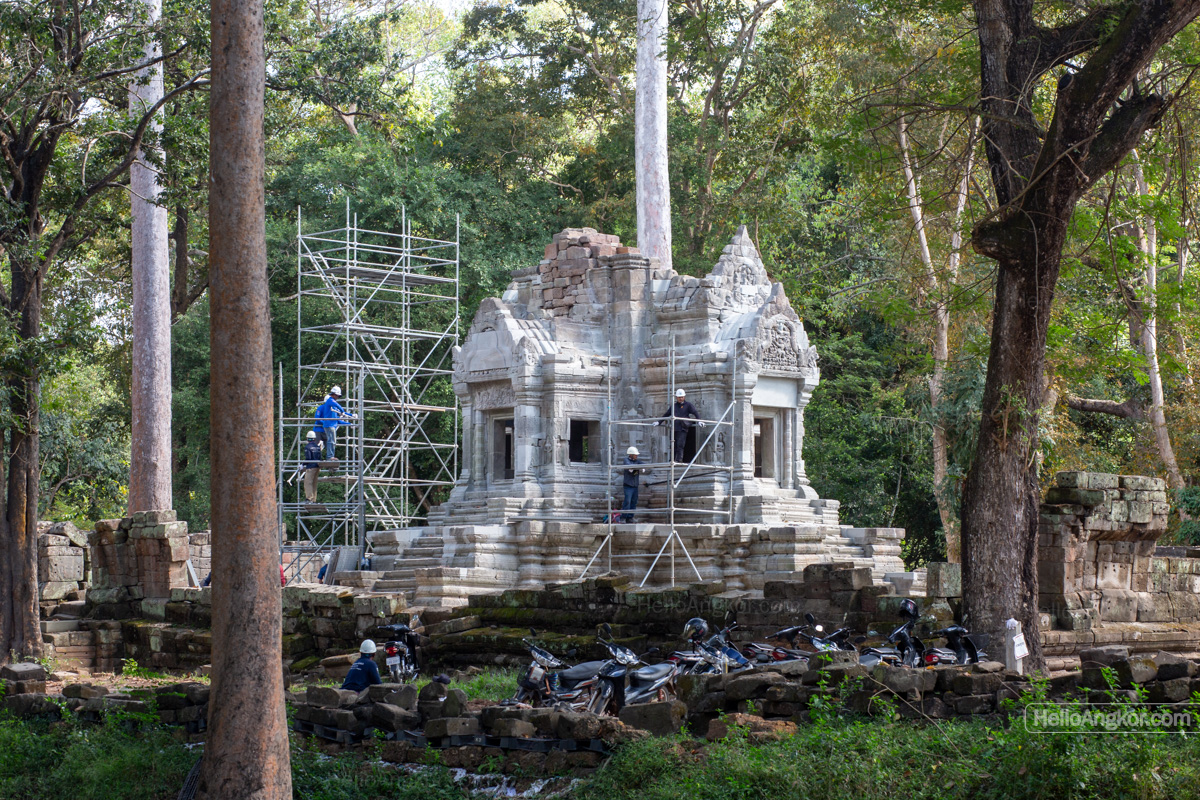
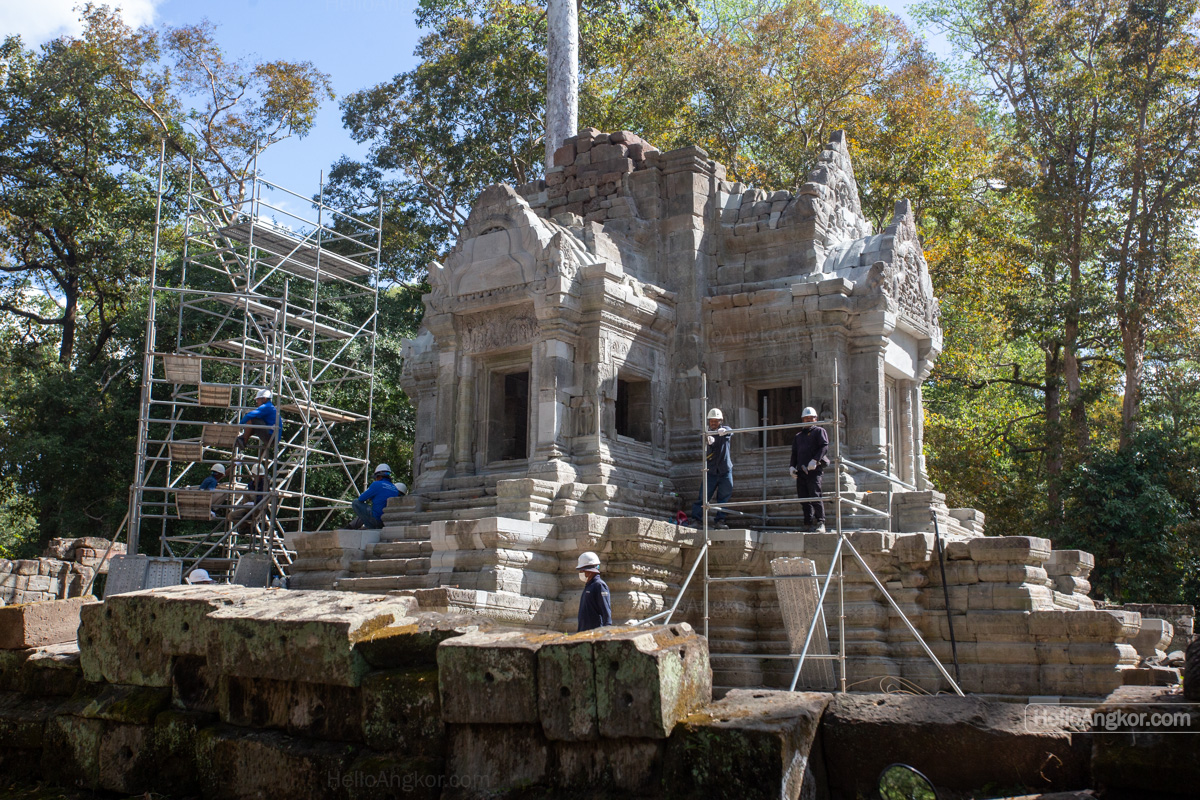
In 2019, restoration works started in the Preah Pithu group, beginning with the western terrace of Kor Sak Temple and proceeding to Prasat Chorm. It was quite something to see the whole temple come down to its base platform. All of its thousands of pieces, carefully labelled and laid out on the grounds surrounding the temple.
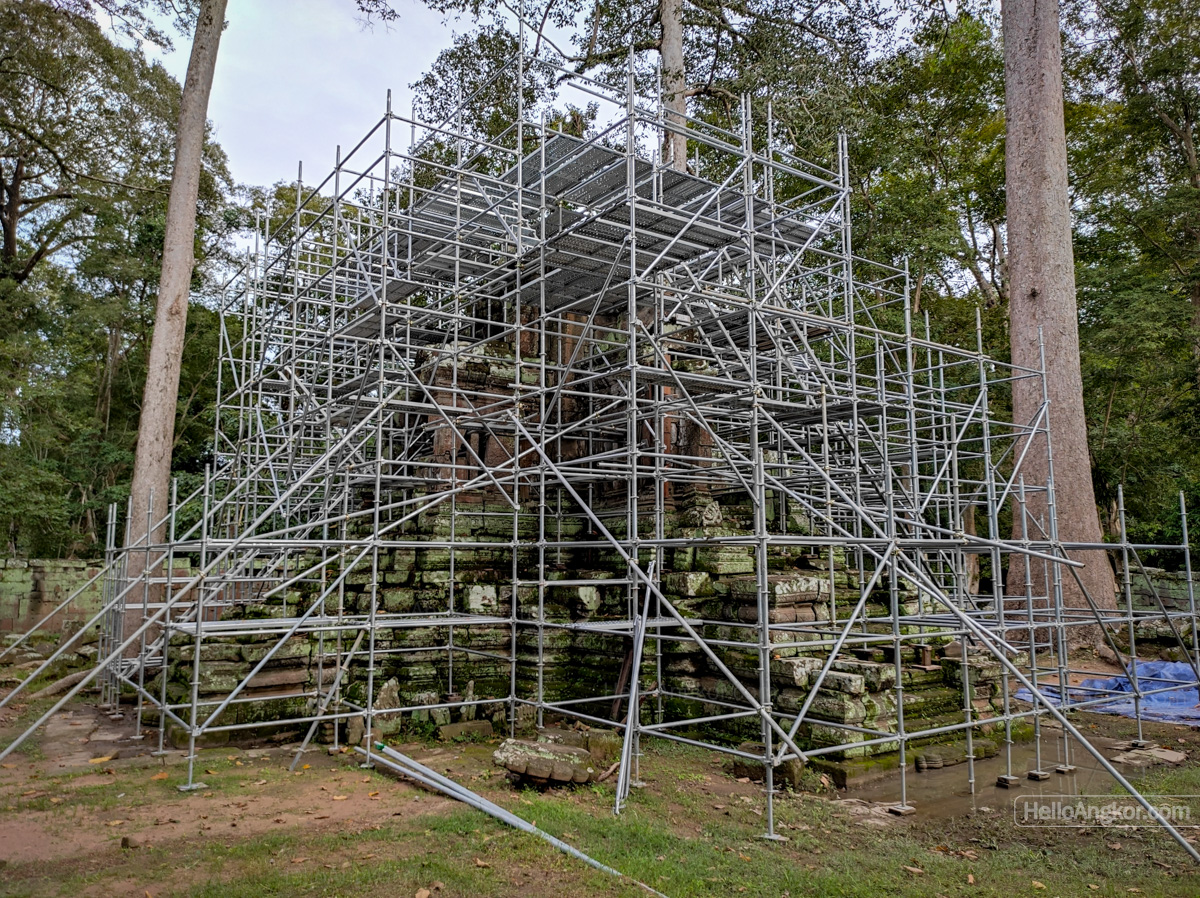
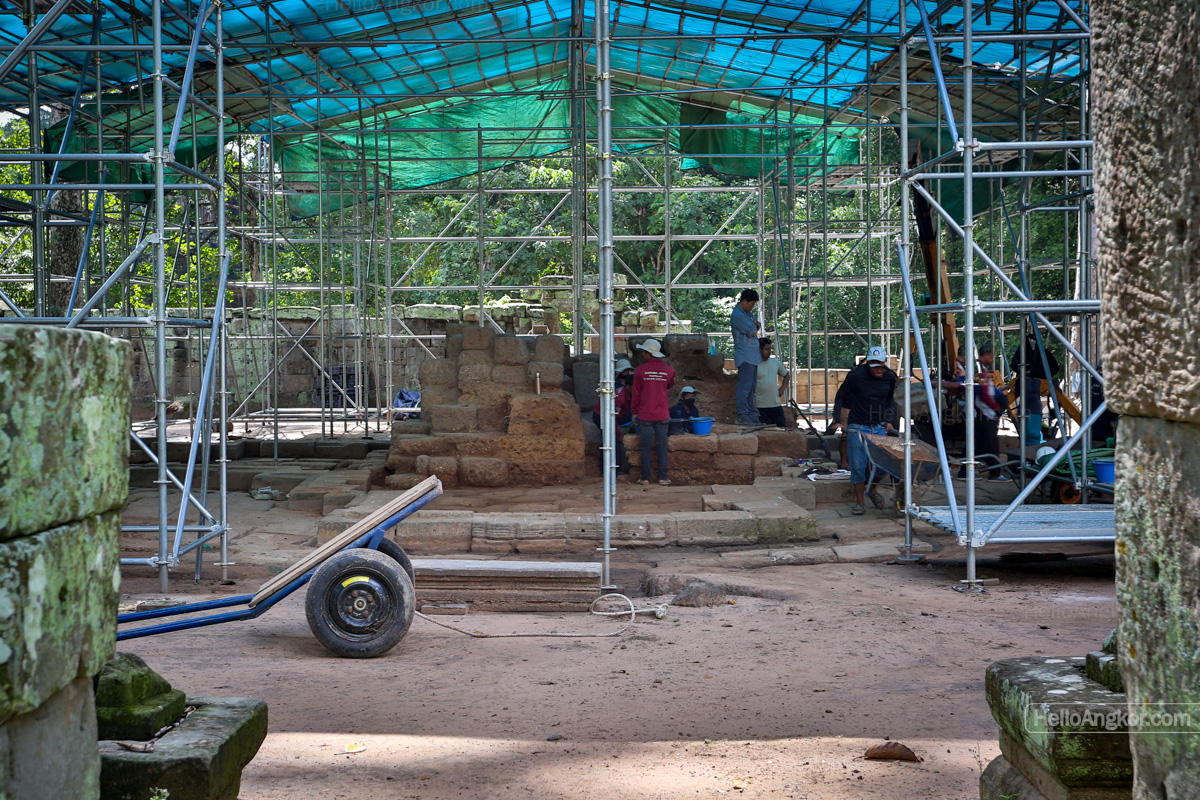
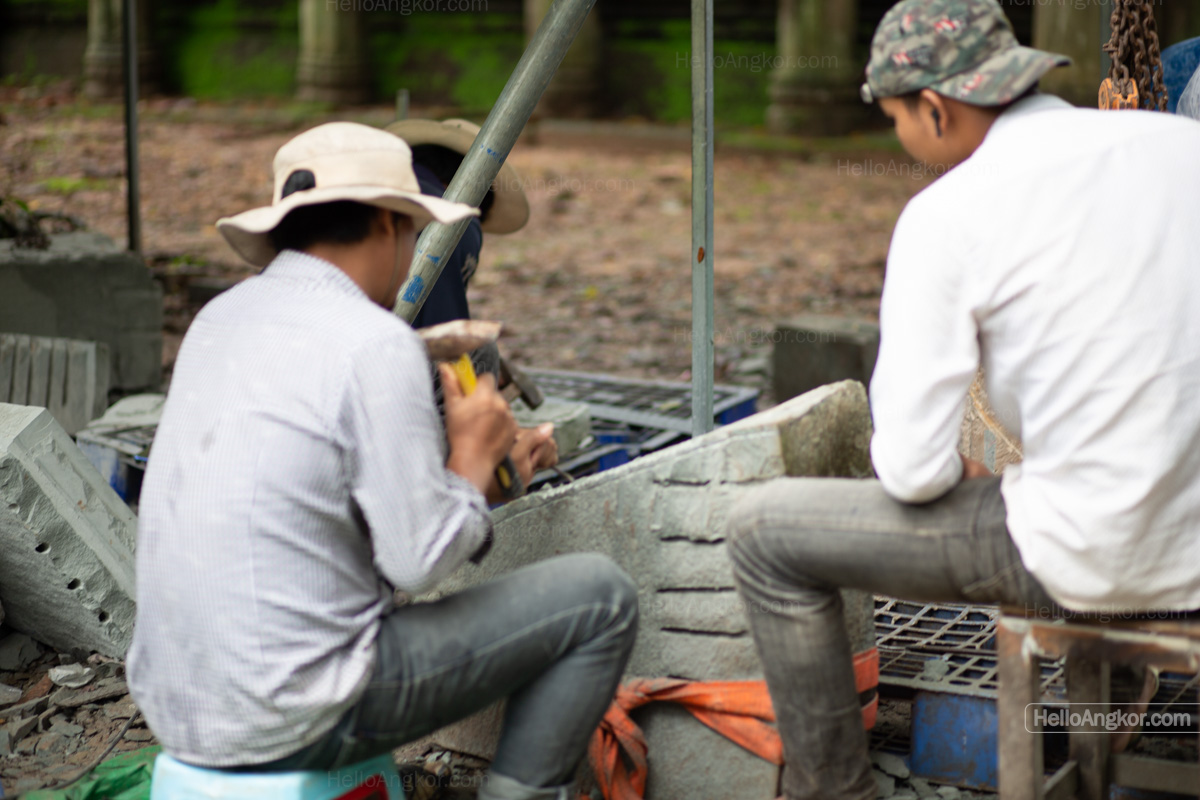
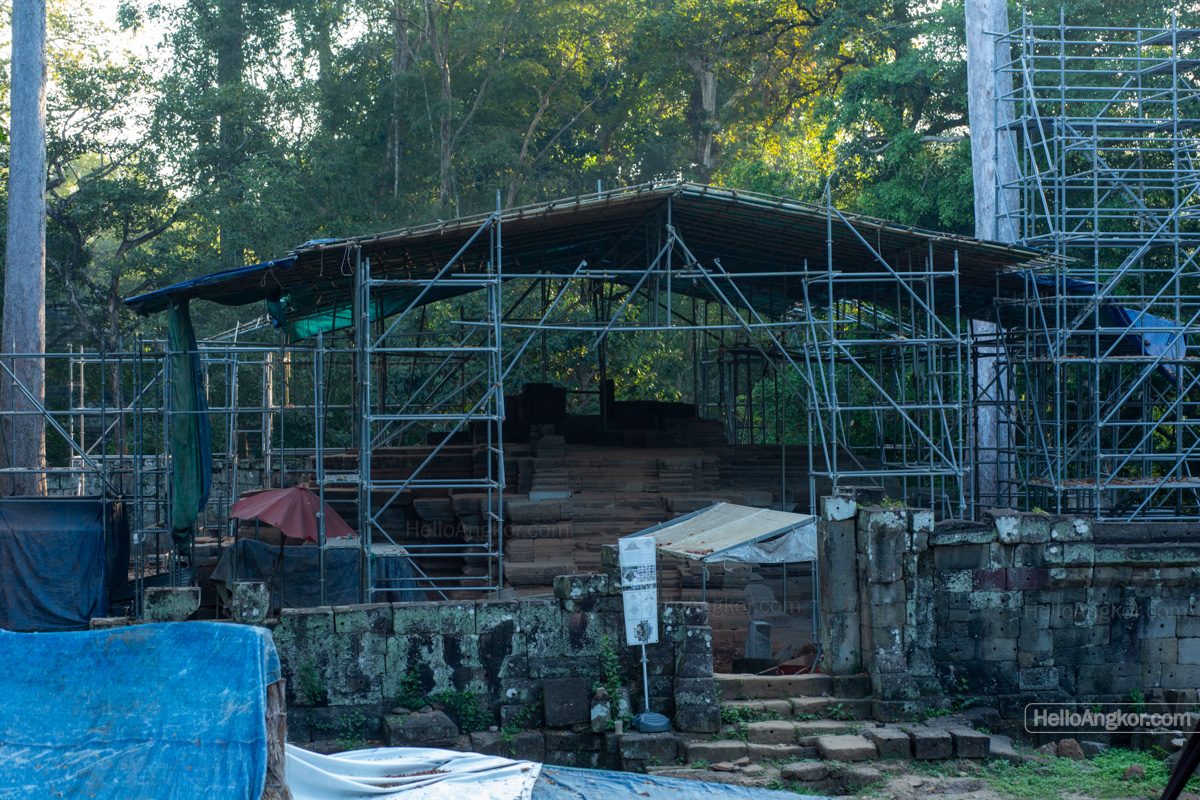
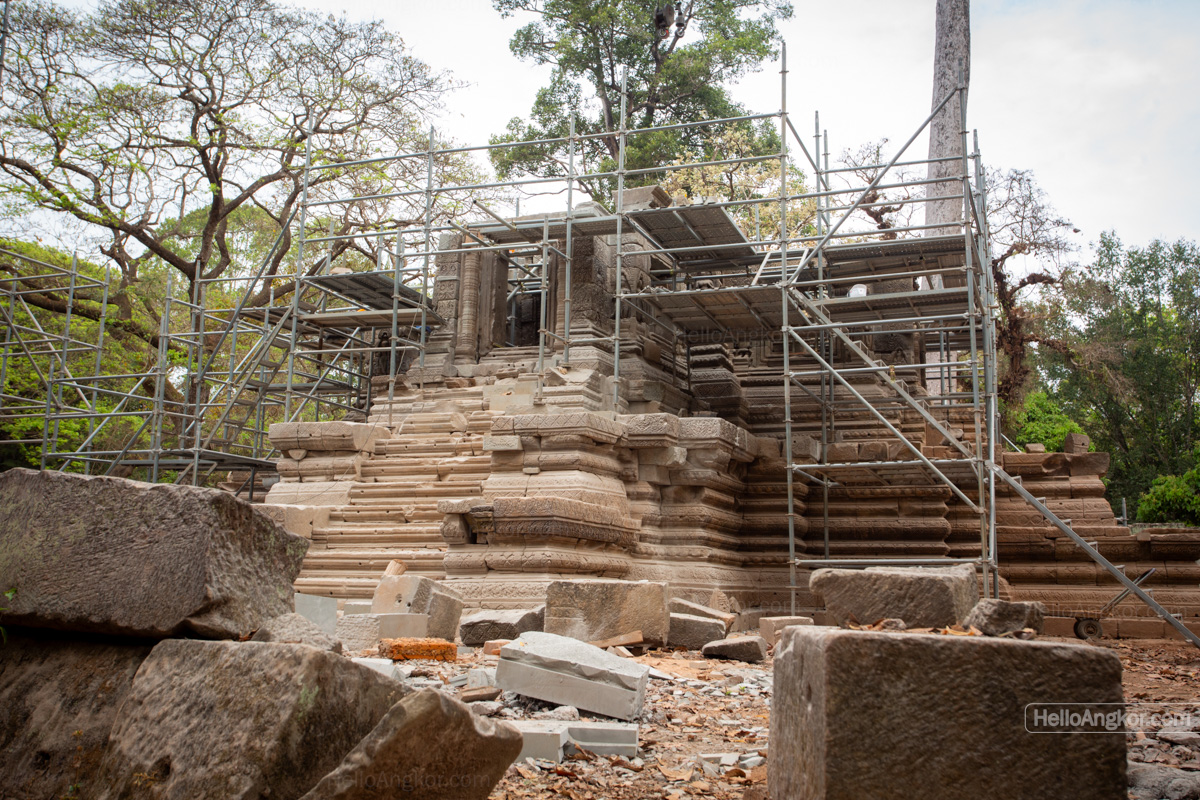
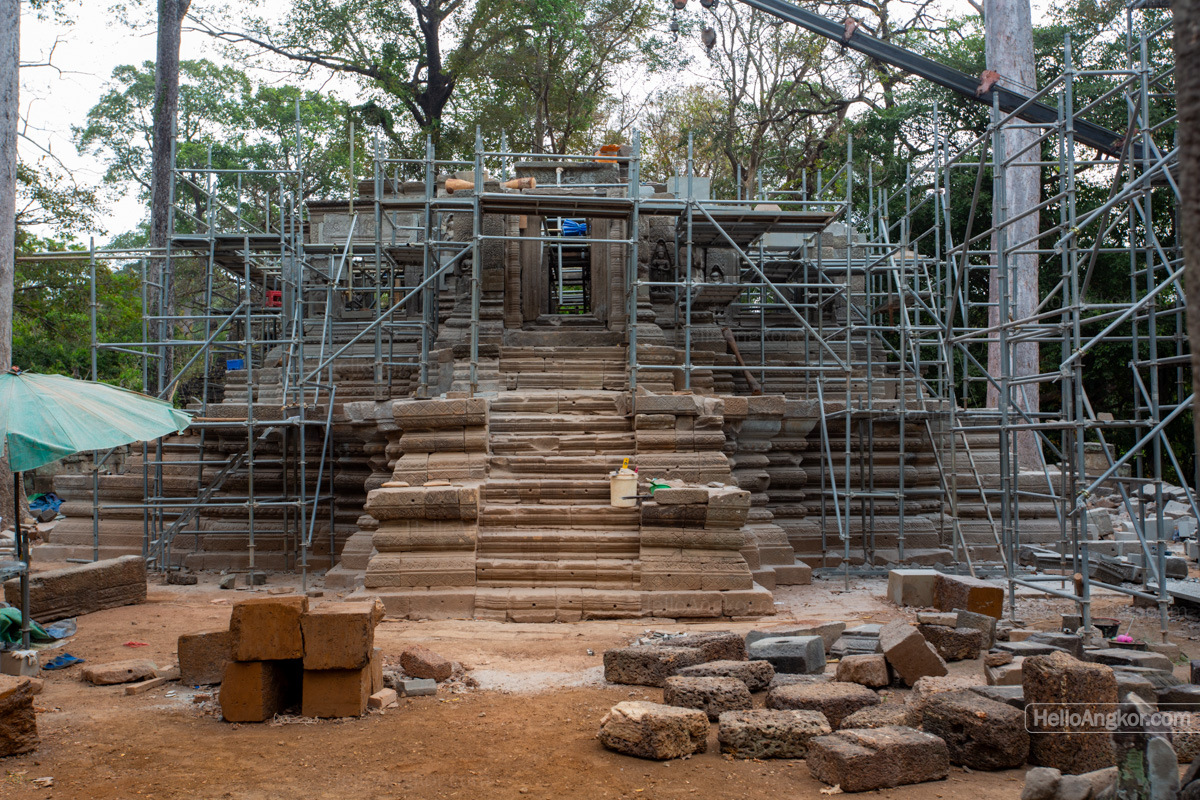
In 2021, a scaffolding went up around the temple, and then its dismantling began. It seemed that some work was required to improve the foundations. Meanwhile, a stonemason’s quarters were set up where new sandstone pieces were formed to enable the restoration by the well-used technique in Angkor, anastylosis, using clearly distinguishable new pieces only where necessary.
Post restoration – December 2025
Art & Style
Traditionally, the Chorm temple was dated as the 12th century, but as mentioned earlier, if the art style was the gauge, it seems more likely to belong to the 11th century. You can see a little Banteay Srei style and Baphuon era, noting the roundness in the narrative relief work and devata, although some elements would seem unique for that time, like motifs in the pediment floral “flames”. Meanwhile, colonettes resemble those of the 12th c. It’s fascinating, and more work is needed to unpack its nuances, in tandem with its surrounding sites, which show both similarities and very unique differences. For example, while this is clearly a site of Shiva worship, the nearby Ta Tout was remodelled into a Theravada Buddhist site with the addition of a terrace/vihara. Some of the art, for example, comparing the devatas of Kor Sak and Chorm, would appear to be from vastly different eras.
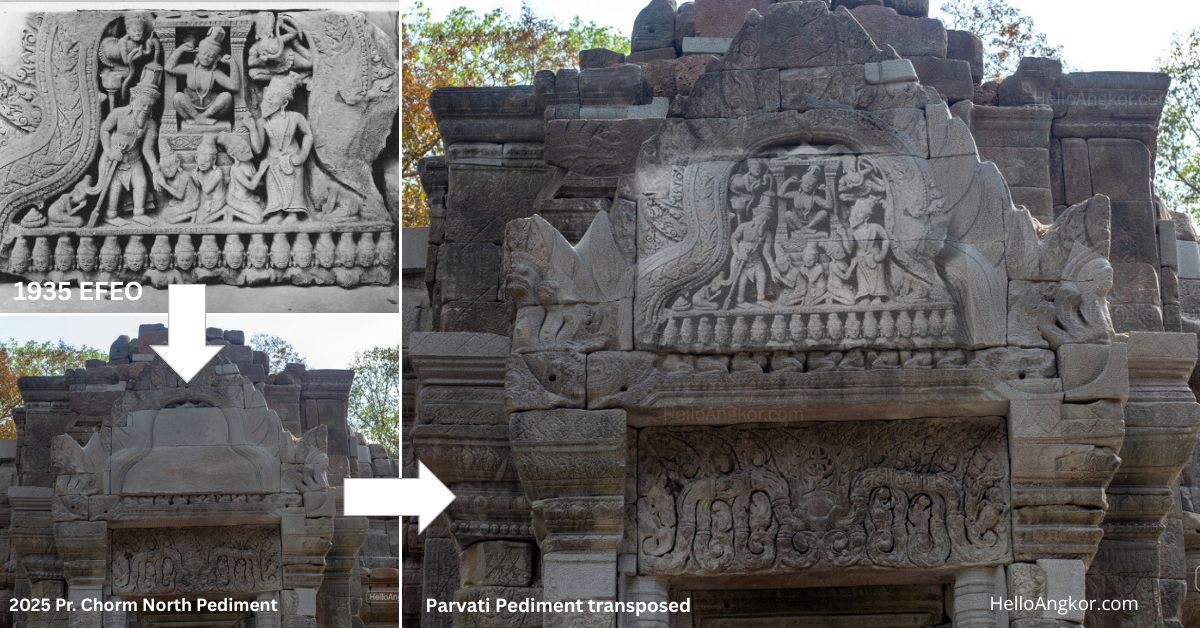
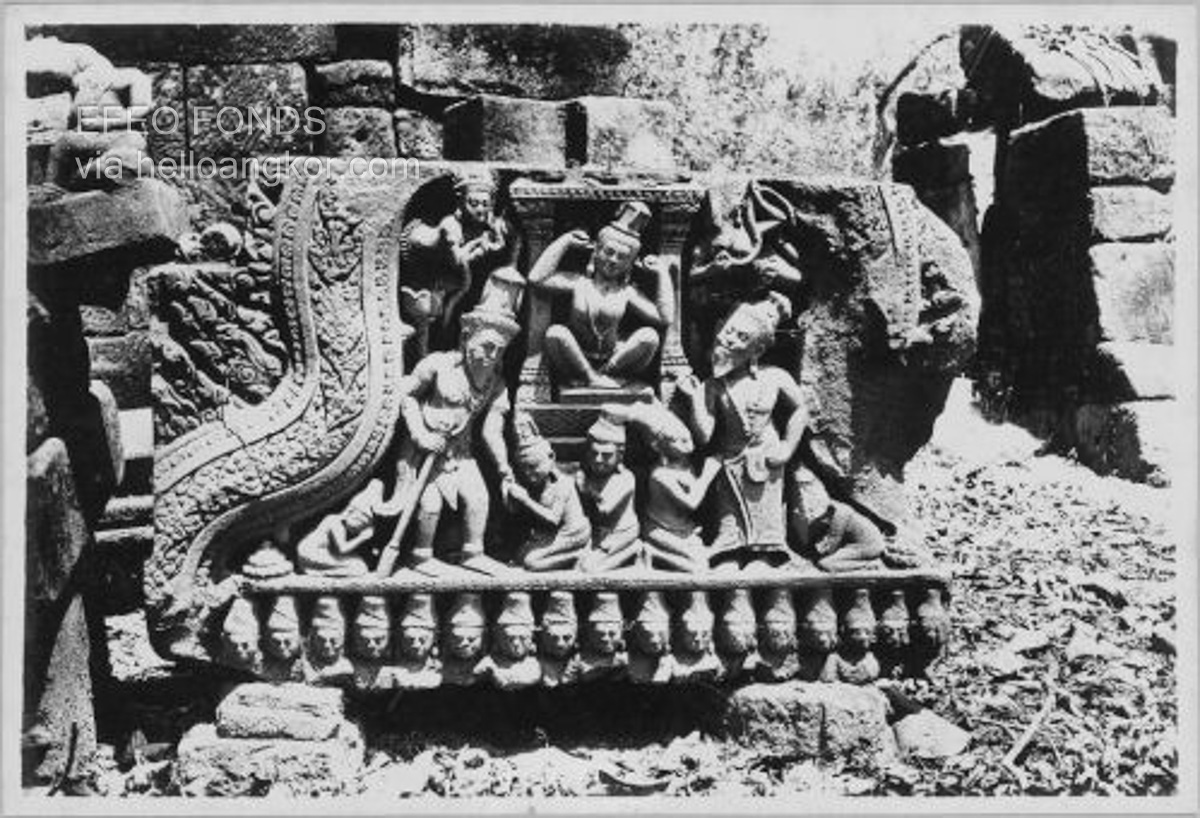
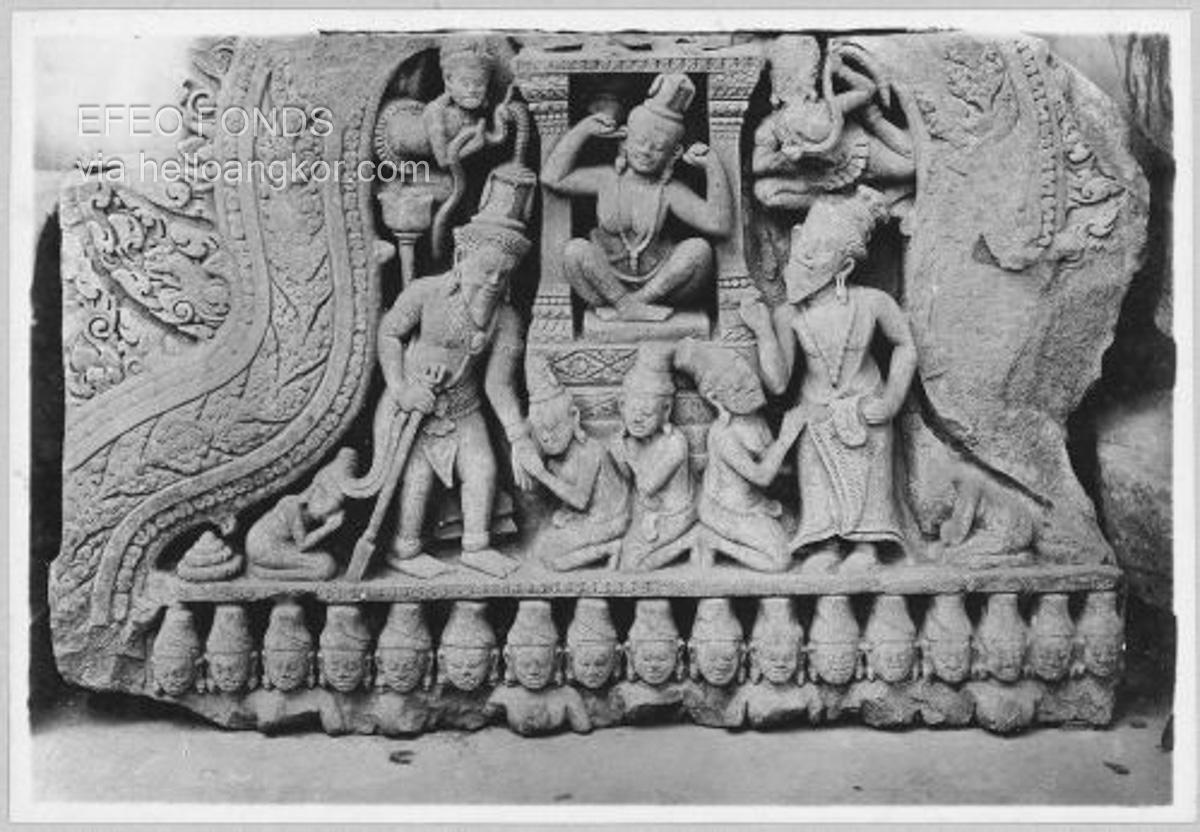
During clearance works in 1910, a stunning pediment depicting Parvati, the wife-to-be of Shiva, was discovered and believed to have originally belonged above the north door. That pediment now resides in the Musée Guimet, catalogued under MG 18912. In L’Art Khmer dans les collections du Musée Guimet, Thierry Zephir attributed the art style to the post-Bayon period (specifically to the second half of the 13th century). If so, that raises two thoughts: one about the possibility of the site being redeveloped from a prior site, or extraordinary archaism, neither of which is unknown in the ancient Khmer world. As Zephir points out in another publication, noting the sites we have mentioned, Theravada Buddhism and Shivaism existed together peacefully, which adds to the lingering question of when and why the Buddha images of the Jayavarman VII era were hacked away during the so-called iconoclasm event.
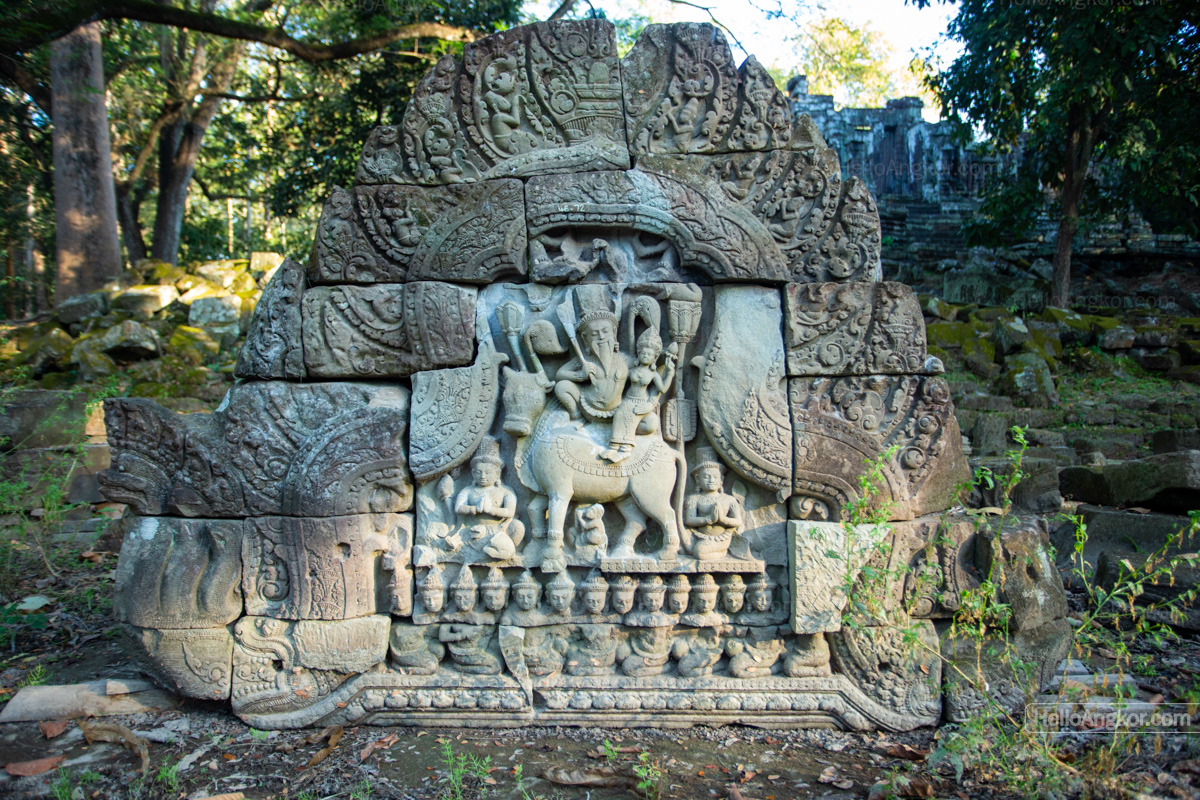
The 1935 EFEO image of the Parvati pediment layered onto the north pediment of the new restoration appears to match quite well, noting the bodies of the worshippers and the arch styling.
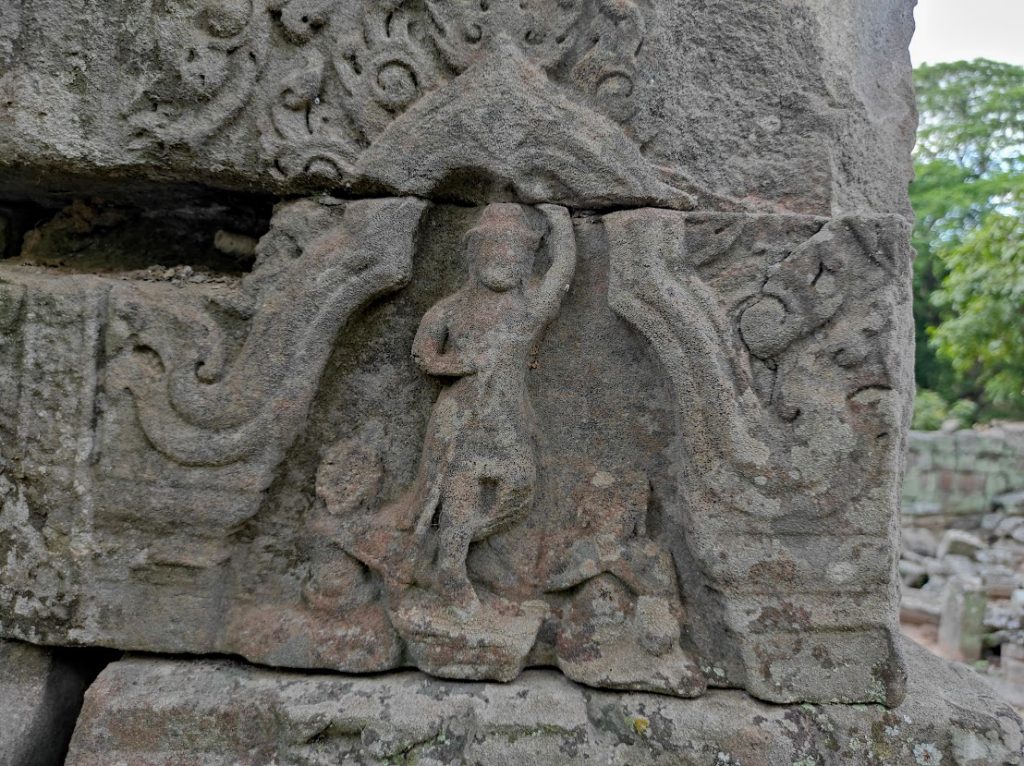
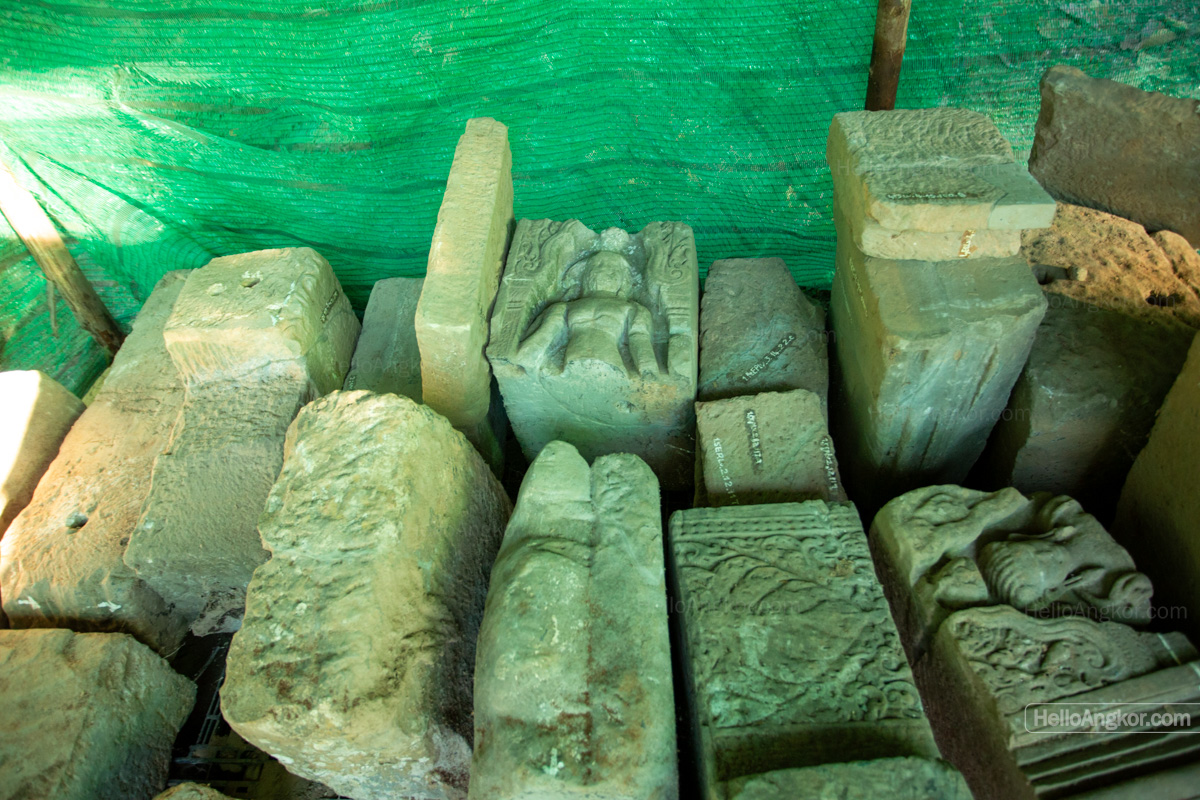
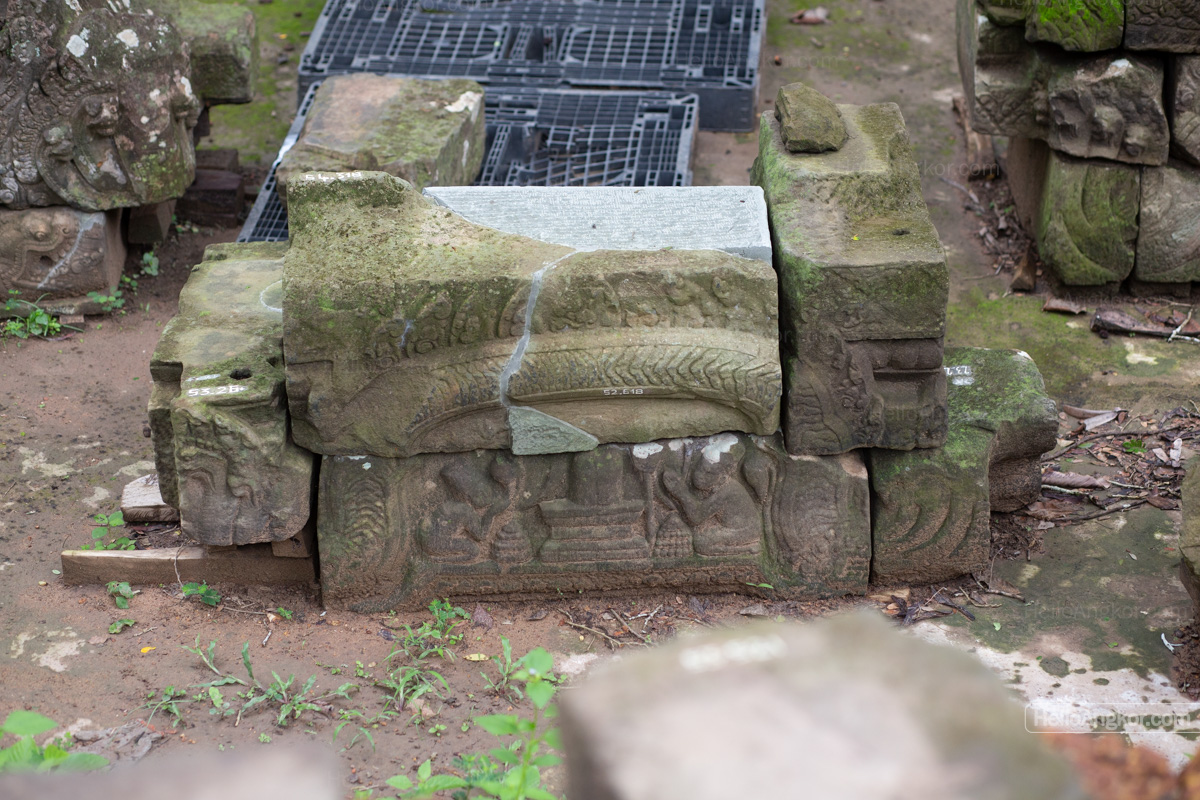
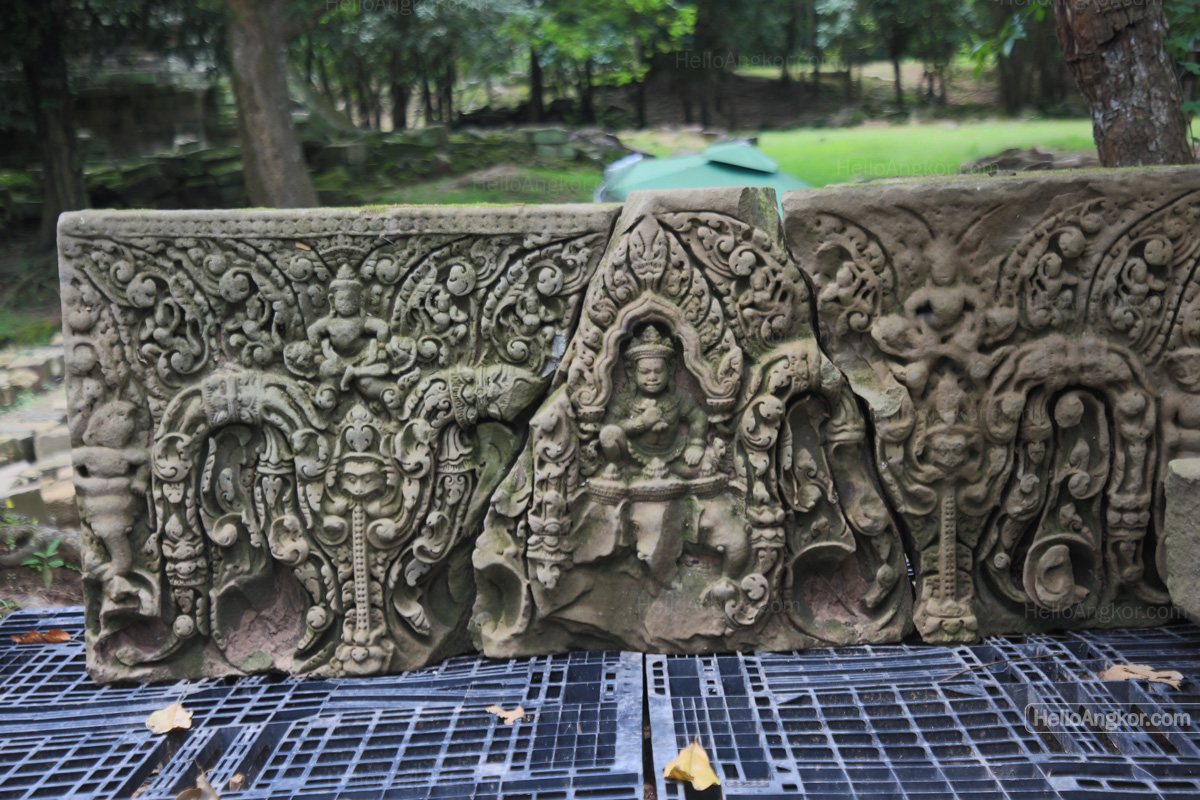
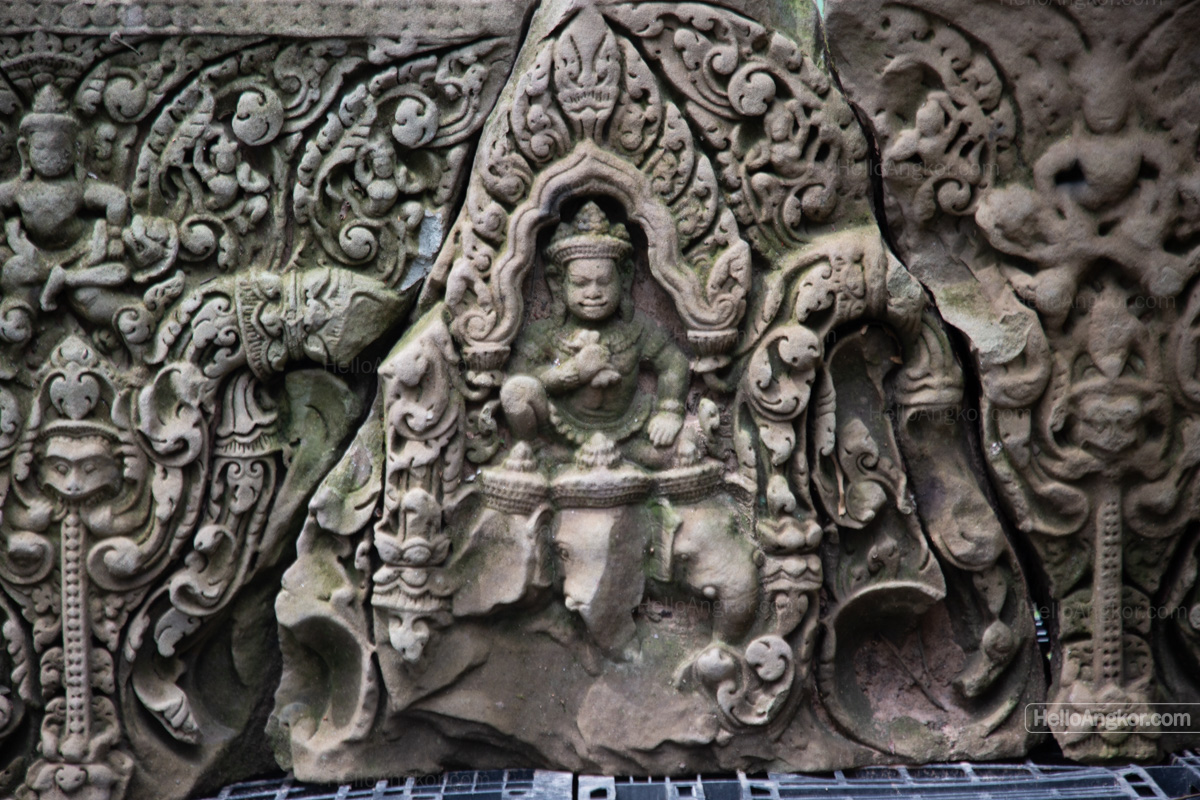
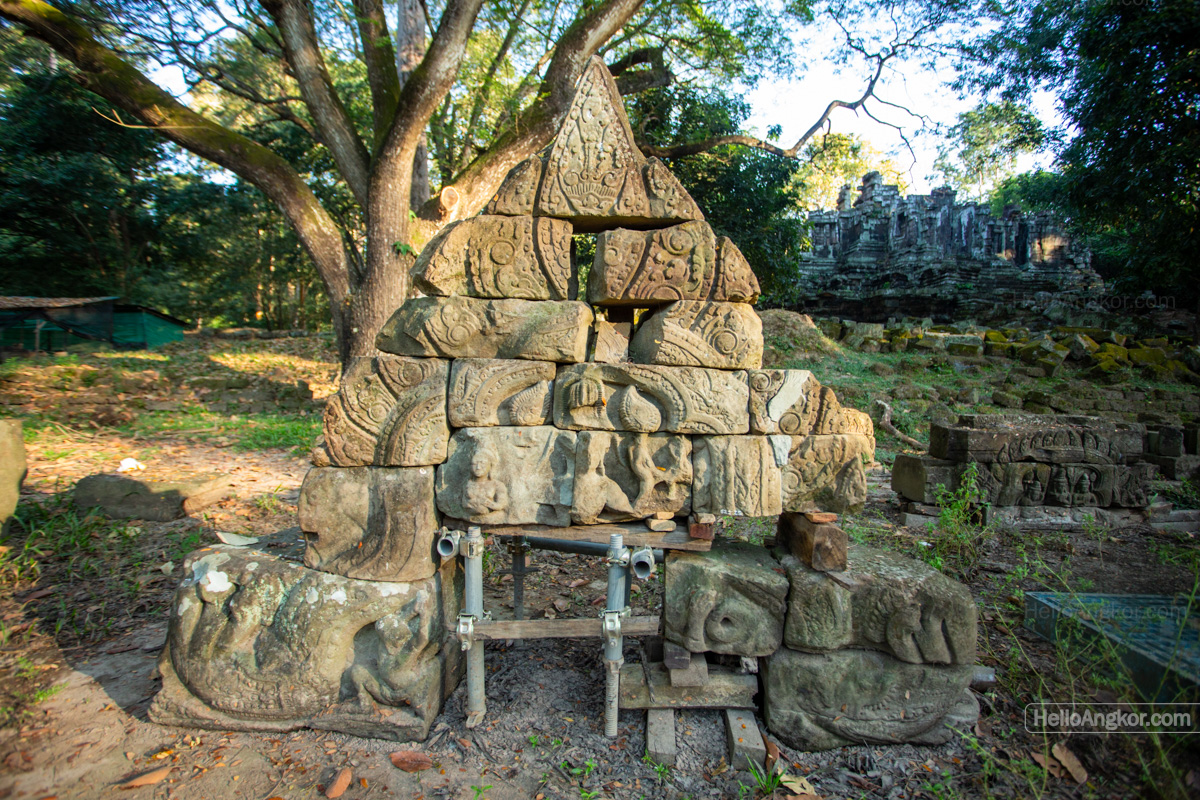
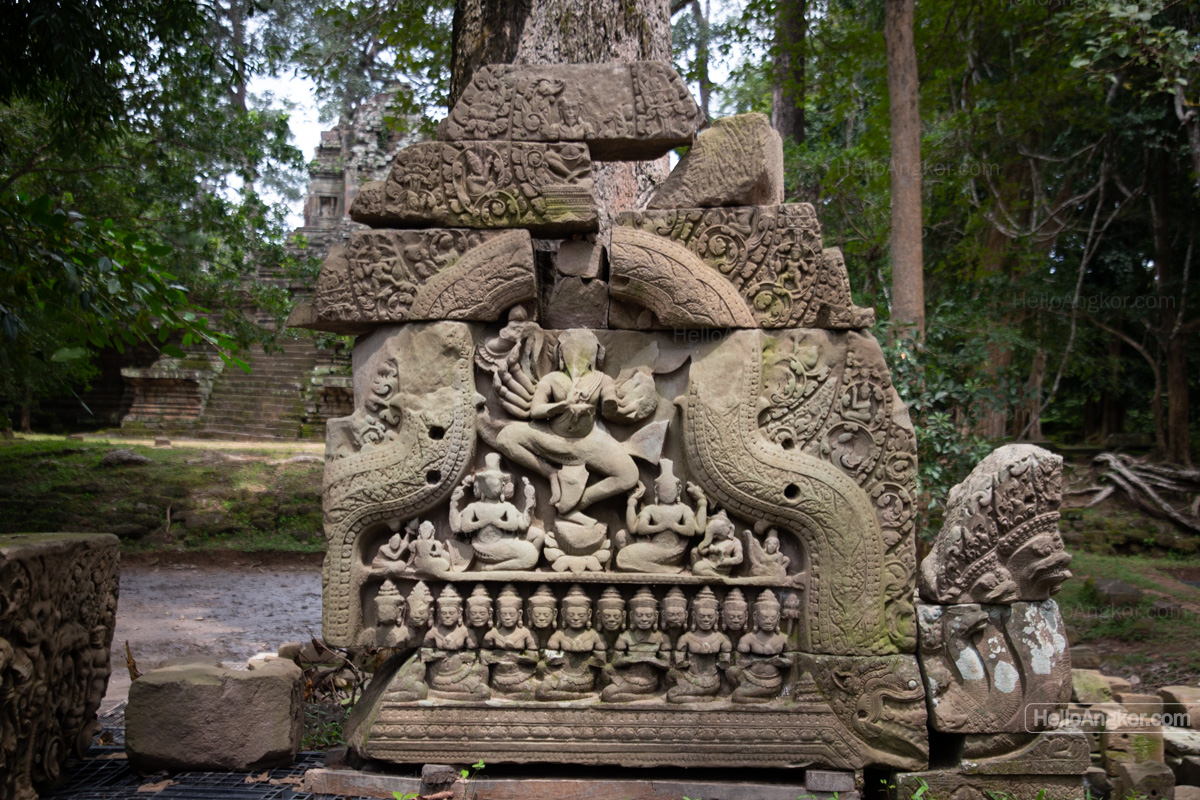
The half pediment in the first picture in the set below is quite interesting, reminiscent of the post-iconoclasm formations, leaving one to wonder if there is more to think about, especially considering the alignment of the suggested era of the site, according to Zephir, what is commonly suggested, but contested, era of the iconoclasm event.
Interestingly, recent research (Sato 2021) has given a date of early the 14th to early 15th century for Theravada Buddhist modifications at West Prasat Top, which shares its art style with Preah Palilay and the nearby Ta Tout (Preah Pithu X). We need to add another site into the mix, and that is Mangalartha. It shares a similar cruciform layout rising up several levels as a “temple mountain” and shares similar architectural decoration, with some nuanced differences. It also has echoes of the 11th century and carries an inscription dated to the 13th century.
Surprisingly, Chorm temple never received a lot of attention, post restoration it has gone from the ugly duckling in the back corner to one of the stars of Angkor Thom. Its abundant architectural art is spectacular.
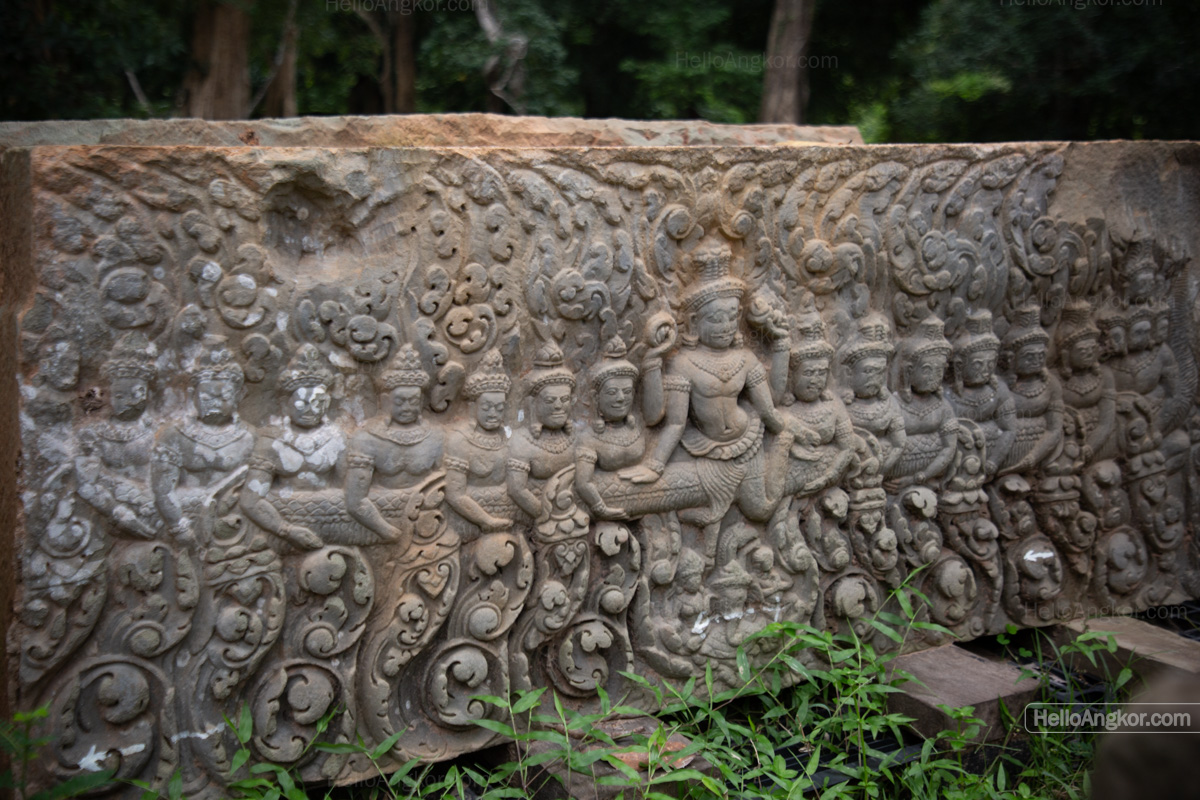
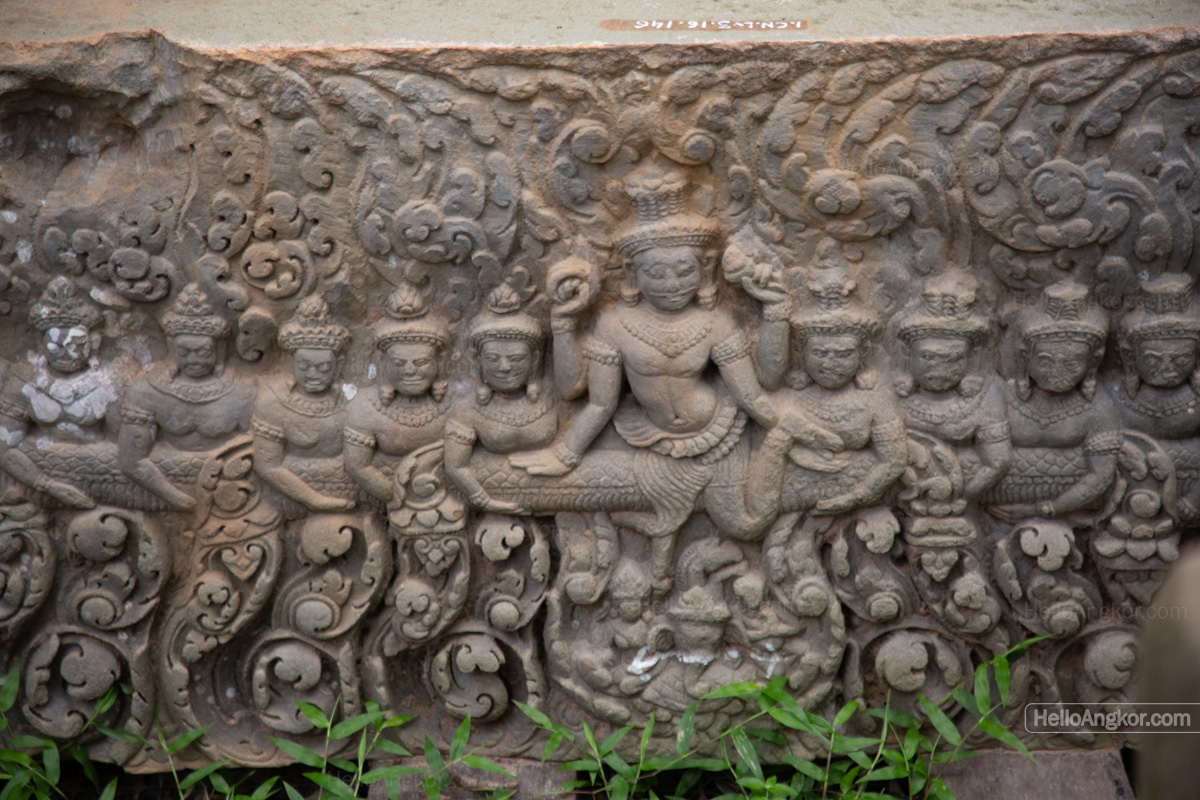
These photos were taken just after the dismantling and cleaning and prior to refitment between mid 2022 and late 2024.
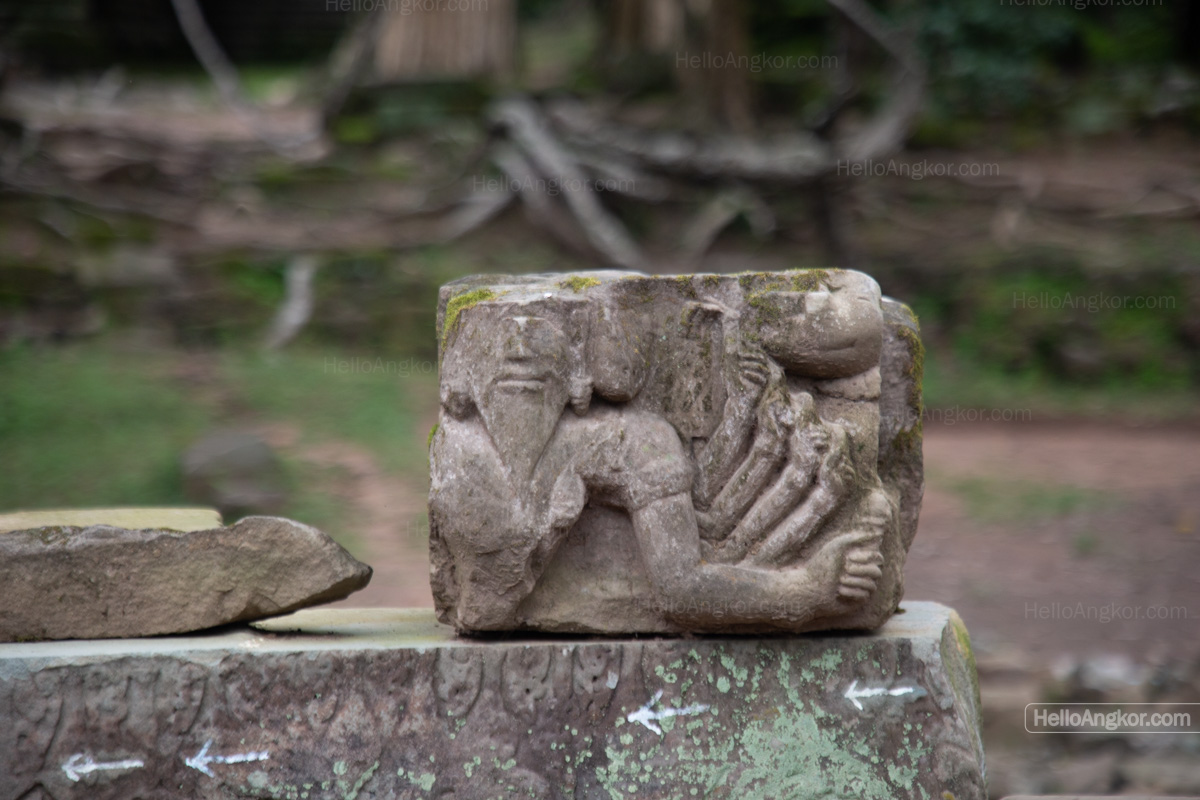
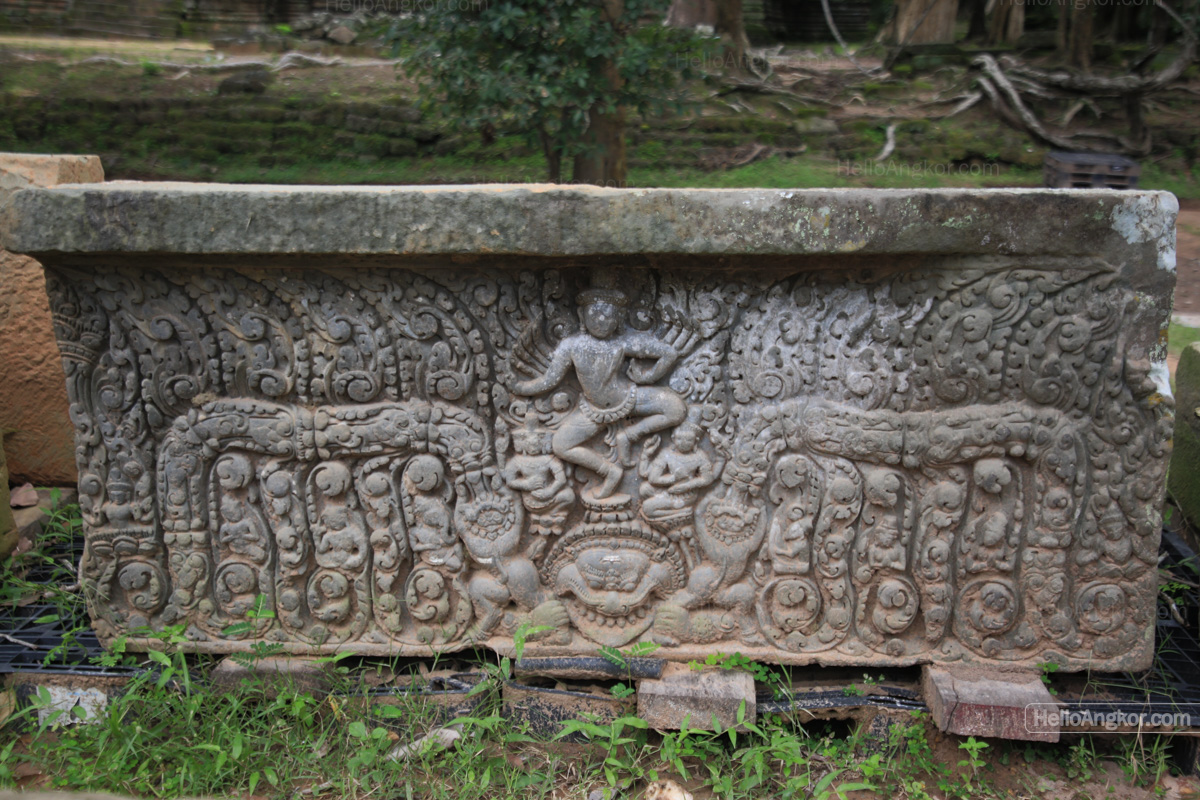
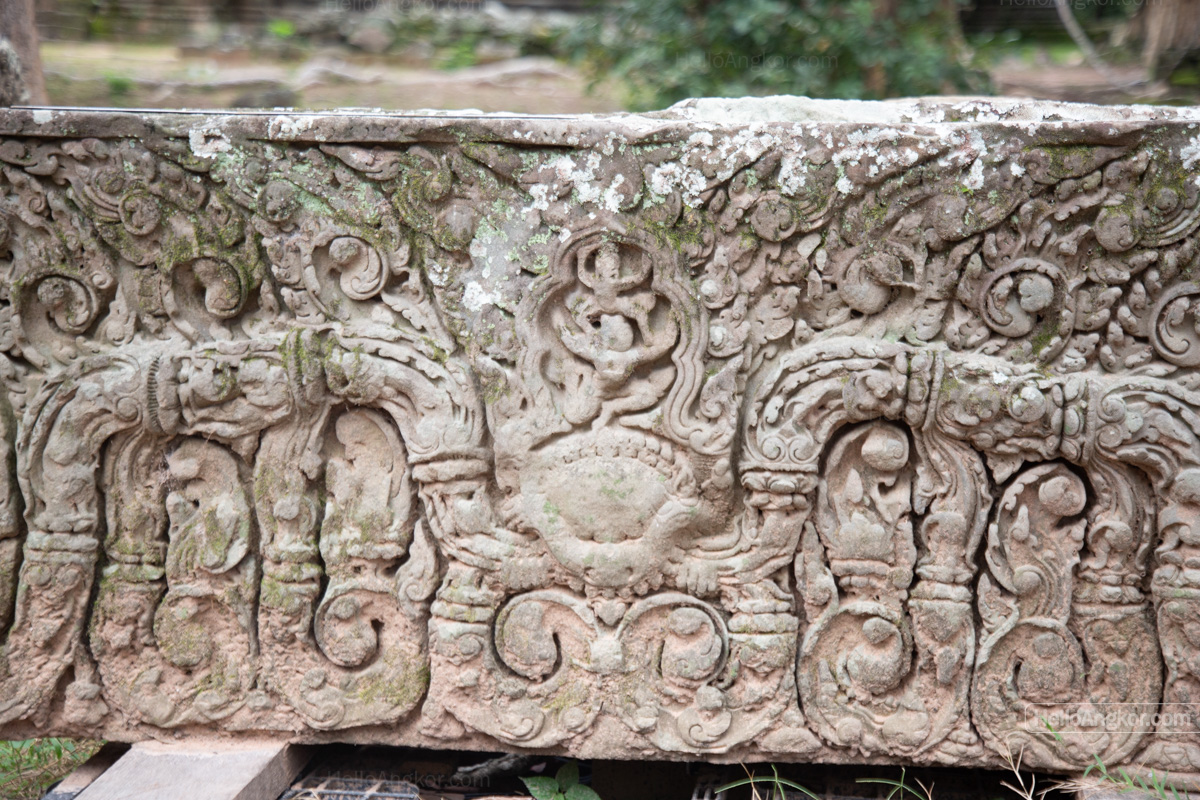
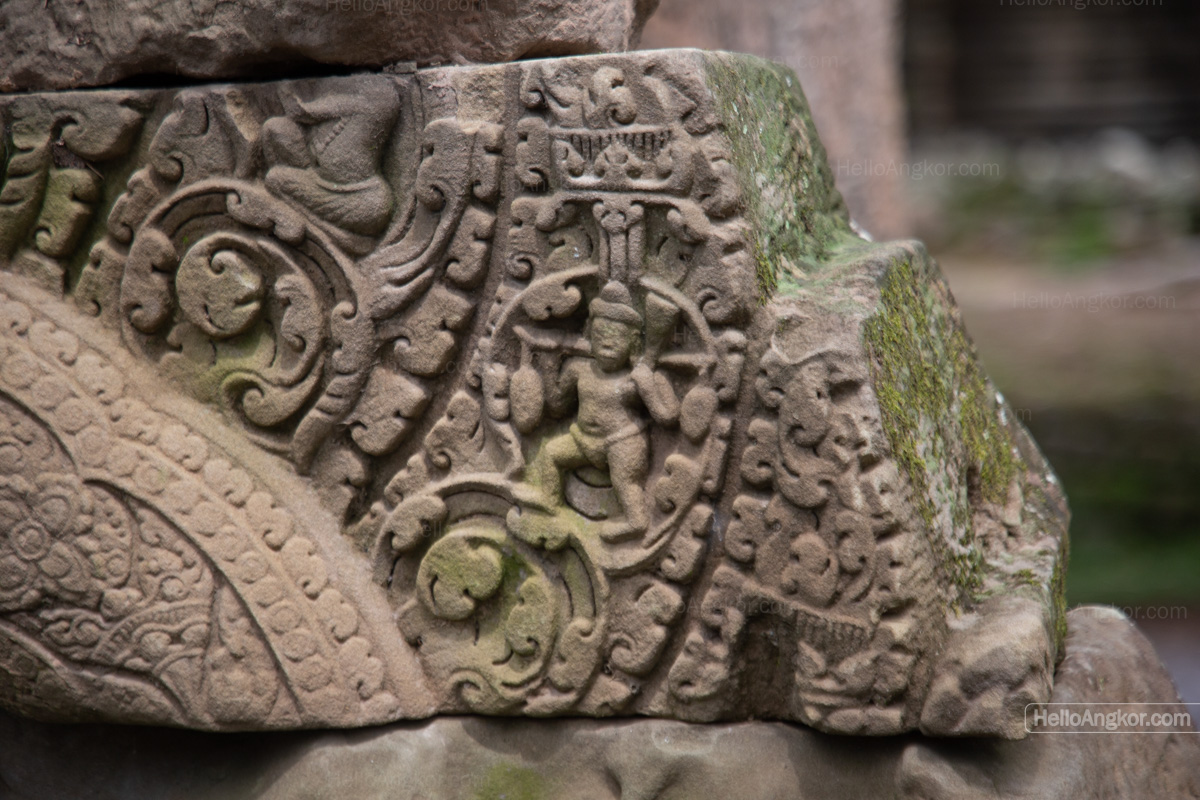


Historical Notes
The first documentation on the site comes from the first conservator of Angkor (during the colonial era), Jean Commaille, who wrote a small piece on “Le Groupe Da Prea Pithu” group as part of a larger introduction to the temples of Angkor, published in Revue Indochinese in 1910. However, in his 1911 publication, E. Lunet De Lajounquiere would provide a little more detail:
Temple u. The second temple, u, built on the same mound as the previous one, also includes a sanctuary and its enclosure.
Sanctuary. It is made of sandstone, square, measuring approximately 10 meters internally on each of its faces, all of which have a doorway with wide, illuminated projecting bays. The collapsed dome fills the interior with its debris.
A square, sandstone-faced base with steps silty slabs resting on each of its faces, and wide entablatures, raise the floor of the sanctuary to a height of about 4 meters; steps and entablatures disappear under the rubble.
The decoration of this small building was very elaborate. The decorative lintels of the interior doors, all of type III, are still in place. On the north door, one can see a dancing figure; to the right and left, other figures, arranged like those representing the devas and asuras in the scene of the churning of the ocean of milk, hold in their arms a stylized serpent’s body, which is the origin of the scrolling foliage. On the east door, a deity, imprecise in its details, is placed on a monster’s head. The south decorative lintel is unfinished; however, one can make out a standing deity figure, facing forward; its right hand holds a mace placed upright in front of it, its left arm raised above its head brandishing a weapon. Finally, on the west lintel is a figurine of Shiva dancing.
Lajonquiere, 1911
During clearance works in 1910, a stunning pediment depicting Parvati, the wife-to-be of Shiva, was discovered and believed to have originally belonged above the north door. That pediment now resides in the Musee Guimet cataloged under MG 18912.
In 1919, the site was formerly cleared, as per the report
Prah Pithu. – The clearing of temples t and u of this complex was continued. The enclosure wall of temple t was completed, on the East and West sides, with the coping and the upper courses that had fallen to the ground.
Sanctuary u has an entire angle, the southwest angle, collapsed, and trees have grown on the rubble. This part was abandoned, the rest was cleared and consolidated, except for the sanctuary itself which provisionally remained cluttered with the upper blocks.
A water drainage passage to the outside was identified in the basement of the North enclosure wall.
In the interior northwest corner of the same wall, a slight elevation of the ground, a probable vestige of a light disappeared construction, is bordered on the south side by remains of a laterite wall. Probes inside this tumulus revealed nothing: a round stone adorned with a rosette, a small very damaged dancing figure stela, and a long stone bearing the nine deities in high relief were found at this location. An analogous stone was found outside the enclosure near the Southwest corner.
Among the blocks taken from the debris of the pràsàt and aligned according to the adopted method are several pieces of quite interesting sculptures, mostly pediment fragments decorated with Brahmanic scenes, a headless statue representing a woman holding a small figure on her knee, a small linga, two decapitated statues, and fragments of antefixes adorned with dvārapālas or female figures whose terminal chignon forms several loops.
Among these carved stones, the main ones were brought back near the storehouse where they are piled up awaiting a definitive shelter.
Chronique, BEFEO 19
Several artifacts were discovered in the Preah Pithu area in the mid-1920s, and consolidation work appeared to continue through that decade.
The excavation yielded various curious pieces, pedestal and linga, cubic die with 17 mortises, bizarre terracotta lamp, hemisphere and linga in rock crystal, various statuettes including a seated four-armed bodhisattva, a stele with another leaning against it, two small Ganeshas, one of bronze, and in the same metal, another statuette of a standing divinity. The strangest piece is a monolithic parallelepipedal block with a complete ordinary pedestal; on each face is a standing divinity, alternatively with two and four arms; the upper surface bears a group of five lingas. The whole does not exceed 0 m. 40.
Chronique BEFEO 24
In 2013, Etsuo Uchida et al published a study on the magnetic susceptibility of the sandstone and determined that the Preah Pithu sites were likely built in the late or post-Bayon era.
….. Both Groups T and U are oriented towards the west and are situated inside the same moat. In the western part of Group T, there is a cruciform terrace decorated with round columns. Groups T and U are both enclosed by sandstone walls. The sandstone blocks used in the walls show a variation in colour, size and shape. Their surfaces were not finished properly, and contain a small number of red siliceous sandstone blocks. These characteristics suggest that these walls were constructed around the end of the Bayon style period or later. The sandstone blocks of each sanctuary display a smooth surface compared with those of the enclosure walls, but show a size variation and are of random range ashlar masonry in the upper structure. In addition, a small number of red siliceous sandstone blocks are observed. These are characteristic of the end of the Bayon style period or later, not of the periods that preceded the Bayon style.
Etsuo Uchida
Historical Images
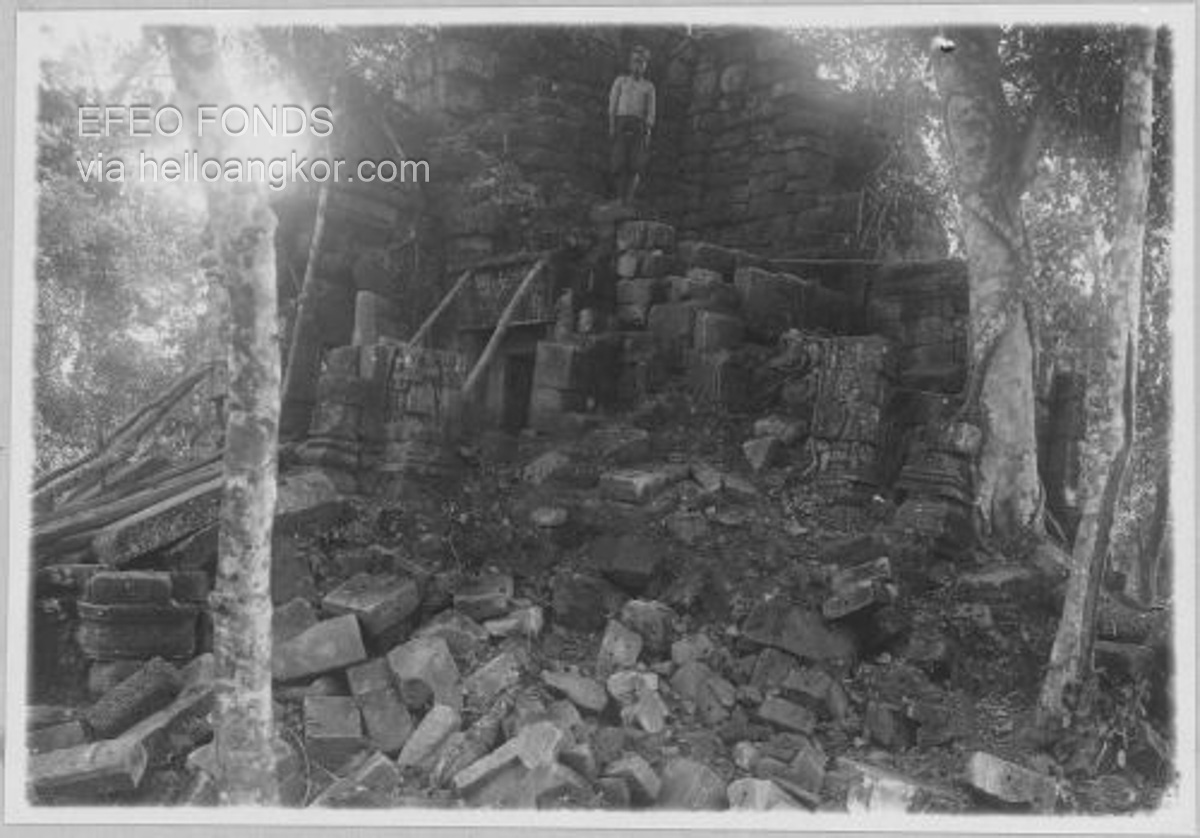
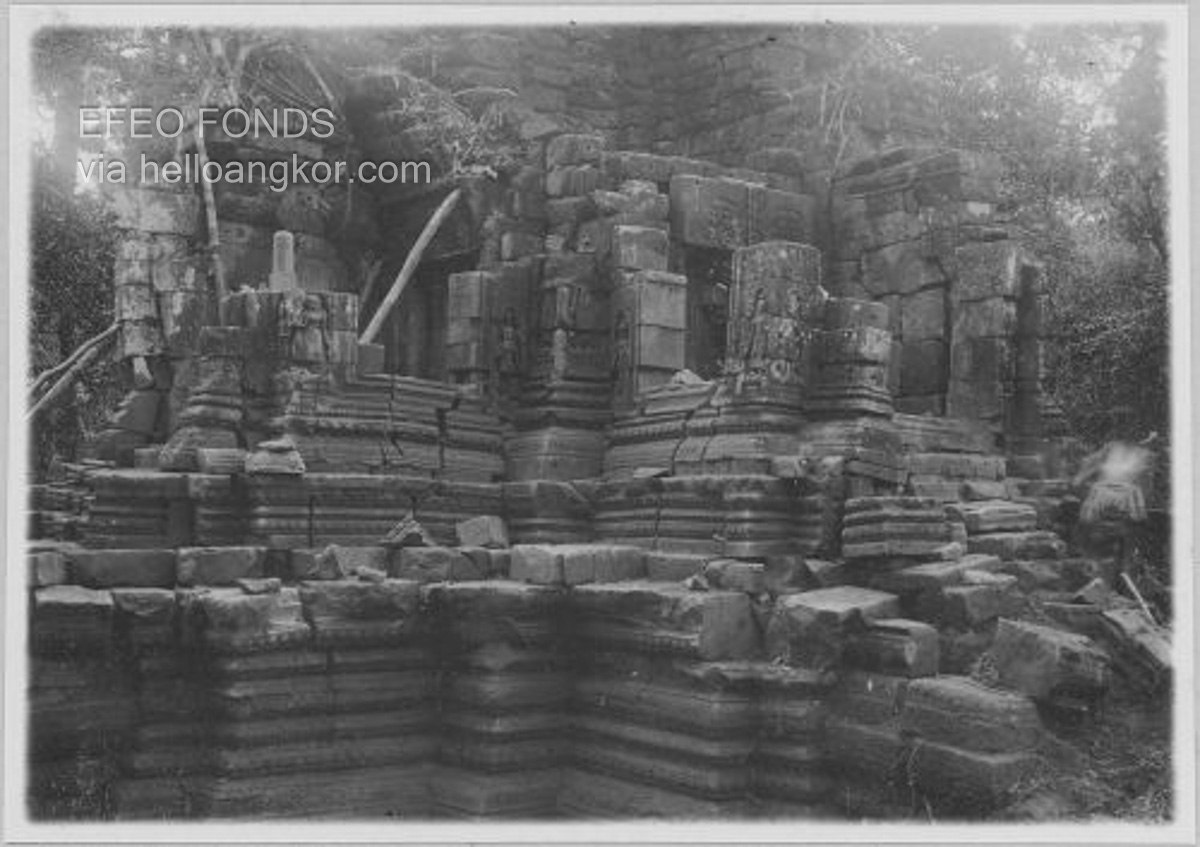
The first image below dates to May 1924 and the second to June of the same year, post the site’s clearance. The next two images are the Parvati pediment now held in the Musee Guimet.
Map
Site Info
- Reference ID: HA11666 | Last Update: January 1st, 2026
- Site Name: Preah Pithu, tour U | Khmer: ប្រាសាទជម - ព្រះពិធូរ (ប៉ម អ៊ុយ)
- Other Names: Prasat Vhorm, Chorm Temple, Preah Pithu U, ប្រាសាទព្រះពិធូរ, Preah Pithu. U, Práḥ Pithu., Temple u, Preah Pithû U
- Date/Era: 12th Century
- Location: Siem Reap Province > Krong Siem Reab > Sangkat Nokor Thum
- Inventaire Khmer IK: 482
- MoCFA/EFEO Inventory - CISARK: 382
- Monuments Historiques - MH: 374
- Tags/Group: 12th Century, 13th Century, 1926MH, Angkor, Angkor Small Circuit, Angkor Thom, Aymonier, Lajonquiere, Map: Angkor's Top 30 Temples & Ancient Sites, Map: Top 100 Temples & Ancient Sites (Siem Reap), MH, Preah Pithu Temple Group, Temples
Historical Inventories of Preah Pithu, tour U
- 1904, E. Aymonier, Le Cambodge, Tome III, pg. 103 (Site Name: Preah Pithû U Region: Angkor Thom)
- 1911, E. Lunet de Lajonquière, Inventaire descriptif des monuments du Cambodge, Tome III, pg. 67 (IK #: 482 Site Name: Temple u Region: Srok Siemreap, Khet Siemreap)
- 1926, Liste des Monuments Historiques, #: 374 Site: Práḥ Pithu. - 3 terraces and 3 sandstone sanctuaries Region: Siemréap
